
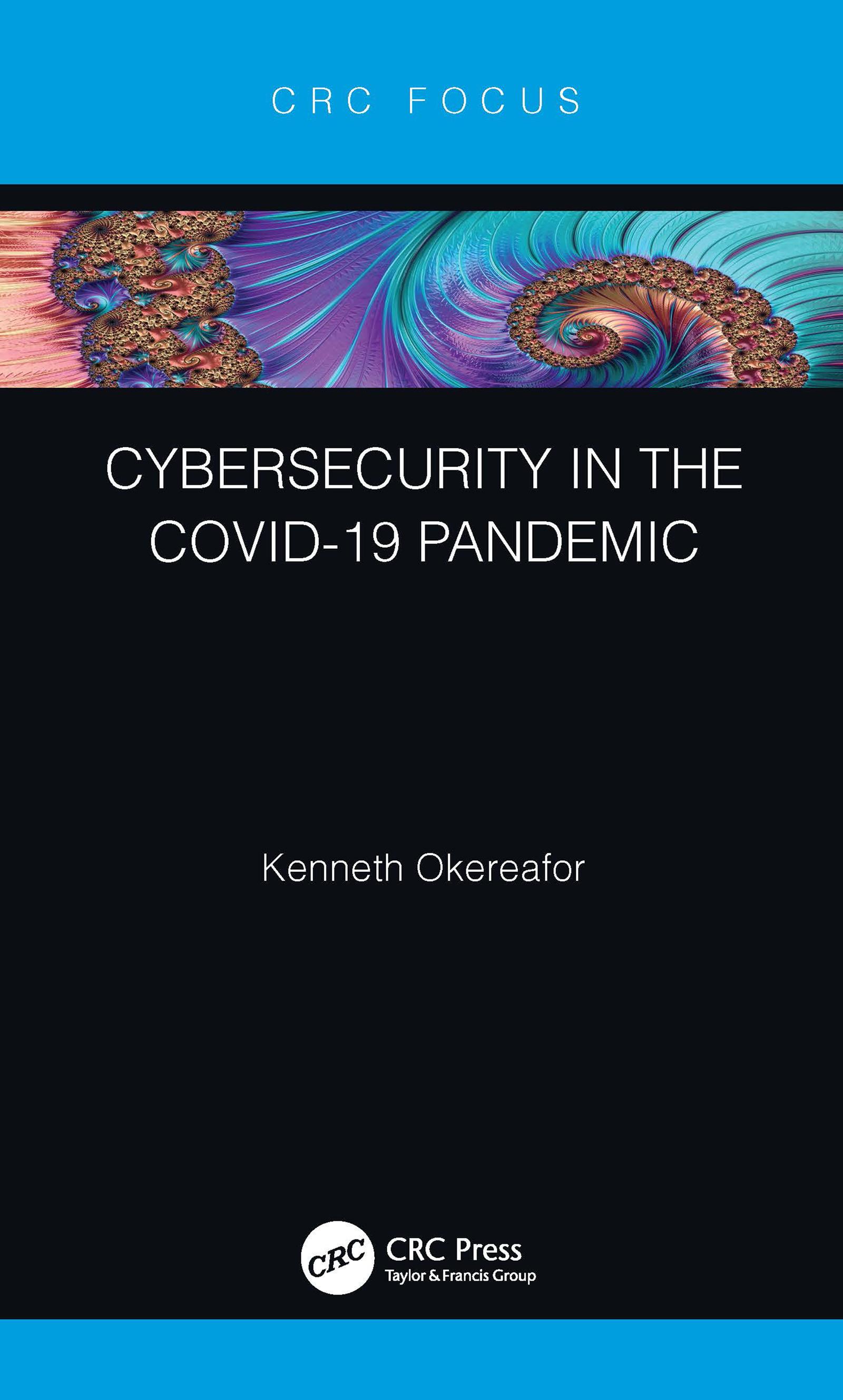
As the 2020 global lockdown became a universal strategy to control the COVID-19 pandemic, social distancing triggered a massive reliance on online and cyberspace alternatives and switched the world to the digital economy. Despite their effectiveness for remote work and online interactions, cyberspace alternatives ignited several Cybersecurity challenges. Malicious hackers capitalized on global anxiety and launched cyberattacks against unsuspecting victims. Internet fraudsters exploited human and system vulnerabilities and impacted data integrity, privacy, and digital behaviour.
Cybersecurity in the COVID-19 Pandemic demystifies Cybersecurity concepts using real-world cybercrime incidents from the pandemic to illustrate how threat actors perpetrated computer fraud against valuable information assets particularly healthcare, financial, commercial, travel, academic, and social networking data. The book simplifies the socio-technical aspects of Cybersecurity and draws valuable lessons from the impacts COVID-19 cyberattacks exerted on computer networks, online portals, and databases. The book also predicts the fusion of Cybersecurity into Artificial Intelligence and Big Data Analytics, the two emerging domains that will potentially dominate and redefine post-pandemic Cybersecurity research and innovations between 2021 and 2025.
The book’s primary audience is individual and corporate cyberspace consumers across all professions intending to update their Cybersecurity knowledge for detecting, preventing, responding to, and recovering from computer crimes. Cybersecurity in the COVID-19 Pandemic is ideal for information officers, data managers, business and risk administrators, technology scholars, Cybersecurity experts and researchers, and information technology practitioners. Readers will draw lessons for protecting their digital assets from email phishing fraud, social engineering scams, malware campaigns, and website hijacks.
Zahle einfach mit Karte, Klarna, Apple Pay oder Google Pay. Nicht zufrieden? Du hast immer ein 14-tägiges Widerrufsrecht. Lies mehr in unseren AGB. Hast du Fragen, schreib uns eine E-Mail an hello@memmo.org.
Memmo macht das Lernen einfacher – wo auch immer du bist. Bei uns findest du deine Kursbücher und smarte Lerntools an einem Ort: Zusammenfassungen, Quizzes, Podcasts und Lernkarten. Und Ted, dein Lernbuddy, beantwortet alles, was du wissen möchtest. Über 50.000 Studierende lernen bereits hier – gemacht, damit du schneller lernst und weniger Stress hast.