
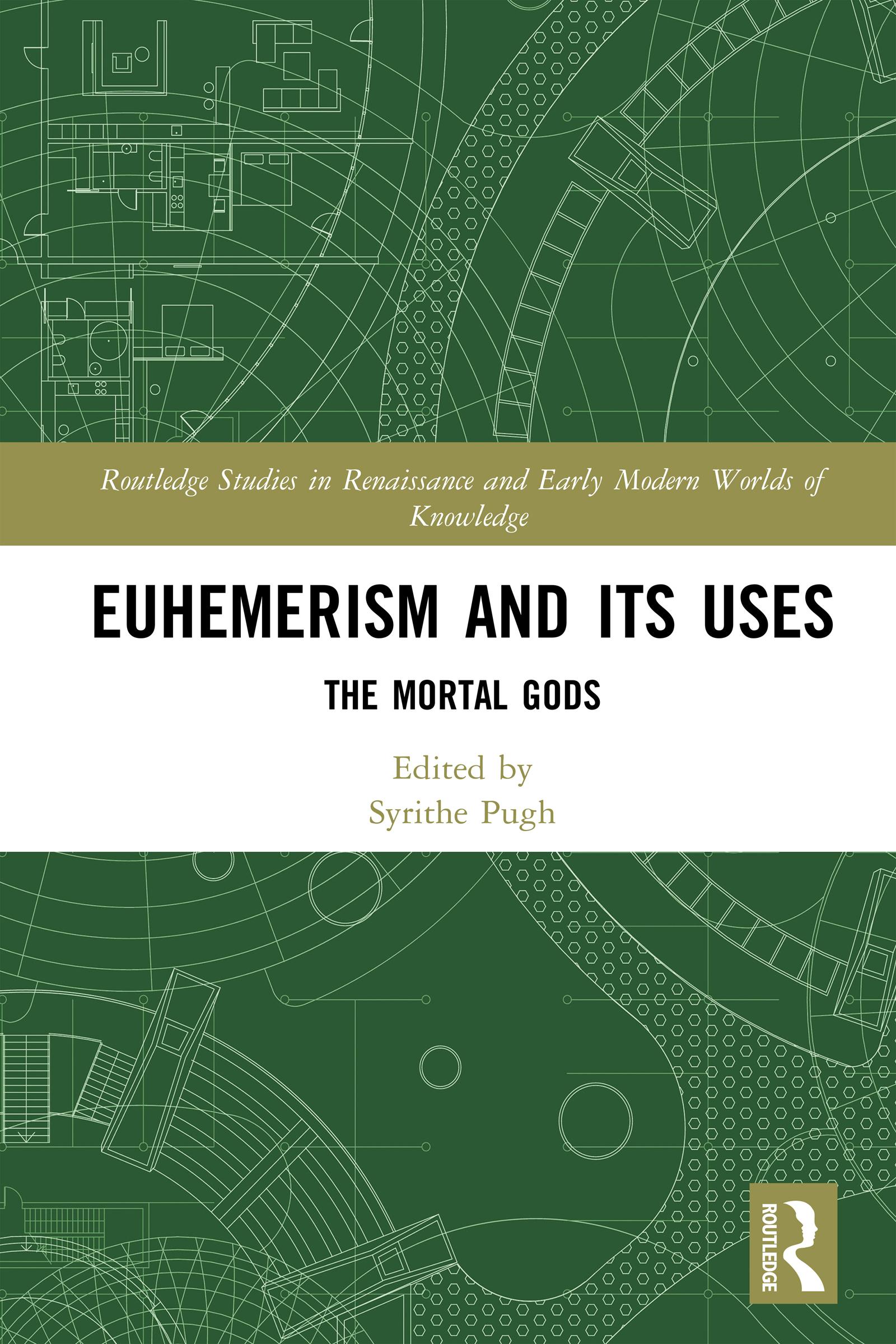
Euhemerism and Its Uses offers the first interdisciplinary, focussed, and all-round view of the long history of an important but understudied phenomenon in European intellectual and cultural history.
Euhemerism – the claim that the Greek gods were historically mortal men and women – originated in the early third century BCE, in an enigmatic and now fragmentary text by the otherwise unknown author Euhemeros. This work, the Sacred Inscription, has been read variously as a theory of religion, an atheist’s manifesto, as justifying or satirizing ruler-worship, as a fantasy travel-narrative, and as an early ‘utopia’. Influencing Hellenistic and Roman literature and religious and political thought, and appropriated by early Christians to debunk polytheism while simultaneously justifying the continued study of classical literature, euhemerism was widespread in the middle ages and Renaissance, and its reverberations continue to be felt in modern myth-theory. Yet, though frequently invoked as a powerful and pervasive tradition across several disciplines, it is still under-examined and poorly understood.
Filling an important gap in the history of ideas, this volume will appeal to scholars and students of classical reception, mediaeval and Renaissance literature, historiography, and theories of myth and religion.
Zahle einfach mit Karte, Klarna, Apple Pay oder Google Pay. Nicht zufrieden? Du hast immer ein 14-tägiges Widerrufsrecht. Lies mehr in unseren AGB. Hast du Fragen, schreib uns eine E-Mail an hello@memmo.org.
Memmo macht das Lernen einfacher – wo auch immer du bist. Bei uns findest du deine Kursbücher und smarte Lerntools an einem Ort: Zusammenfassungen, Quizzes, Podcasts und Lernkarten. Und Ted, dein Lernbuddy, beantwortet alles, was du wissen möchtest. Über 50.000 Studierende lernen bereits hier – gemacht, damit du schneller lernst und weniger Stress hast.