
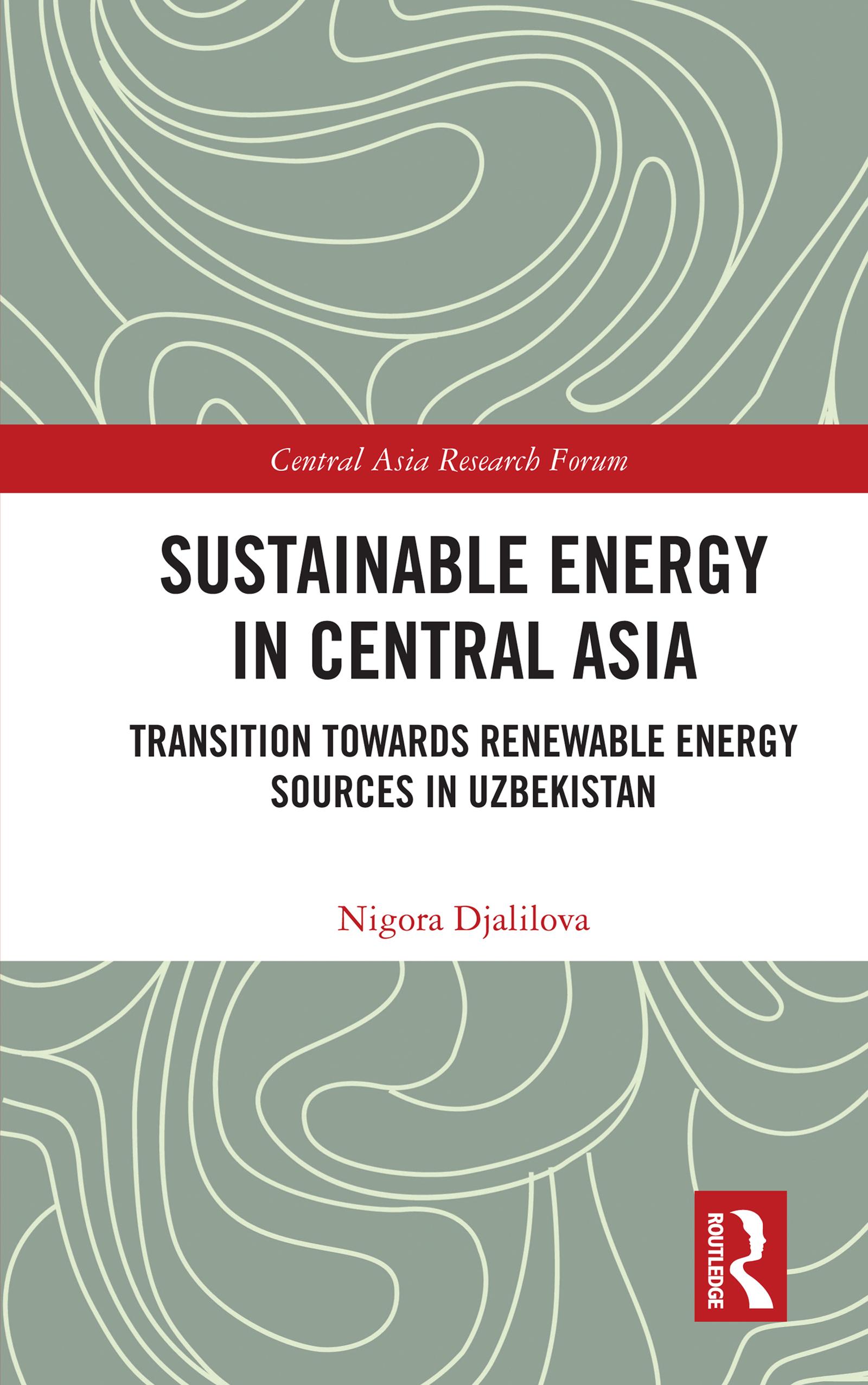
This book argues that sustainable energy development represents a new frontier for many transitional economies, including those countries that are well endowed with traditional energy resources, as exemplified by the case of Uzbekistan in Central Asia.
The book highlights the challenges and issues faced by the energy sector in countries which are undergoing a transition from government-led economic models to open market economies. Using Uzbekistan as a case study, the book demonstrates these challenges, as well as opportunities of being part of an increasingly interconnected global market, to show how governments can ensure inclusive economic growth and build pathways toward sustainable development by deploying renewable energy sources (RES). By applying the Quadruple Bottom Line strategy as a conceptual framework to evaluate social, economic, and environmental benefits and governance as a key dynamic component, the book includes recommendations for implementing a transition strategy to renewable energy consumption for developing countries and offers insights into ways of dealing with government policy in post-Soviet countries.
Presenting a holistic approach to promoting RES deployment in Uzbekistan and elsewhere, this book will be of interest to researchers interested in energy transition in developing countries, development economics, Central Asian politics, and the management of natural resources and climate-change issues.
Zahle einfach mit Karte, Klarna, Apple Pay oder Google Pay. Nicht zufrieden? Du hast immer ein 14-tägiges Widerrufsrecht. Lies mehr in unseren AGB. Hast du Fragen, schreib uns eine E-Mail an hello@memmo.org.
Memmo macht das Lernen einfacher – wo auch immer du bist. Bei uns findest du deine Kursbücher und smarte Lerntools an einem Ort: Zusammenfassungen, Quizzes, Podcasts und Lernkarten. Und Ted, dein Lernbuddy, beantwortet alles, was du wissen möchtest. Über 50.000 Studierende lernen bereits hier – gemacht, damit du schneller lernst und weniger Stress hast.