
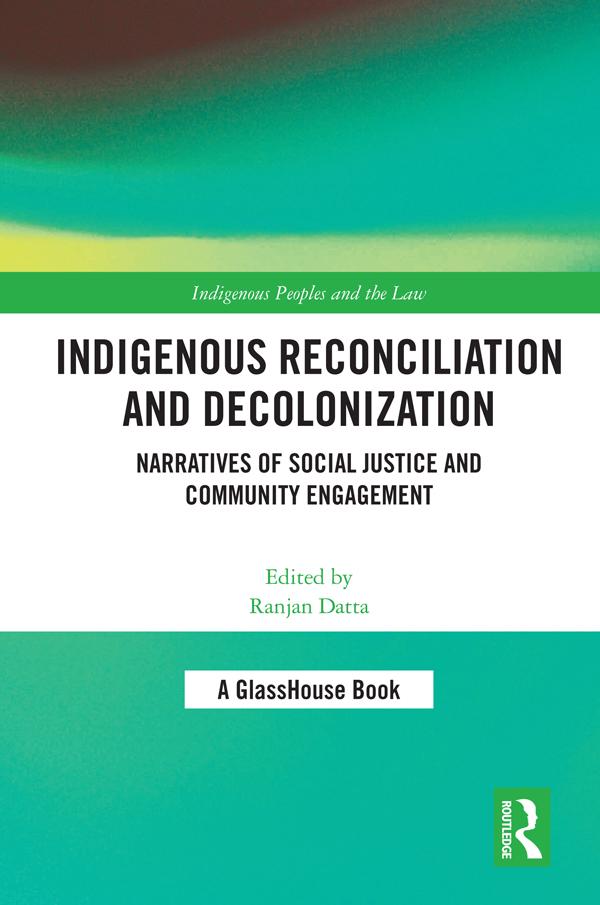
This book addresses the ethical and practical issues at stake in the reconciliation of Indigenous and non-indigenous communities.
An increasing number of researchers, educators, and social and environmental activists are eager to find ways to effectively support ongoing attempts to recognize, integrate and promote Indigenous perspectives and communities. Taking Canada as its focus, this book offers a multidisciplinary consideration of a range of reconciliation policies, practices and initiatives that are relevant in all settler states. Set against its increasing neoliberal appropriation, the book resituates reconciliation in the everyday contexts of community interaction and engagement, as well as in the important areas of Indigenous knowledge, resource management and social and environmental justice. Reconciliation is not just the responsibility of law and government. And, attuned to the different perspectives of settlers, migrants and refugee communities, the book examines areas of opportunity, as well as obstacles to progress, in the forging of a truly decolonizing framework for reconciliation.
As the challenges of reconciliation cross numerous academic and substantial areas, this book will appeal to a range of scholars and practitioners working in law, politics, education, environmental studies, anthropology and Indigenous studies.
Zahle einfach mit Karte, Klarna, Apple Pay oder Google Pay. Nicht zufrieden? Du hast immer ein 14-tägiges Widerrufsrecht. Lies mehr in unseren AGB. Hast du Fragen, schreib uns eine E-Mail an hello@memmo.org.
Memmo macht das Lernen einfacher – wo auch immer du bist. Bei uns findest du deine Kursbücher und smarte Lerntools an einem Ort: Zusammenfassungen, Quizzes, Podcasts und Lernkarten. Und Ted, dein Lernbuddy, beantwortet alles, was du wissen möchtest. Über 50.000 Studierende lernen bereits hier – gemacht, damit du schneller lernst und weniger Stress hast.