
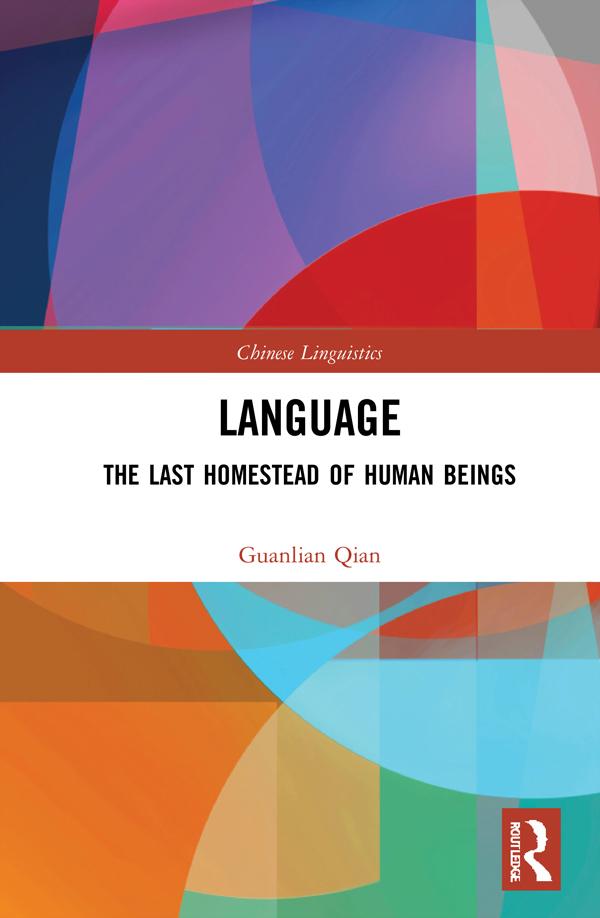
Heidegger characterizes the relationship between language and Being as "language is the house of Being", negating the idea that language is merely a tool ready to be used at hand.
Drawing on this idea, as well as ideas from anthropology, pragmatics, and folklore studies, the author argues that "language is the last homestead of human beings", meaning that mankind lives within language, has to live within language, and lives in formulaic speech events. The author takes Western classic works on the philosophy of language and his own insights of language use, rooted in traditional Chinese culture, in order to develop his own localized theory. In this title, the author explores the philosophical aspect of man’s survival by presenting day-to-day exchange routines such as weddings and fortune-telling dialogues in the Chinese context.
Awarded the first prize for Academic Excellence in Philosophy and Social Sciences in Guangdong Province, and second prize in the second Xu Guozhang Award for Foreign Language Studies, this is a must-read for researchers interested in philosophy of language and pragmatics.
Zahle einfach mit Karte, Klarna, Apple Pay oder Google Pay. Nicht zufrieden? Du hast immer ein 14-tägiges Widerrufsrecht. Lies mehr in unseren AGB. Hast du Fragen, schreib uns eine E-Mail an hello@memmo.org.
Memmo macht das Lernen einfacher – wo auch immer du bist. Bei uns findest du deine Kursbücher und smarte Lerntools an einem Ort: Zusammenfassungen, Quizzes, Podcasts und Lernkarten. Und Ted, dein Lernbuddy, beantwortet alles, was du wissen möchtest. Über 50.000 Studierende lernen bereits hier – gemacht, damit du schneller lernst und weniger Stress hast.