
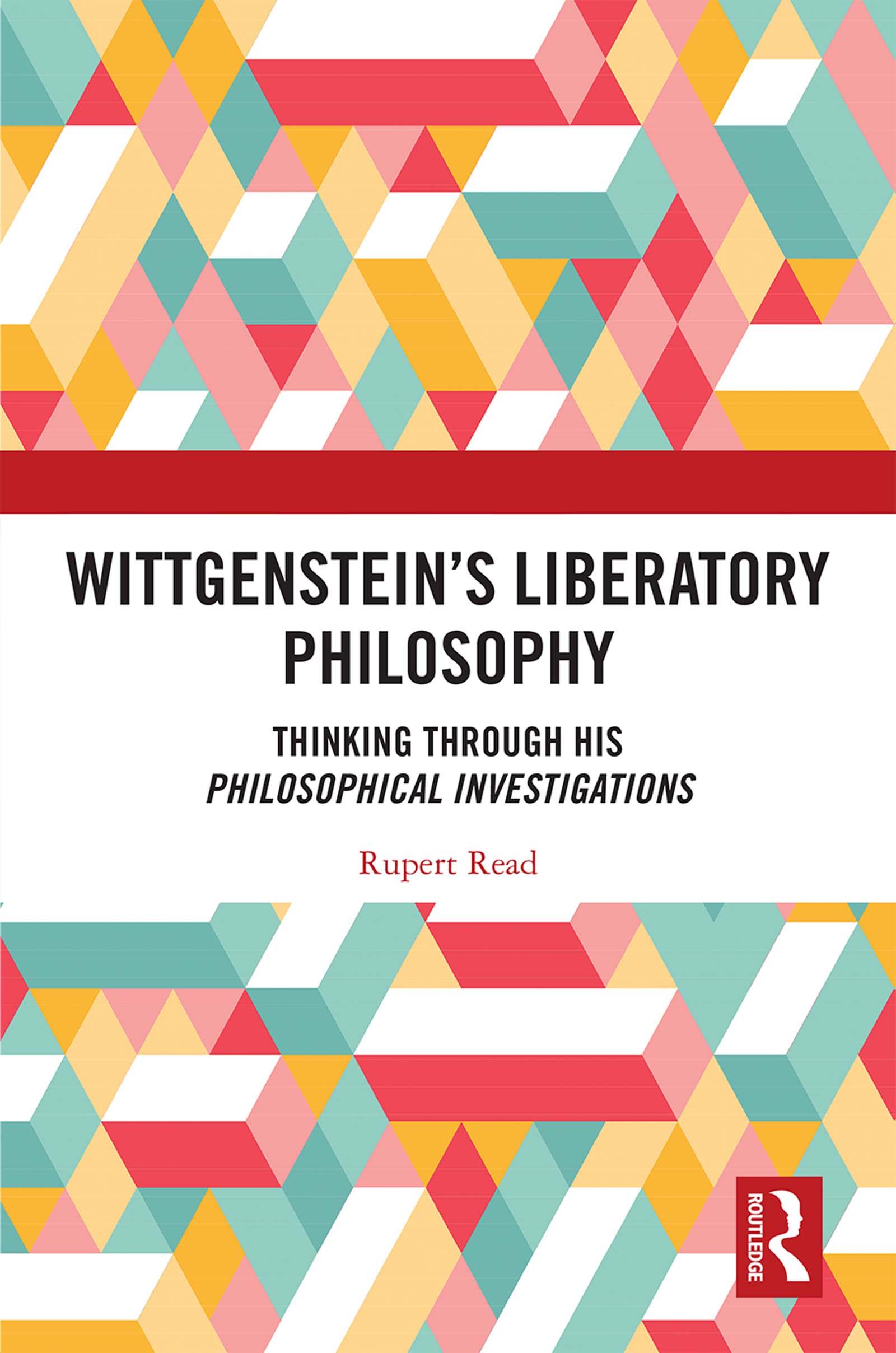
In this book, Rupert Read offers the first outline of a resolute reading, following the highly influential New Wittgenstein ‘school’, of the Philosophical Investigations. He argues that the key to understanding Wittgenstein’s later philosophy is to understand its liberatory purport.
Read contends that a resolute reading coincides in its fundaments with what, building on ideas in the later Gordon Baker, he calls a liberatory reading. Liberatory philosophy is philosophy that can liberate the user from compulsive (and destructive) patterns of thought, freeing one for possibilities that were previously obscured. Such liberation is our prime goal in philosophy. This book consists in a sequential reading, along these lines, of what Read considers the most important and controversial passages in the Philosophical Investigations: 1, 16, 43, 95 & 116 & 122, 130–3, 149–151, 186, 198–201, 217, and 284–6. Read claims that this liberatory conception is simultaneously an ethical conception. The PI should be considered a work of ethics in that its central concern becomes our relation with others. Wittgensteinian liberations challenge widespread assumptions about how we allegedly are independent of and separate from others.
Wittgenstein’s Liberatory Philosophy will be of interest to scholars and advanced students working on Wittgenstein, and to scholars of the political philosophy of liberation and the ethics of relation.
Zahle einfach mit Karte, Klarna, Apple Pay oder Google Pay. Nicht zufrieden? Du hast immer ein 14-tägiges Widerrufsrecht. Lies mehr in unseren AGB. Hast du Fragen, schreib uns eine E-Mail an hello@memmo.org.
Memmo macht das Lernen einfacher – wo auch immer du bist. Bei uns findest du deine Kursbücher und smarte Lerntools an einem Ort: Zusammenfassungen, Quizzes, Podcasts und Lernkarten. Und Ted, dein Lernbuddy, beantwortet alles, was du wissen möchtest. Über 50.000 Studierende lernen bereits hier – gemacht, damit du schneller lernst und weniger Stress hast.