
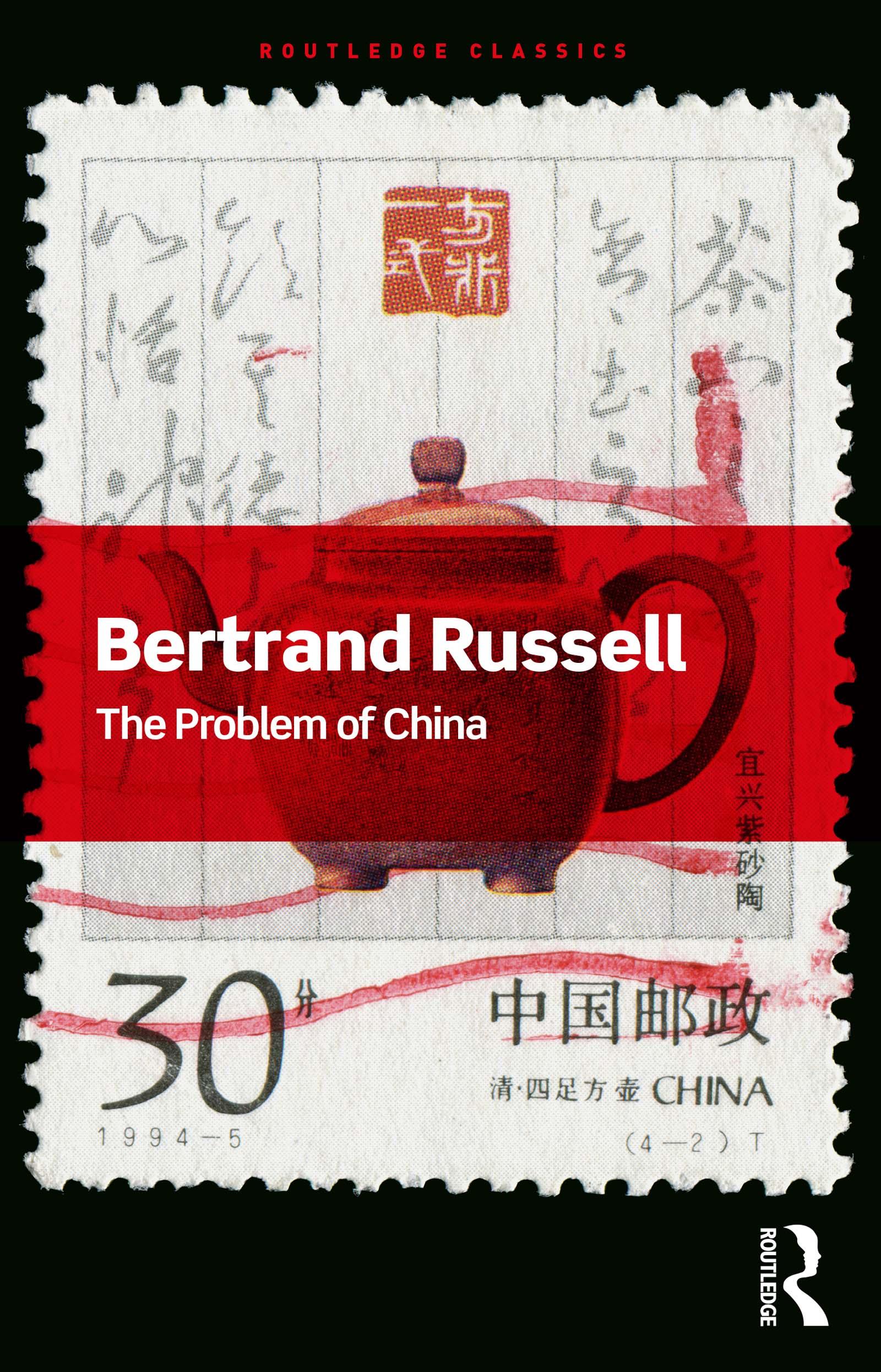
'China, by her resources and her population, is capable of being the greatest power in the world after the United States.'
Bertrand Russell, The Problem of China
In 1920 the philosopher Bertrand Russell spent a year in China as Professor of Philosophy at the University of Beijing (then Peking), where his lectures on mathematical logic enthralled students and listeners, including Mao Tse Tung, who attended some of Russell’s talks. Written at a time when China was largely regarded by the West as backward and weak, The Problem of China sees Russell rise above the prejudices of his era and presciently assess China's past, present and future.
Russell brings his analytical and insightful eye to bear on some fundamental aspects of China’s history and politics, cautioning China against adopting a purely Western model of social and economic development, which he regarded as characterized by a combination of greed and militarism. Beginning with an overview of nineteenth-century Chinese history and considering China's relations with Japan and Russia, Russell then contrasts Chinese civilization with Western. He devotes a fascinating chapter to the character of the Chinese, which he argues is complex but ultimately defined by a ‘pacific temper’.
With uncanny foresight, Russell predicts China’s resurgence, but only if it is able to establish an orderly government, promote industrial development under Chinese control and foster the spread of education.
This Routledge Classics edition includes a new introduction by Bernard Linsky.
Zahle einfach mit Karte, Klarna, Apple Pay oder Google Pay. Nicht zufrieden? Du hast immer ein 14-tägiges Widerrufsrecht. Lies mehr in unseren AGB. Hast du Fragen, schreib uns eine E-Mail an hello@memmo.org.
Memmo macht das Lernen einfacher – wo auch immer du bist. Bei uns findest du deine Kursbücher und smarte Lerntools an einem Ort: Zusammenfassungen, Quizzes, Podcasts und Lernkarten. Und Ted, dein Lernbuddy, beantwortet alles, was du wissen möchtest. Über 50.000 Studierende lernen bereits hier – gemacht, damit du schneller lernst und weniger Stress hast.