
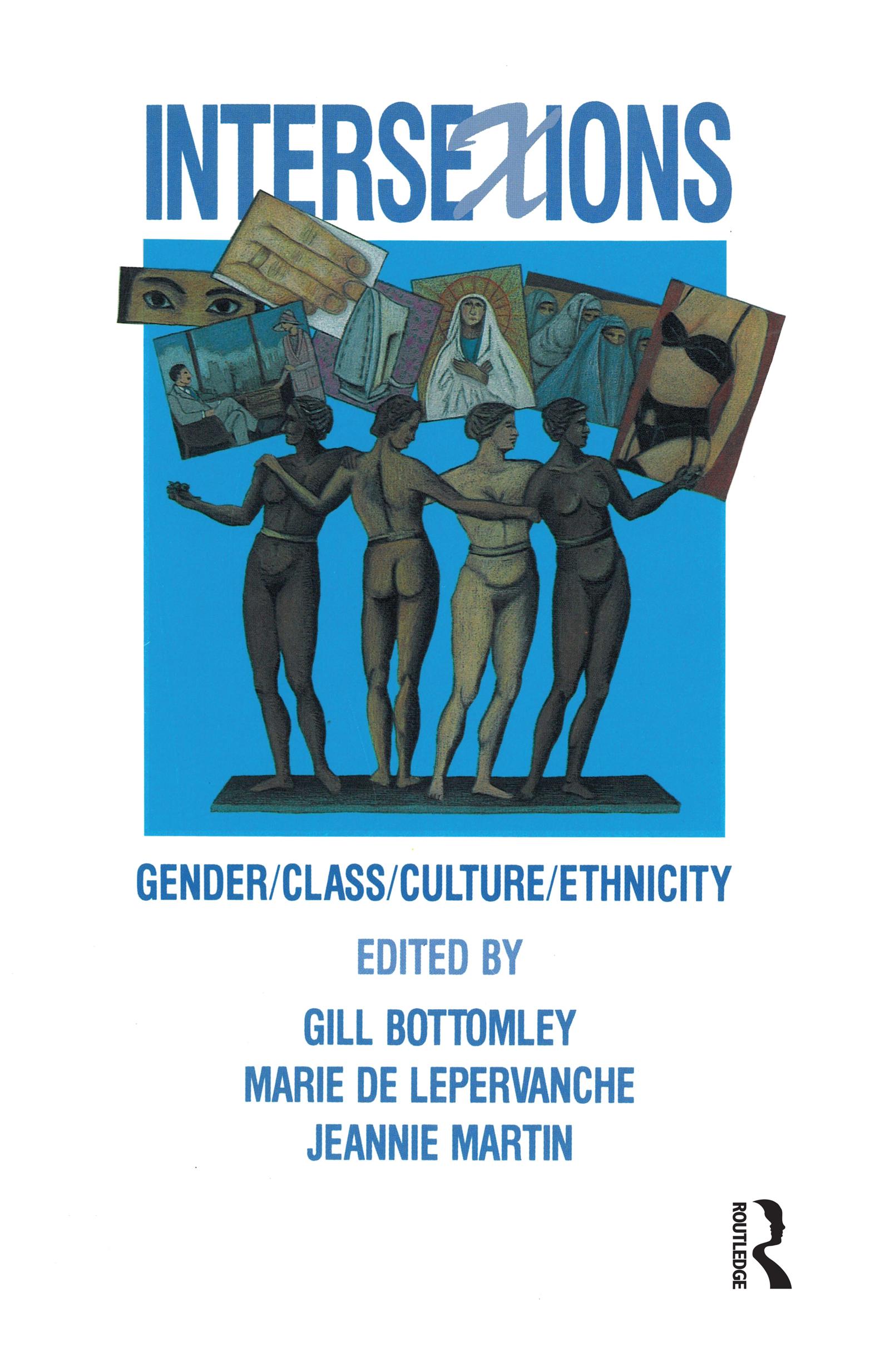
Do writings about ethnicity, class and gender form a 'holy trinity' or challenge previous unidimensional analyses?
Intersexions accepts the triple perspective but goes further. One aim is to understand the processes by which relations of power are maintained, reproduced and resisted. Intersexions also examines modes of representation: within social theory, feminism, development theory and discussions of capitalism and postcolonialism, as well as dominant ideological notions of caste, domesticity and 'success'.
The writers' approaches are all critical but concerned also with providing alternatives. Comparative and specific analyses are combined, attention is paid to the written and spoken material of the people 'represented' and their own positions as commentators examined. Topics range from discussions of family ideology and paid and domestic work, to analyses of writings by Aboriginals, Vanuatuans and second generation Greek Australians and critiques of the cultural construction of gender and ethnicity in Bangladesh, India and Indonesia.
Themes recur and overlap. Unitary categories are questioned and the processes by which relations described as 'class', 'ethnic', 'cultural' and 'gender' intersect and interact are demonstrated.
Zahle einfach mit Karte, Klarna, Apple Pay oder Google Pay. Nicht zufrieden? Du hast immer ein 14-tägiges Widerrufsrecht. Lies mehr in unseren AGB. Hast du Fragen, schreib uns eine E-Mail an hello@memmo.org.
Memmo macht das Lernen einfacher – wo auch immer du bist. Bei uns findest du deine Kursbücher und smarte Lerntools an einem Ort: Zusammenfassungen, Quizzes, Podcasts und Lernkarten. Und Ted, dein Lernbuddy, beantwortet alles, was du wissen möchtest. Über 50.000 Studierende lernen bereits hier – gemacht, damit du schneller lernst und weniger Stress hast.