
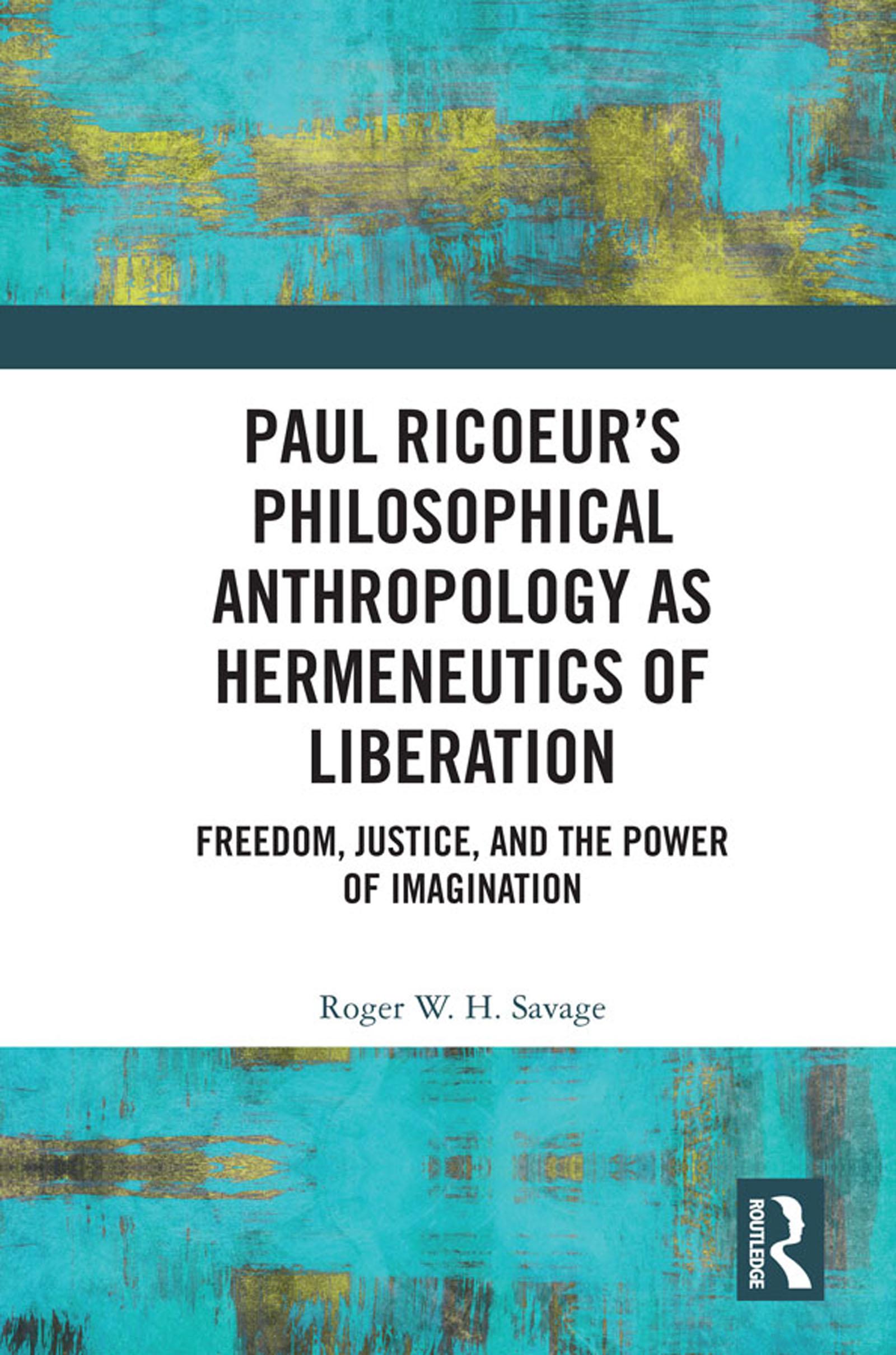
This book offers a unique account of the role imagination plays in advancing the course of freedom’s actualization. It draws on Paul Ricoeur’s philosophical anthropology of the capable human being as the staging ground for an extended inquiry into the challenges of making freedom a reality within the history of humankind.
This book locates the abilities we exercise as capable human beings at the heart of a sustained analysis and reflection on the place of the idea of justice in a hermeneutics for which every expectation regarding rights, liberties, and opportunities must be a hope for humanity as a whole. The vision of a reconciled humanity that for Ricoeur figures in a philosophy of the will provides an initial touchstone for a hermeneutics of liberation rooted in a philosophical anthropology for which the pathétique of human misery is its non- or pre-philosophical source. By setting the idea of the humanity in each of us against the backdrop of the necessity of preserving the tension between the space of our experiences and the horizons of our expectations, the book identifies the ethical and political dimensions of the idea of justice’s federating force with the imperative of respect.
Paul Ricoeur’s Philosophical Anthropology as Hermeneutics of Liberation will be of interest to scholars and advanced students working in hermeneutics, phenomenology, ethics, political theory, and aesthetics.
Zahle einfach mit Karte, Klarna, Apple Pay oder Google Pay. Nicht zufrieden? Du hast immer ein 14-tägiges Widerrufsrecht. Lies mehr in unseren AGB. Hast du Fragen, schreib uns eine E-Mail an hello@memmo.org.
Memmo macht das Lernen einfacher – wo auch immer du bist. Bei uns findest du deine Kursbücher und smarte Lerntools an einem Ort: Zusammenfassungen, Quizzes, Podcasts und Lernkarten. Und Ted, dein Lernbuddy, beantwortet alles, was du wissen möchtest. Über 50.000 Studierende lernen bereits hier – gemacht, damit du schneller lernst und weniger Stress hast.