
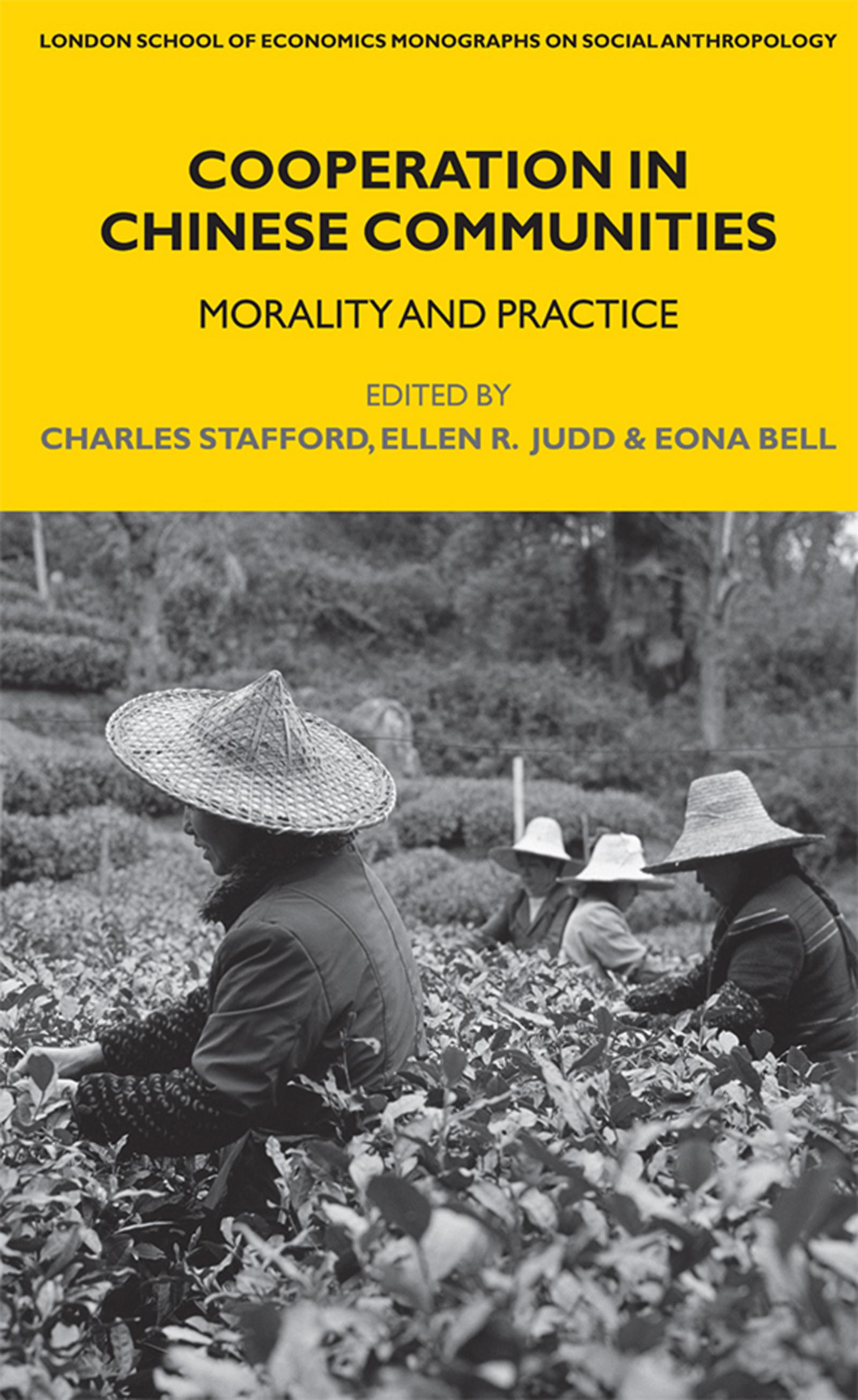
When humans cooperate, what are the social and psychological mechanisms that enable them to do so successfully? Is cooperativeness something natural for humans, built in to our species over the course of evolution, or rather something that depends on cultural learning and social interaction? This book addresses these central questions concerning human nature and the nature of cooperation. The editors present a wide range of vivid anthropological case-studies focused on everyday cooperation in Chinese communities, for example, between children in Nanjing playing a ballgame; parents in Edinburgh organising a community school; villagers in Yunnan dealing with “common pool” resource problems; and families in Kinmen in Taiwan worshipping their dead together. On the one hand, these case studies illustrate some uniquely Chinese cultural factors, such as those related to kinship ideals and institutions that shape the experience and practice of cooperation. They also illustrate, on the other hand, how China’s recent history, not least the rise and fall of collectivism in various forms, continues to shape the experience of cooperation for ordinary people in China today. Finally, they show that in spite of the cultural and historical particularity of Chinese cooperation, it does share some underlying features that would be familiar to people coming from radically different backgrounds.
Zahle einfach mit Karte, Klarna, Apple Pay oder Google Pay. Nicht zufrieden? Du hast immer ein 14-tägiges Widerrufsrecht. Lies mehr in unseren AGB. Hast du Fragen, schreib uns eine E-Mail an hello@memmo.org.
Memmo macht das Lernen einfacher – wo auch immer du bist. Bei uns findest du deine Kursbücher und smarte Lerntools an einem Ort: Zusammenfassungen, Quizzes, Podcasts und Lernkarten. Und Ted, dein Lernbuddy, beantwortet alles, was du wissen möchtest. Über 50.000 Studierende lernen bereits hier – gemacht, damit du schneller lernst und weniger Stress hast.
Das könnte dir auch gefallen
Buch kaufen0