
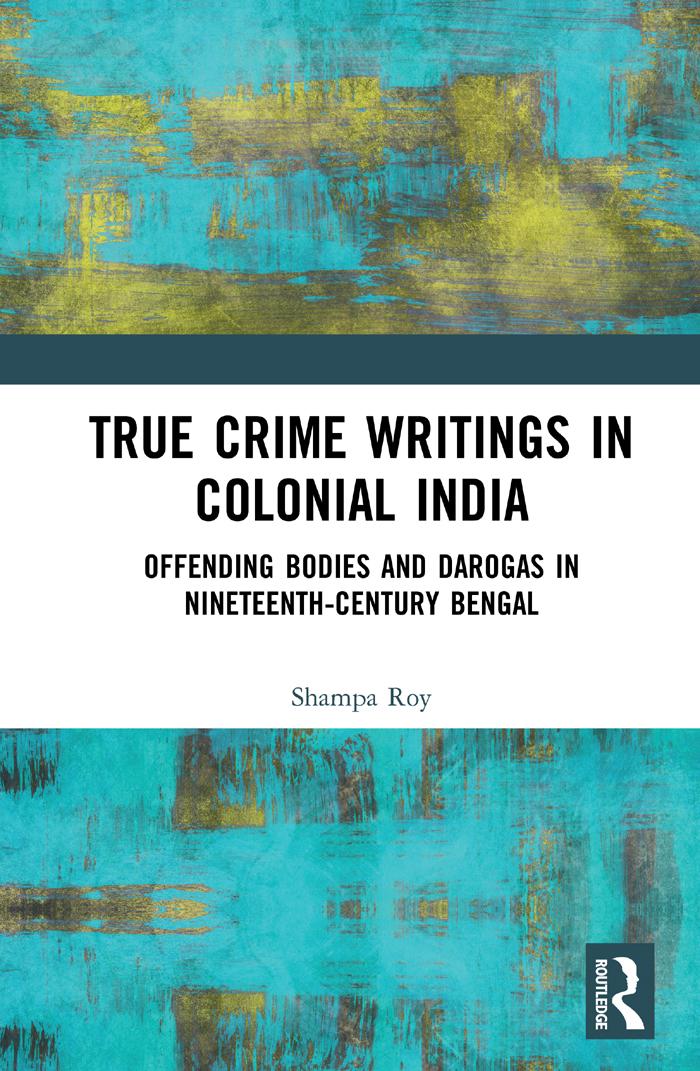
The emergent culture of crime writings in late 19th century colonial Bengal (India) is an interesting testimony to how literature is shaped by various material forces including the market. This book deals with true crime writings of the late 1800s published by ‘lowbrow publishing houses’ — infamous for publishing ‘sensational’ and the ‘vulgar’ literature — which had an avid bhadralok (genteel) readership.
The volume focuses on select translations of true crime writings by Bakaullah and Priyanath Mukhopadhyay who worked as darogas (Detective Inspectors) in the police department in mid-late nineteenth century colonised Bengal. These published accounts of cases investigated by them are among the very first manifestations of the crime genre in India. The writings reflect their understandings of criminality and guilt, as well as negotiations with colonial law and policing. Further, through a selection of cases in which women make an appearance either as victims or offenders, (or sometimes as both,) this book sheds light on the hidden gendered experiences of the time, often missing in mainstream Bangla literature.
Combining a love for suspense with critical readings of a cultural phenomenon, this book will be of much interest to scholars and researchers of comparative literature, translation studies, gender studies, literary theory, cultural studies, modern history, and lovers of crime fiction from all disciplines.
Zahle einfach mit Karte, Klarna, Apple Pay oder Google Pay. Nicht zufrieden? Du hast immer ein 14-tägiges Widerrufsrecht. Lies mehr in unseren AGB. Hast du Fragen, schreib uns eine E-Mail an hello@memmo.org.
Memmo macht das Lernen einfacher – wo auch immer du bist. Bei uns findest du deine Kursbücher und smarte Lerntools an einem Ort: Zusammenfassungen, Quizzes, Podcasts und Lernkarten. Und Ted, dein Lernbuddy, beantwortet alles, was du wissen möchtest. Über 50.000 Studierende lernen bereits hier – gemacht, damit du schneller lernst und weniger Stress hast.