
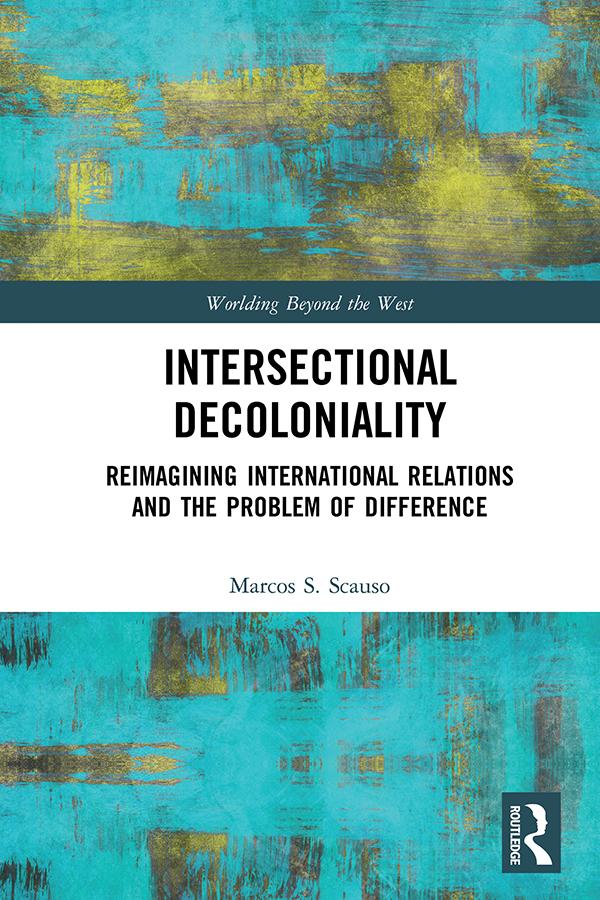
This book assesses diverse ways to think about “others” while also emphasizing the advantages of decolonial intersectionality.
The author analyzes a number of struggles that emerge among Andean indigenous intellectuals, governmental projects, and International Relations scholars from the Global North. From different perspectives, actors propose and promote diverse ways to deal with “others”. By focusing on the epistemic assumptions and the marginalizing effects that emerge from these constructions, the author separates four ways to think about difference, and analyzes their implications. The genealogical journey linking the chapters in this book not only examines the specificities of Bolivian discussions, but also connects this geo-historical focal point with the rest of the world, other positions concerning the problem of difference, and the broader implications of thinking about respect, action, and coexistence. To achieve this goal, the author emphasizes the potential implications of intersectional decoloniality, highlighting its relationship with discussions that engage post-colonial, decolonial, feminist, and interpretivist scholars. He demonstrates the ways in which intersectional decoloniality moves beyond some of the limitations found in other discourses, proposing a reflexive, bottom-up, intersectional, and decolonial possibility of action and ally-ship.
This book is aimed primarily at students, scholars, and educated practitioners of IR, but its engagement with diverse literature, discussions of epistemic politics, and normative implications crosses boundaries of Political Science, Sociology, Gender Studies, Latin American Studies, and Anthropology.
Zahle einfach mit Karte, Klarna, Apple Pay oder Google Pay. Nicht zufrieden? Du hast immer ein 14-tägiges Widerrufsrecht. Lies mehr in unseren AGB. Hast du Fragen, schreib uns eine E-Mail an hello@memmo.org.
Memmo macht das Lernen einfacher – wo auch immer du bist. Bei uns findest du deine Kursbücher und smarte Lerntools an einem Ort: Zusammenfassungen, Quizzes, Podcasts und Lernkarten. Und Ted, dein Lernbuddy, beantwortet alles, was du wissen möchtest. Über 50.000 Studierende lernen bereits hier – gemacht, damit du schneller lernst und weniger Stress hast.