
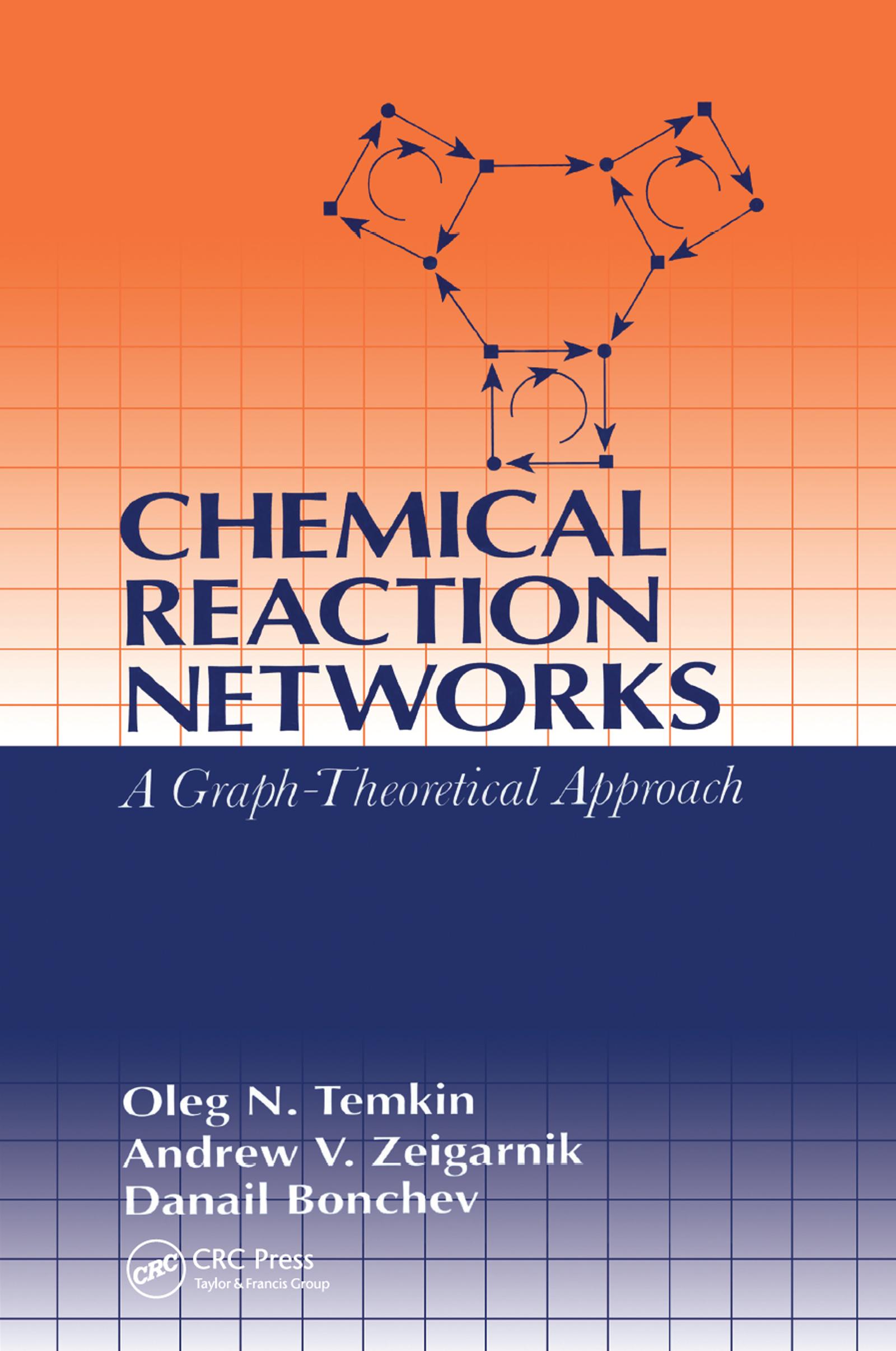
Over the last decade, increased attention to reaction dynamics, combined with the intensive application of computers in chemical studies, mathematical modeling of chemical processes, and mechanistic studies has brought graph theory to the forefront of research. It offers an advanced and powerful formalism for the description of chemical reactions and their intrinsic reaction mechanisms. Chemical Reaction Networks: A Graph-Theoretical Approach elegantly reviews and expands upon graph theory as applied to mechanistic theory, chemical kinetics, and catalysis.
The authors explore various graph-theoretical approaches to canonical representation, numbering, and coding of elementary steps and chemical reaction mechanisms, the analysis of their topological structure, the complexity estimation, and classification of reaction mechanisms. They discuss topologically distinctive features of multiroute catalytic and noncatalytic and chain reactions involving metal complexes.
With it's careful balance of clear language and mathematical rigor, the presentation of the authors' significant original work, and emphasis on practical applications and examples, Chemical Reaction Networks: A Graph Theoretical Approach is both an outstanding reference and valuable tool for chemical research.
Zahle einfach mit Karte, Klarna, Apple Pay oder Google Pay. Nicht zufrieden? Du hast immer ein 14-tägiges Widerrufsrecht. Lies mehr in unseren AGB. Hast du Fragen, schreib uns eine E-Mail an hello@memmo.org.
Memmo macht das Lernen einfacher – wo auch immer du bist. Bei uns findest du deine Kursbücher und smarte Lerntools an einem Ort: Zusammenfassungen, Quizzes, Podcasts und Lernkarten. Und Ted, dein Lernbuddy, beantwortet alles, was du wissen möchtest. Über 50.000 Studierende lernen bereits hier – gemacht, damit du schneller lernst und weniger Stress hast.
Das könnte dir auch gefallen
Buch kaufen0