
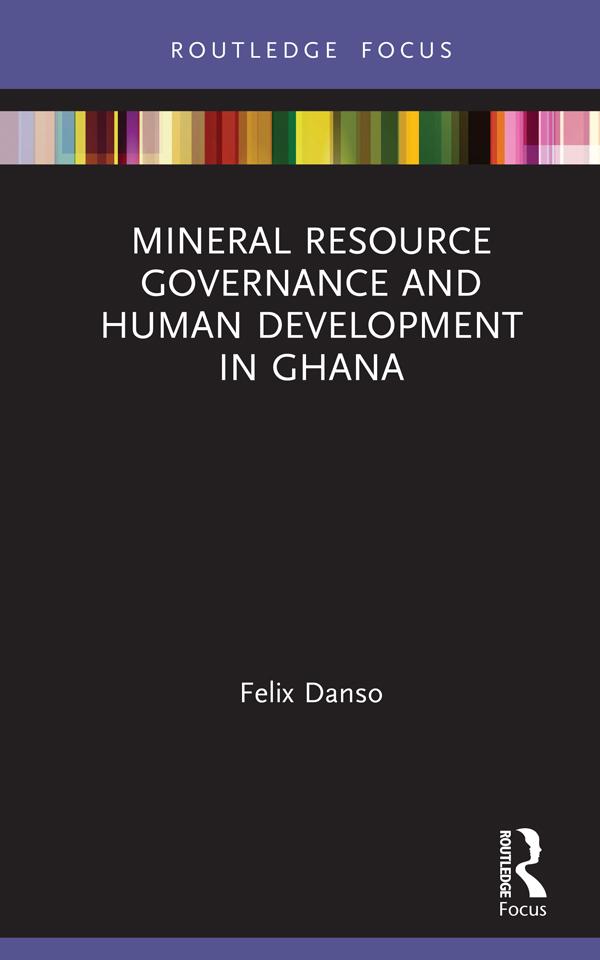
This book investigates how mineral resources can be governed to promote people-centred development in Ghana, focusing on the three main human development variables: living standards, education and health.
Ghana is endowed with abundant mineral resources. The mineral sector accounts for about 14% of total tax revenue, driven mostly by an increase in export earnings from the gold sector and the commencement of crude oil exports. However, the country has not yet been able to use its natural resources to promote human development, and the majority of the population still lives on less than $2 a day. This book argues for a paradigm shift in the discussion of mineral resources, one that looks to govern natural resources in such a way as to improve standards of living, health, education, income levels, empowerment, quality of work and threats from violence. The human-centred mineral resource governance approach developed by this book will not only be useful to Ghana, but can also be applied to other mineral-rich countries in sub-Saharan Africa.
This book will be important to upper-level students and researchers of natural resource management, international development and African studies, as well as to NGOs, practitioners and policymakers who recognise the importance of linking natural resources income to human development.
Zahle einfach mit Karte, Klarna, Apple Pay oder Google Pay. Nicht zufrieden? Du hast immer ein 14-tägiges Widerrufsrecht. Lies mehr in unseren AGB. Hast du Fragen, schreib uns eine E-Mail an hello@memmo.org.
Memmo macht das Lernen einfacher – wo auch immer du bist. Bei uns findest du deine Kursbücher und smarte Lerntools an einem Ort: Zusammenfassungen, Quizzes, Podcasts und Lernkarten. Und Ted, dein Lernbuddy, beantwortet alles, was du wissen möchtest. Über 50.000 Studierende lernen bereits hier – gemacht, damit du schneller lernst und weniger Stress hast.