
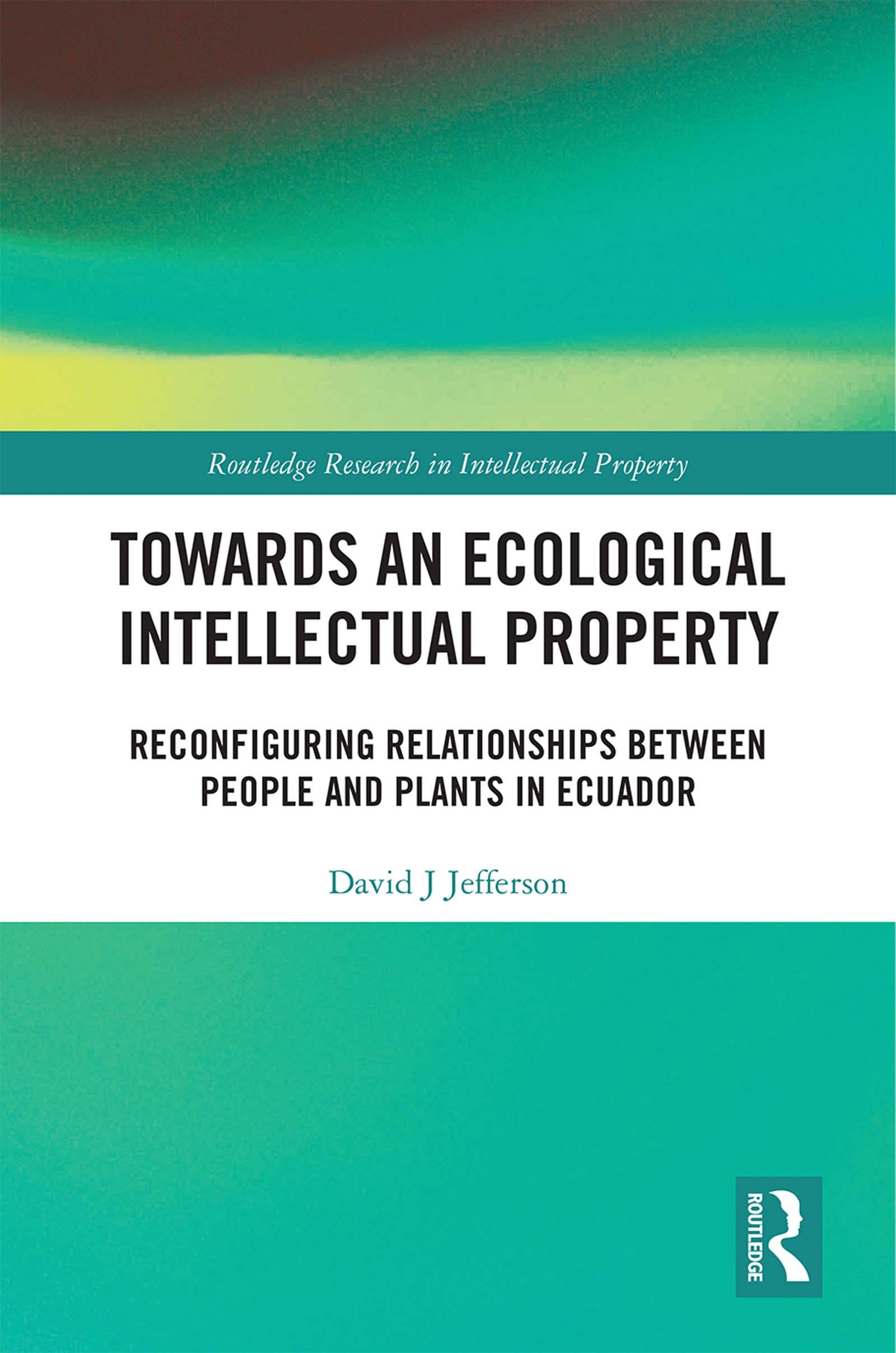
This book focuses on analysing how legal systems set the terms for interactions between human beings and plants.
The story that the book recounts is one of experimental lawmaking in Ecuador, a country where over the past decade, governmental officials and civil society advocates have attempted to reconfigure how human individuals and institutions relate to nature, by following an "eco-centric" approach to lawmaking. In doing so, Ecuadorian legislators, administrators, and judges have taken seriously the ontologies of non-human entities, including plants, through a process that has required the continuous navigation of tensions with certain "logics" that pervade conventional legal regimes. The book endeavours to disrupt these conventional assumptions and approaches to lawmaking by taking seriously alternative strategies to reconstitute interactions between people and plants. In doing so, the book argues in favour of an "ecological turn" in laws that govern vegetal life. The analysis is based on a close examination of the experiences that lawmakers in Ecuador have had when experimenting with innovative approaches to re-form relationships between human and non-human beings. Concretely, these experiments have yielded constitutional, legislative, and regulatory changes that inform the inquiry of how intellectual property and plant genetic resources laws – both in Ecuador and worldwide – could become more "ecological" in nature.
The argument that the book develops is based on extensive ethnographic fieldwork and empirical research in Ecuador, complemented by archival and doctrinal legal analysis. The contents of the book will be of interest to an academic audience of legal scholars and postgraduate students in law, in addition to scholars and students in the fields of anthropology, sociology, socio-legal studies, and science and technology studies.
Zahle einfach mit Karte, Klarna, Apple Pay oder Google Pay. Nicht zufrieden? Du hast immer ein 14-tägiges Widerrufsrecht. Lies mehr in unseren AGB. Hast du Fragen, schreib uns eine E-Mail an hello@memmo.org.
Memmo macht das Lernen einfacher – wo auch immer du bist. Bei uns findest du deine Kursbücher und smarte Lerntools an einem Ort: Zusammenfassungen, Quizzes, Podcasts und Lernkarten. Und Ted, dein Lernbuddy, beantwortet alles, was du wissen möchtest. Über 50.000 Studierende lernen bereits hier – gemacht, damit du schneller lernst und weniger Stress hast.