
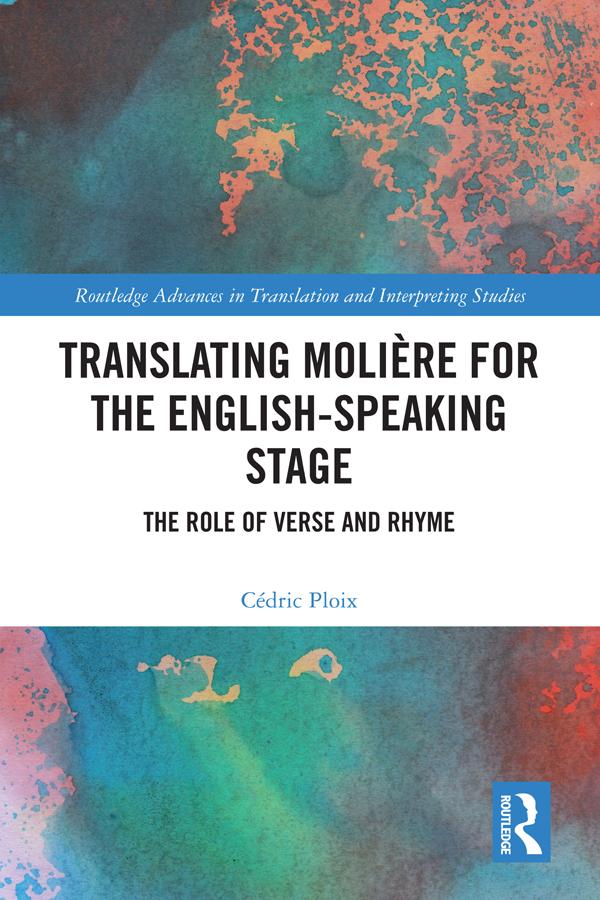
This book critically analyzes the body of English language translations Moliere’s work for the stage, demonstrating the importance of rhyme and verse forms, the creative work of the translator, and the changing relationship with source texts in these translations and their reception. The volume questions prevailing notions about Moliere’s legacy on the stage and the prevalence of comedy in his works, pointing to the high volume of English language translations for the stage of his work that have emerged since the 1950s. Adopting a computer-aided method of analysis, Ploix illustrates the role prosody plays in verse translation for the stage more broadly, highlighting the implementation of self-consciously comic rhyme and conspicuous verse forms in translations of Moliere’s work by way of example. The book also addresses the question of the interplay between translation and source text in these works and the influence of the stage in overcoming formal infelicities in verse systems that may arise from the process of translation. In so doing, Ploix considers translations as texts in and of themselves in these works and the translator as a more visible, creative agent in shaping the voice of these texts independent of the source material, paving the way for similar methods of analysis to be applied to other canonical playwrights’ work. The book will be of particular interest to students and scholars in translation studies, adaptation studies, and theatre studies
Zahle einfach mit Karte, Klarna, Apple Pay oder Google Pay. Nicht zufrieden? Du hast immer ein 14-tägiges Widerrufsrecht. Lies mehr in unseren AGB. Hast du Fragen, schreib uns eine E-Mail an hello@memmo.org.
Memmo macht das Lernen einfacher – wo auch immer du bist. Bei uns findest du deine Kursbücher und smarte Lerntools an einem Ort: Zusammenfassungen, Quizzes, Podcasts und Lernkarten. Und Ted, dein Lernbuddy, beantwortet alles, was du wissen möchtest. Über 50.000 Studierende lernen bereits hier – gemacht, damit du schneller lernst und weniger Stress hast.