
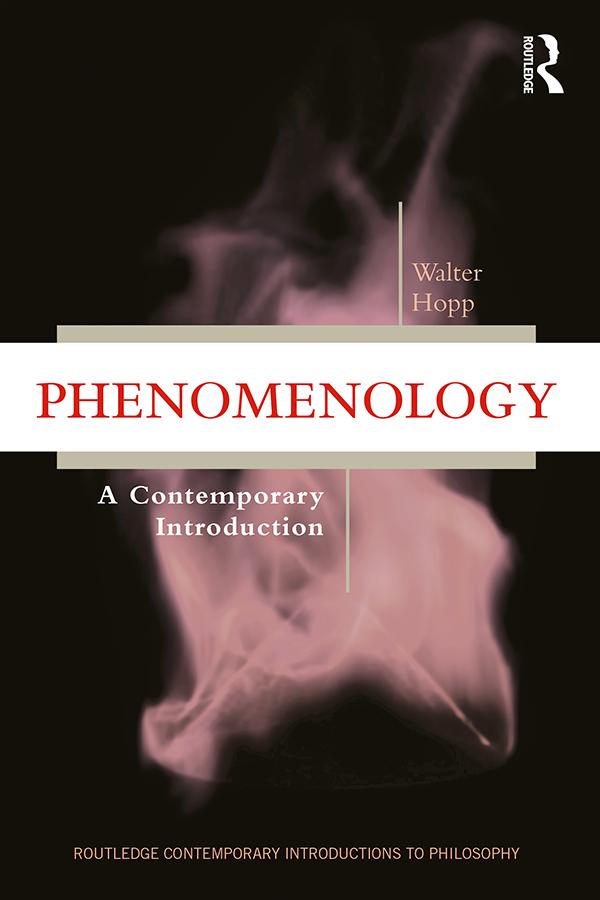
The central task of phenomenology is to investigate the nature of consciousness and its relations to objects of various types. The present book introduces students and other readers to several foundational topics of phenomenological inquiry, and illustrates phenomenology’s contemporary relevance. The main topics include consciousness, intentionality, perception, meaning, and knowledge. The book also contains critical assessments of Edmund Husserl’s phenomenological method. It argues that knowledge is the most fundamental mode of consciousness, and that the central theses constitutive of Husserl’s "transcendental idealism" are compatible with metaphysical realism regarding the objects of thought, perception, and knowledge.
Helpful tools include introductions that help the reader segue from the previous chapter to the new one, chapter conclusions, and suggested reading lists of primary and some key secondary sources.
Key Features:
- Elucidates and engages with contemporary work in analytic epistemology and philosophy of mind
- Provides clear prose explanations of the necessary distinctions and arguments required for understanding the subject
- Places knowledge at the center of phenomenological inquiry
Zahle einfach mit Karte, Klarna, Apple Pay oder Google Pay. Nicht zufrieden? Du hast immer ein 14-tägiges Widerrufsrecht. Lies mehr in unseren AGB. Hast du Fragen, schreib uns eine E-Mail an hello@memmo.org.
Memmo macht das Lernen einfacher – wo auch immer du bist. Bei uns findest du deine Kursbücher und smarte Lerntools an einem Ort: Zusammenfassungen, Quizzes, Podcasts und Lernkarten. Und Ted, dein Lernbuddy, beantwortet alles, was du wissen möchtest. Über 50.000 Studierende lernen bereits hier – gemacht, damit du schneller lernst und weniger Stress hast.