
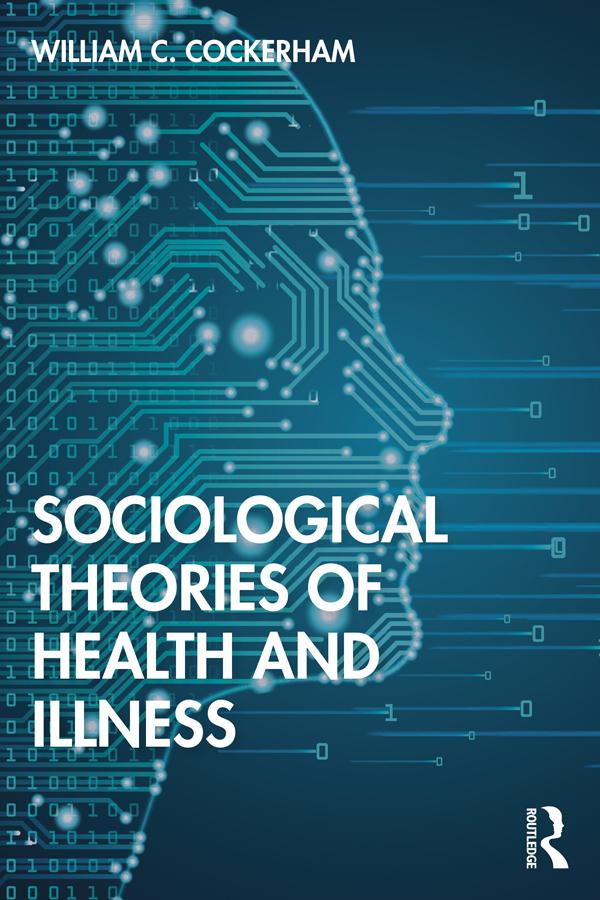
Sociological Theories of Health and Illness reviews the evolution of theory in medical sociology beginning with the field’s origins in medicine and extending to its present-day standing as a major sociological subdiscipline. Sociological theory has an especially important role in the practice of medical sociology because its theories distinguish the subdiscipline from virtually all other scientific fields engaged in the study of health and illness. The focus is on contemporary theory because it applies to contemporary conditions; however, since theory in sociology is often grounded in historical precedents and classical foundations, this material is likewise included as it relates to medical sociology today.
This book focuses on the most commonly used sociological theories in the study of health and illness, illustrating their utility in current examples of empirical research on a wide range of topics. The qualitative or quantitative research methods applicable to specific theories are also covered. Distinctions between macro and micro-level levels of analysis and the relevance of the agency-structure dichotomy inherent in all theories in sociology are discussed. Beginning with classical theory (Durkheim, Weber, and Marx) and the neglected founders (Gilman, Martineau, and DuBois), along with symbolic interaction (Mead, Strauss) and labeling theory (Becker), and poststructuralism and postmodernism (Foucault), coverage is extended to contemporary medical sociology. Discussion of the stress process model (Pearlin) is followed by the social construction of gender and race and intersectionality theory (Collins), health lifestyle theory (Cockerham), life course theory (Elder), fundamental cause theory (Link and Phelan), and theories of the medical profession (Freidson), medicalization and biomedicalization (Conrad, Clarke), and social capital (Bourdieu, Putnam, and Lin).
Zahle einfach mit Karte, Klarna, Apple Pay oder Google Pay. Nicht zufrieden? Du hast immer ein 14-tägiges Widerrufsrecht. Lies mehr in unseren AGB. Hast du Fragen, schreib uns eine E-Mail an hello@memmo.org.
Memmo macht das Lernen einfacher – wo auch immer du bist. Bei uns findest du deine Kursbücher und smarte Lerntools an einem Ort: Zusammenfassungen, Quizzes, Podcasts und Lernkarten. Und Ted, dein Lernbuddy, beantwortet alles, was du wissen möchtest. Über 50.000 Studierende lernen bereits hier – gemacht, damit du schneller lernst und weniger Stress hast.