
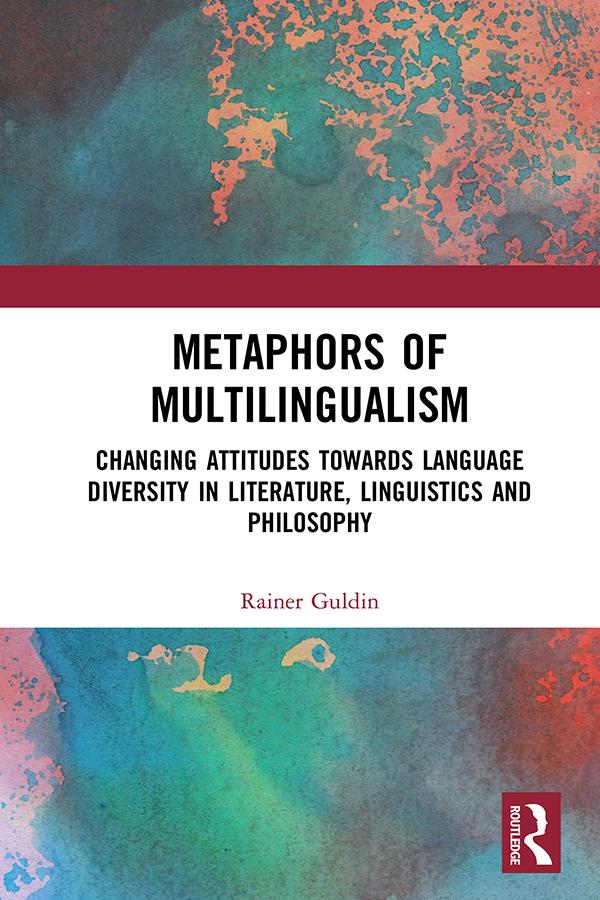
Metaphors of Multilingualism explores changing attitudes towards multilingualism by focusing on shifts both in the choice and in the use of metaphors. Rainer Guldin uses linguistics, philosophy, literature, literary theory and related disciplines to trace the radical redefinition of multilingualism that has taken place over the last decades. This overall change constitutes a paradigmatic shift. However, despite the emergence of the new paradigm, the traditional monolingual point of view is still significantly influencing present-day attitudes towards multilingualism. Consequently, the emergent paradigm has to be studied in close connection with its predecessor.
This book is the first extensive attempt to provide a critical overview of the key metaphors that organize current perceptions of multilingualism. Instead of an exhaustive list of possible metaphors of multilingualism, the emphasis is on three closely interrelated and overlapping clusters that play a central role in both paradigms: organic metaphors of the body, kinship and gender metaphors, as well as spatial metaphors. The examples are taken from different languages, among them French, German, Chinese, Japanese, Spanish and Brazilian Portuguese.
This is ground-breaking reading for scholars and researchers in the fields of linguistics, literature, philosophy, media studies, anthropology, history and cultural studies.
Zahle einfach mit Karte, Klarna, Apple Pay oder Google Pay. Nicht zufrieden? Du hast immer ein 14-tägiges Widerrufsrecht. Lies mehr in unseren AGB. Hast du Fragen, schreib uns eine E-Mail an hello@memmo.org.
Memmo macht das Lernen einfacher – wo auch immer du bist. Bei uns findest du deine Kursbücher und smarte Lerntools an einem Ort: Zusammenfassungen, Quizzes, Podcasts und Lernkarten. Und Ted, dein Lernbuddy, beantwortet alles, was du wissen möchtest. Über 50.000 Studierende lernen bereits hier – gemacht, damit du schneller lernst und weniger Stress hast.