
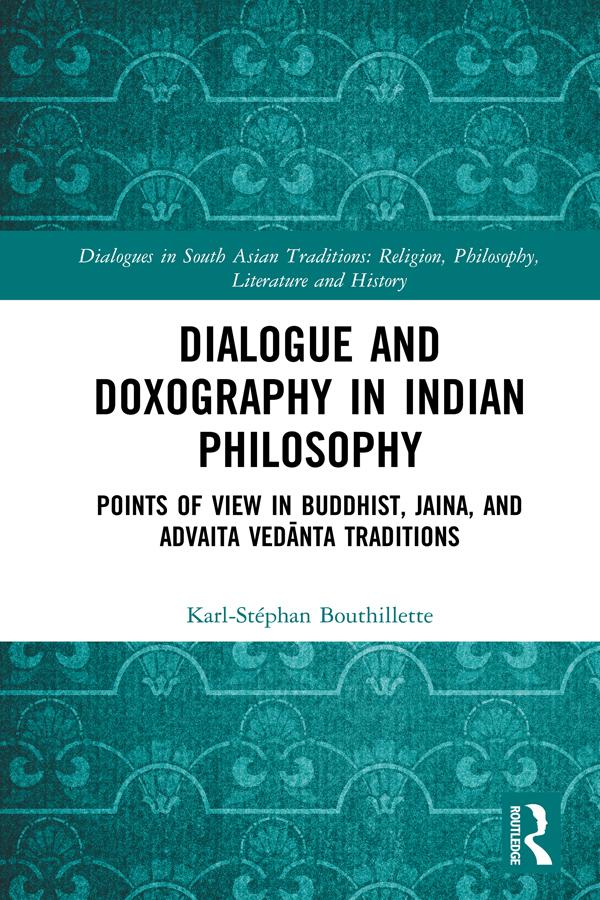
This is the first book fully dedicated to Indian philosophical doxography. It examines the function such dialectical texts were intended to serve in the intellectual and religious life of their public. It looks at Indian doxography both as a witness of inter- and intra-sectarian dialogues and as a religious phenomenon. It argues that doxographies represent dialectical exercises, indicative of a peculiar religious attitude to plurality, and locate these ‘exercises’ within a known form of ‘yoga’ dedicated to the cultivation of ‘knowledge’ or ‘gnosis’ (jñāna).
Concretely, the book presents a critical examination of three Sanskrit doxographies: the Madhyamakahṛdayakārikā of the Buddhist Bhāviveka, the Ṣaḍdarśanasamuccaya of the Jain Haribhadra, and the Sarvasiddhāntasaṅgraha attributed to the Advaitin Śaṅkara, focusing on each of their respective presentation of the Mīmāṃsā view.
It is the first time that the genre of doxography is considered beyond its literary format to ponder its performative dimension, as a spiritual exercise. Theoretically broad, the book reaches out to academics in religious studies, Indian philosophy, Indology, and classical studies.
Zahle einfach mit Karte, Klarna, Apple Pay oder Google Pay. Nicht zufrieden? Du hast immer ein 14-tägiges Widerrufsrecht. Lies mehr in unseren AGB. Hast du Fragen, schreib uns eine E-Mail an hello@memmo.org.
Memmo macht das Lernen einfacher – wo auch immer du bist. Bei uns findest du deine Kursbücher und smarte Lerntools an einem Ort: Zusammenfassungen, Quizzes, Podcasts und Lernkarten. Und Ted, dein Lernbuddy, beantwortet alles, was du wissen möchtest. Über 50.000 Studierende lernen bereits hier – gemacht, damit du schneller lernst und weniger Stress hast.