
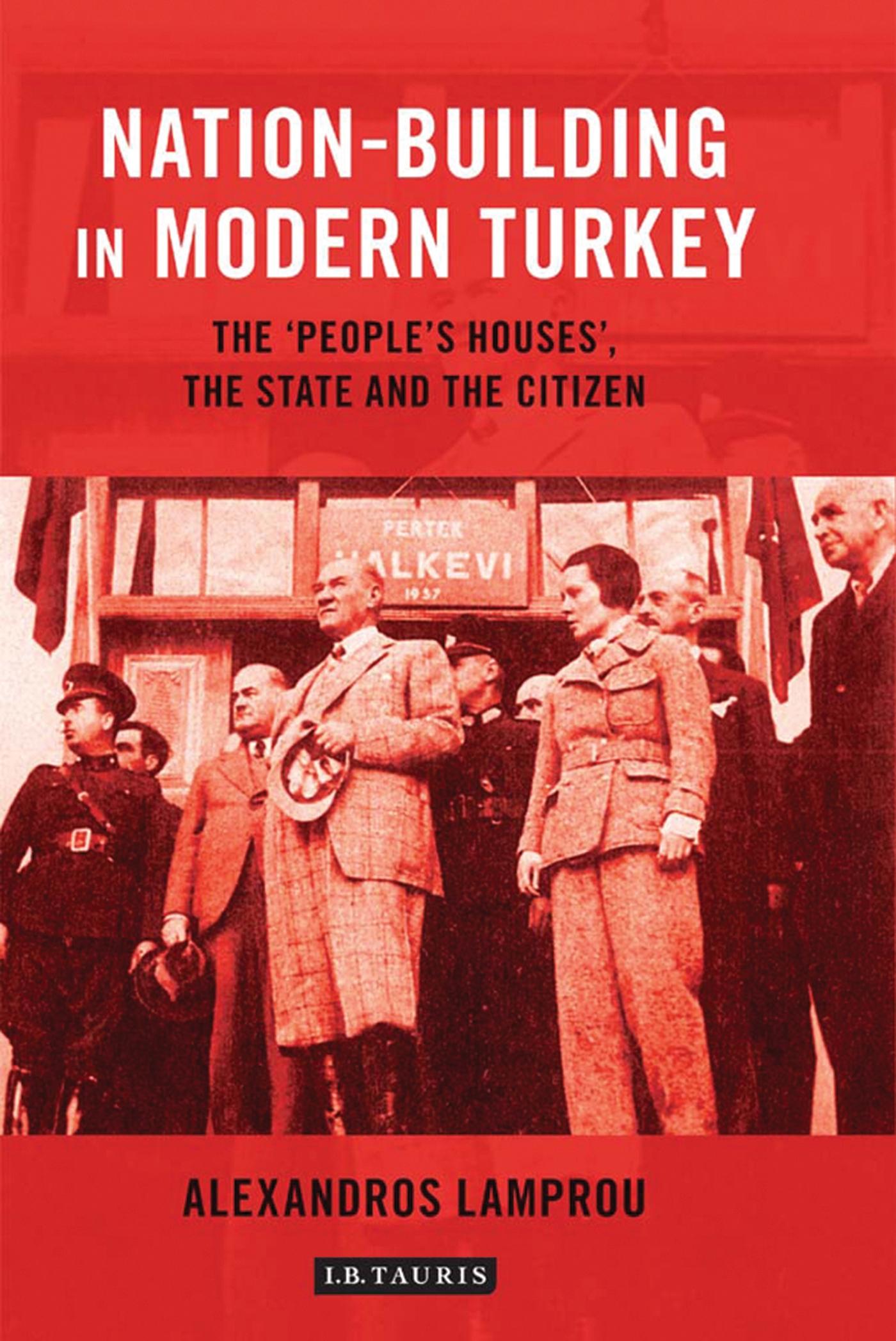
From 1924 to 1946 the Republic of Turkey was in effect ruled as an authoritarian single-party regime. During these years the state embarked upon an extensive reform programme of modernization and nation-building. The Kemalist reform movement has been extensively studied in its institutional dimensions as a state project of top-down reform; however, Nation-Building in Modern Turkey offers a fresh look at these formative years of the Turkish state. It studies modernist nation-building and state-society relations from a novel perspective through the study of the People's House, an institution aiming at the propagation of the modernist reforms to Turkey's urban population in the 1930s and 1940s.
Using previously unpublished archival material and provincial publications, this work offers an alternative understanding of social change and state-society relations. In shifting the focus from the state as the fulcrum of change to the population's participation in the process, this book offers a 'peripheral' perspective of social change as it fashions a view from provincial towns. Focusing on everyday people, it explores their participation in and experience of the new habits and mixed-gender socialization practices the modernist state was introducing in the People's Houses, such as theatre, concerts, sports, dancing balls and village excursions. By analysing hundreds of petitions and complaint letters from the provinces, Alexandros Lamprou is able to examine the multiple ways ordinary people experienced, negotiated and resisted the reforms and to consider the ramifi cations of this process for the shaping of social and collective identities.
Nation-Building in Modern Turkey will be essential reading for not only students and scholars of nation-building, socio-cultural change and state society-relations in Turkey, but also of the history, sociology, political science and anthropology of Turkey and the modern Middle East.
Using previously unpublished archival material and provincial publications, this work offers an alternative understanding of social change and state-society relations. In shifting the focus from the state as the fulcrum of change to the population's participation in the process, this book offers a 'peripheral' perspective of social change as it fashions a view from provincial towns. Focusing on everyday people, it explores their participation in and experience of the new habits and mixed-gender socialization practices the modernist state was introducing in the People's Houses, such as theatre, concerts, sports, dancing balls and village excursions. By analysing hundreds of petitions and complaint letters from the provinces, Alexandros Lamprou is able to examine the multiple ways ordinary people experienced, negotiated and resisted the reforms and to consider the ramifi cations of this process for the shaping of social and collective identities.
Nation-Building in Modern Turkey will be essential reading for not only students and scholars of nation-building, socio-cultural change and state society-relations in Turkey, but also of the history, sociology, political science and anthropology of Turkey and the modern Middle East.
Zahle einfach mit Karte, Klarna, Apple Pay oder Google Pay. Nicht zufrieden? Du hast immer ein 14-tägiges Widerrufsrecht. Lies mehr in unseren AGB. Hast du Fragen, schreib uns eine E-Mail an hello@memmo.org.
Memmo macht das Lernen einfacher – wo auch immer du bist. Bei uns findest du deine Kursbücher und smarte Lerntools an einem Ort: Zusammenfassungen, Quizzes, Podcasts und Lernkarten. Und Ted, dein Lernbuddy, beantwortet alles, was du wissen möchtest. Über 50.000 Studierende lernen bereits hier – gemacht, damit du schneller lernst und weniger Stress hast.