
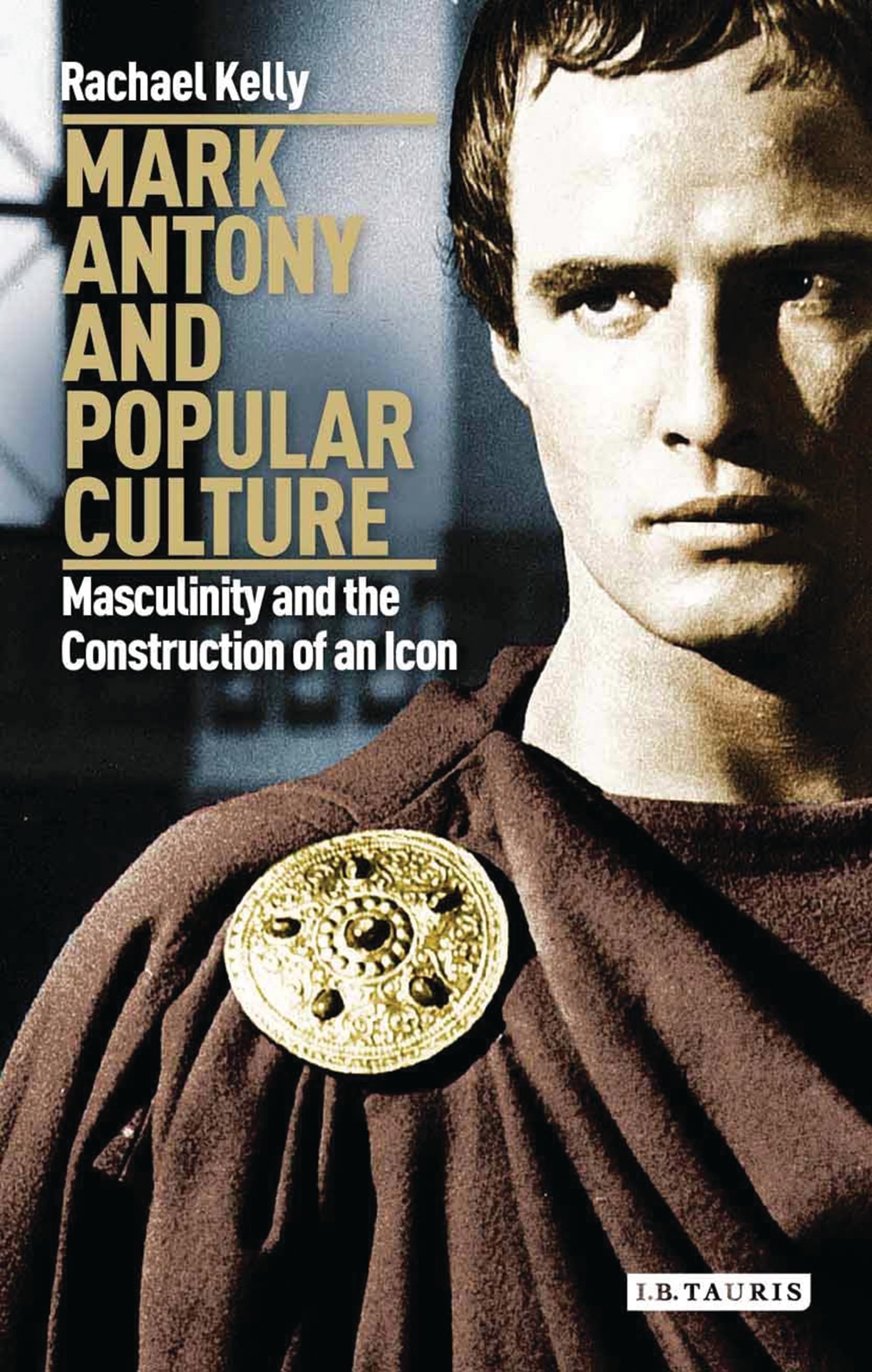
Shakespeare called him "Th' abstract of all faults / That all men follow". For Plutarch he was a bon vivant whose excessive appetites and poor judgement overwhelmed his potential for greatness. History remembers him as the man who threw away an empire for love: an imperfect romantic hero, dashing but decadent, whose tragic narrative is conveniently contained by his death by suicide in Cleopatra's arms. Stemming from hostile Roman propaganda in the years leading up to his death, Mark Antony is generally presented in popular culture as a deeply flawed character, subject to emotional and physical excesses that are understood in gendered terms as defective, feminised masculinity. His notoriety for drunkenness, debauchery, decadence and profligacy have survived and flourished in contemporary screen representations. But who was Mark Antony? Was he Richard Burton's Byronic dilettante, the brooding soldier who allows his love for Cleopatra to dictate his political policy? Was he James Purefoy's amoral, impulsive bully-boy, loyal to no-one but himself and dedicated to the relentless pursuit of bodily gratification? Both - or neither?
In this fascinating account of a classical figure and his reception in popular culture, Rachael Kelly traces the Mark Antony myth in Hollywood historical epic film and television and examines the complex discourses of hegemonic masculinity that have shaped it. Certain tropes occur time and again in constructing Mark Antony for the screen, nurtured by the strong influence of Roman gendered social mores on Western society. Kelly exposes and examines these tropes in order to look at how and why Mark Antony as pop culture icon differs so substantially and specifically from the actual historical figure Marcus Antonius - once the most powerful man in the Roman world, and the man who nearly led the Republic into empire.
In this fascinating account of a classical figure and his reception in popular culture, Rachael Kelly traces the Mark Antony myth in Hollywood historical epic film and television and examines the complex discourses of hegemonic masculinity that have shaped it. Certain tropes occur time and again in constructing Mark Antony for the screen, nurtured by the strong influence of Roman gendered social mores on Western society. Kelly exposes and examines these tropes in order to look at how and why Mark Antony as pop culture icon differs so substantially and specifically from the actual historical figure Marcus Antonius - once the most powerful man in the Roman world, and the man who nearly led the Republic into empire.
Zahle einfach mit Karte, Klarna, Apple Pay oder Google Pay. Nicht zufrieden? Du hast immer ein 14-tägiges Widerrufsrecht. Lies mehr in unseren AGB. Hast du Fragen, schreib uns eine E-Mail an hello@memmo.org.
Memmo macht das Lernen einfacher – wo auch immer du bist. Bei uns findest du deine Kursbücher und smarte Lerntools an einem Ort: Zusammenfassungen, Quizzes, Podcasts und Lernkarten. Und Ted, dein Lernbuddy, beantwortet alles, was du wissen möchtest. Über 50.000 Studierende lernen bereits hier – gemacht, damit du schneller lernst und weniger Stress hast.