
I.B.Tauris in association with the Institute of Ismaili Studies
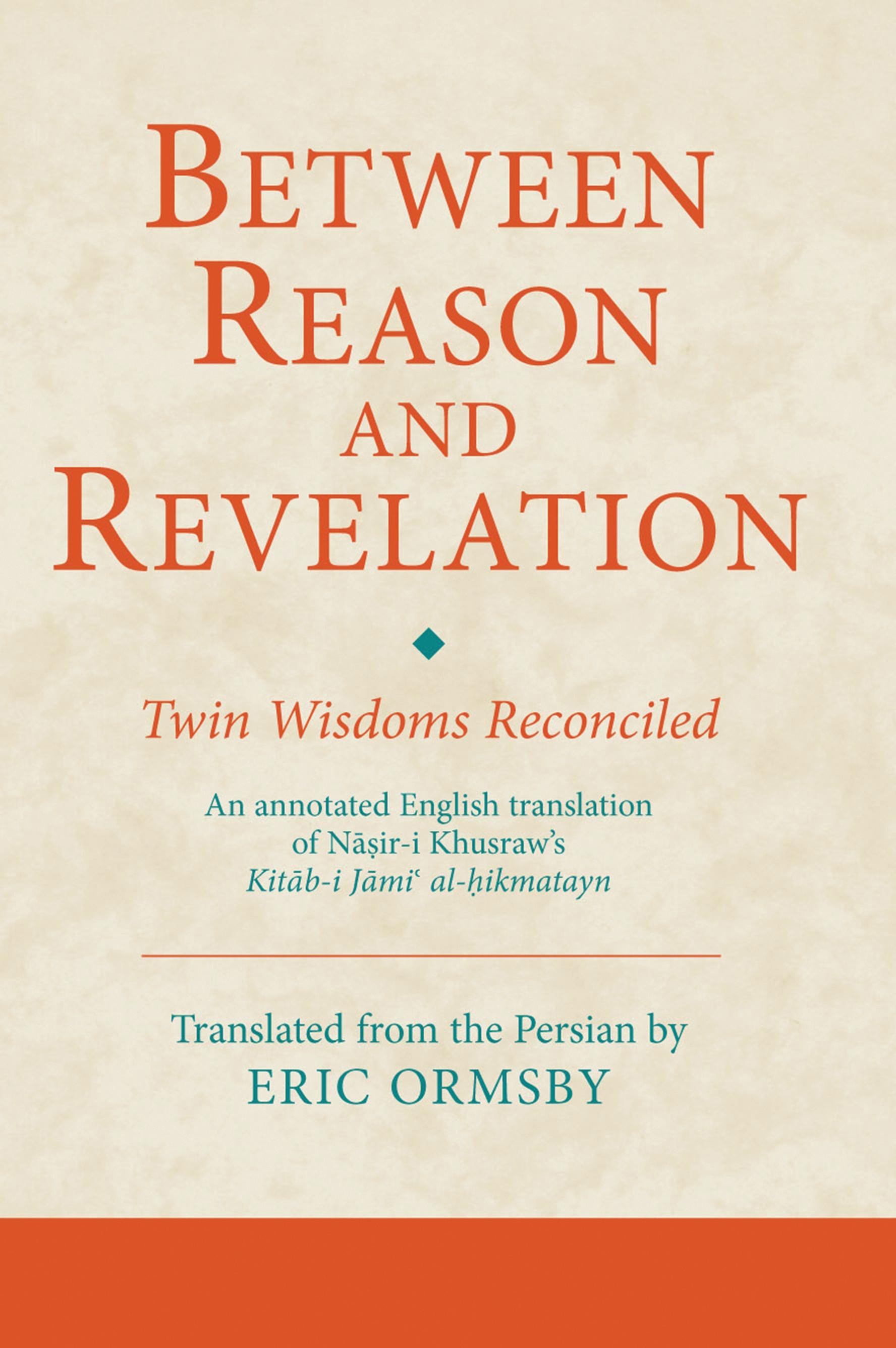
This is the first English translation of the final philosophical work of the great eleventh-century Ismaili thinker, poet, and Fatimid emissary, N?sir-i Khusraw. Appointed from Cairo by command of the Fatimid Imam-caliph al-Mustansir to serve first as a d?'?, and then as the hujjat, for the entire region of Khur?s?n, he maintained his allegiance both to his mission and his Imam-caliph for the rest of his life, even when threatened and driven into exile. Written
during his exile in Badakhsh?n in the year 1070, N?sir-i Khusraw here develops a powerful presentation of both Aristotelian philosophy and Ismaili exegesis, or ta'w?l, and strives to show that they are ultimately in harmony. The work is presented as a learned commentary on a long philosophical poem, written in the previous century and sent to N?sir by the am?r of Badakhsh?n, 'Al? b. al-Asad, who copied the poem out in his own hand from memory and asked the poet-philosopher to explicate it. In doing so, N?sir ranges over a huge span of topics from logic and language to the nature of the physical world, from the spheres of the highest heavens to the plants and animals of the earthly realm, and, most importantly, hidden spiritual realities: the esoteric (b?tin) as well as the exoteric (z?hir) realms. He thus discusses the nature of God, the creation of human beings, and the mysteries concealed in the physical world, itself a reflection of a higher, transcendent realm.
Between Reason and Revelation: Twin Wisdoms Reconciled is an annotated translation of the Persian text prepared by Henry Corbin and Mohammed Mu'?n based on the single surviving manuscript of the work, now in the Süleymaniye Mosque Library in Istanbul. It is a work of great philosophical and spiritual insight, which is also a pioneering attempt to tackle difficult
intellectual problems in the Persian language; it is at once lucid and lyrical, precise and speculative. N?sir's influence has been immense as both a poet and a thinker, and the Kit?b-i J?mi' al-hikmatayn is his crowning work.
This is the first English translation of the final philosophical work of the great eleventh-century Ismaili thinker, poet, and Fatimid emissary, N?sir-i Khusraw. Appointed from Cairo by command of the Fatimid Imam-caliph al-Mustansir to serve first as a d?'?, and then as the hujjat, for the entire region of Khur?s?n, he maintained his allegiance both to his mission and his Imam-caliph for the rest of his life, even when threatened and driven into exile. Written
during his exile in Badakhsh?n in the year 1070, N?sir-i Khusraw here develops a powerful presentation of both Aristotelian philosophy and Ismaili exegesis, or ta'w?l, and strives to show that they are ultimately in harmony. The work is presented as a learned commentary on a long philosophical poem, written in the previous century and sent to N?sir by the am?r of Badakhsh?n, 'Al? b. al-Asad, who copied the poem out in his own hand from memory and asked the poet-philosopher to explicate it. In doing so, N?sir ranges over a huge span of topics from logic and language to the nature of the physical world, from the spheres of the highest heavens to the plants and animals of the earthly realm, and, most importantly, hidden spiritual realities: the esoteric (b?tin) as well as the exoteric (z?hir) realms. He thus discusses the nature of God, the creation of human beings, and the mysteries concealed in the physical world, itself a reflection of a higher, transcendent realm.
Between Reason and Revelation: Twin Wisdoms Reconciled is an annotated translation of the Persian text prepared by Henry Corbin and Mohammed Mu'?n based on the single surviving manuscript of the work, now in the Süleymaniye Mosque Library in Istanbul. It is a work of great philosophical and spiritual insight, which is also a pioneering attempt to tackle difficult
intellectual problems in the Persian language; it is at once lucid and lyrical, precise and speculative. N?sir's influence has been immense as both a poet and a thinker, and the Kit?b-i J?mi' al-hikmatayn is his crowning work.
Zahle einfach mit Karte, Klarna, Apple Pay oder Google Pay. Nicht zufrieden? Du hast immer ein 14-tägiges Widerrufsrecht. Lies mehr in unseren AGB. Hast du Fragen, schreib uns eine E-Mail an hello@memmo.org.
Memmo macht das Lernen einfacher – wo auch immer du bist. Bei uns findest du deine Kursbücher und smarte Lerntools an einem Ort: Zusammenfassungen, Quizzes, Podcasts und Lernkarten. Und Ted, dein Lernbuddy, beantwortet alles, was du wissen möchtest. Über 50.000 Studierende lernen bereits hier – gemacht, damit du schneller lernst und weniger Stress hast.