
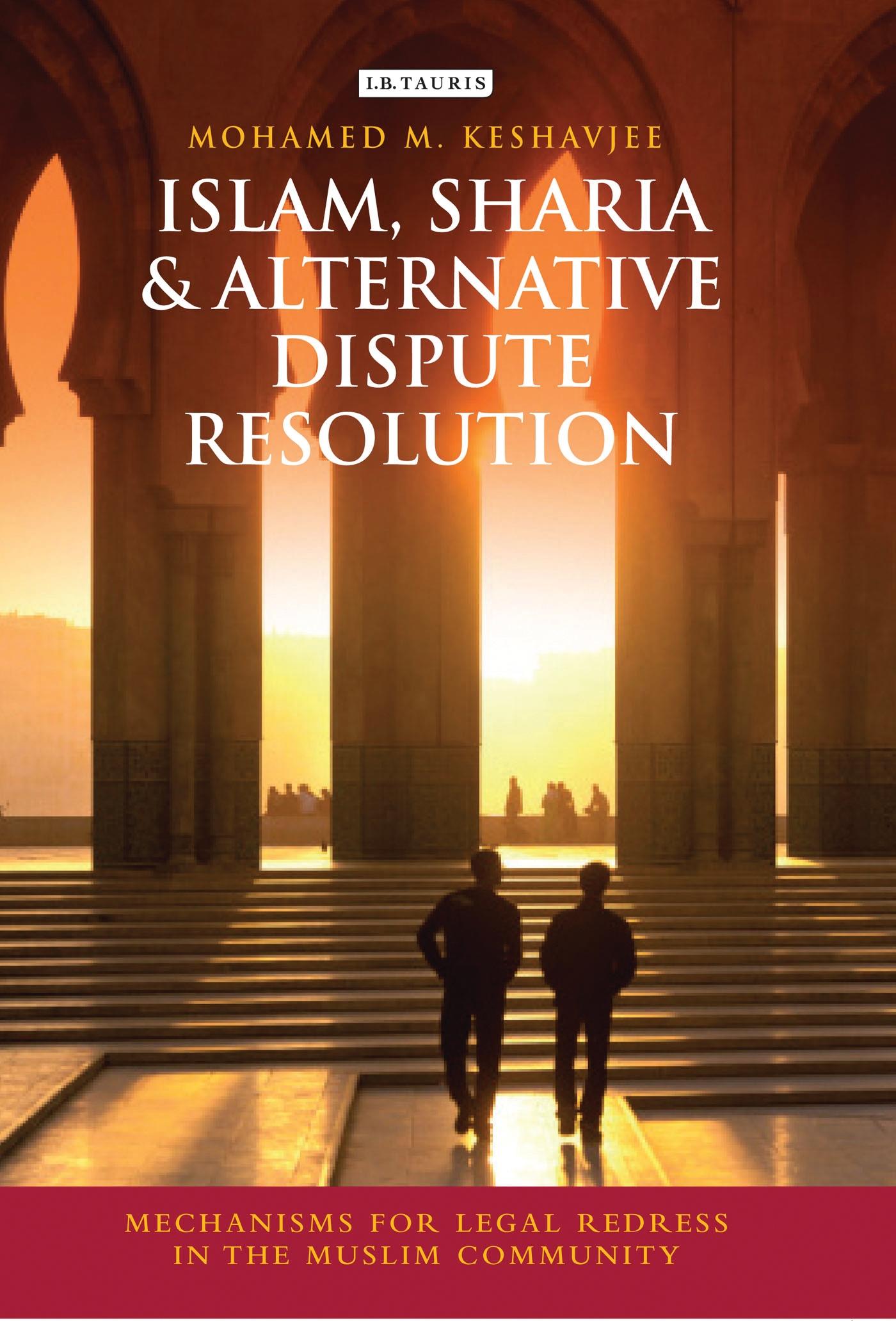
The meanings and contexts of Shari'a are the subject of both curiosity and misunderstanding by non-Muslims. Shari'a is sometimes crudely characterised by outsiders as a punitive legal system operating broadly outside, and separate from, national laws and customs. This groundbreaking book shows that Shari'a and its 'fiqh' (laws set forward by various Islamic legal schools) comprise a far more nuanced matrix of interpretations than is often assumed to be the case. Far from being monolithic or impervious to change from without, Muslim legal tradition has - since its beginnings in the early Islamic period - placed an emphasis on equity and non-adversarial conflict-resolution. Mohamed Keshavjee examines both Sunni and Shi'a applications of Islamic law, demonstrating how political, cultural and other factors have influenced the practice of fiqh and Shari'a in the West. Exploring in particular the modern development of Alternative Dispute Resolution (ADR), the author shows that this process can revitalise some of the essential principles that underlie Muslim teachings and jurispudence, delivering not only formal remedies but also perceived justice, even to non-Muslims.
Zahle einfach mit Karte, Klarna, Apple Pay oder Google Pay. Nicht zufrieden? Du hast immer ein 14-tägiges Widerrufsrecht. Lies mehr in unseren AGB. Hast du Fragen, schreib uns eine E-Mail an hello@memmo.org.
Memmo macht das Lernen einfacher – wo auch immer du bist. Bei uns findest du deine Kursbücher und smarte Lerntools an einem Ort: Zusammenfassungen, Quizzes, Podcasts und Lernkarten. Und Ted, dein Lernbuddy, beantwortet alles, was du wissen möchtest. Über 50.000 Studierende lernen bereits hier – gemacht, damit du schneller lernst und weniger Stress hast.