
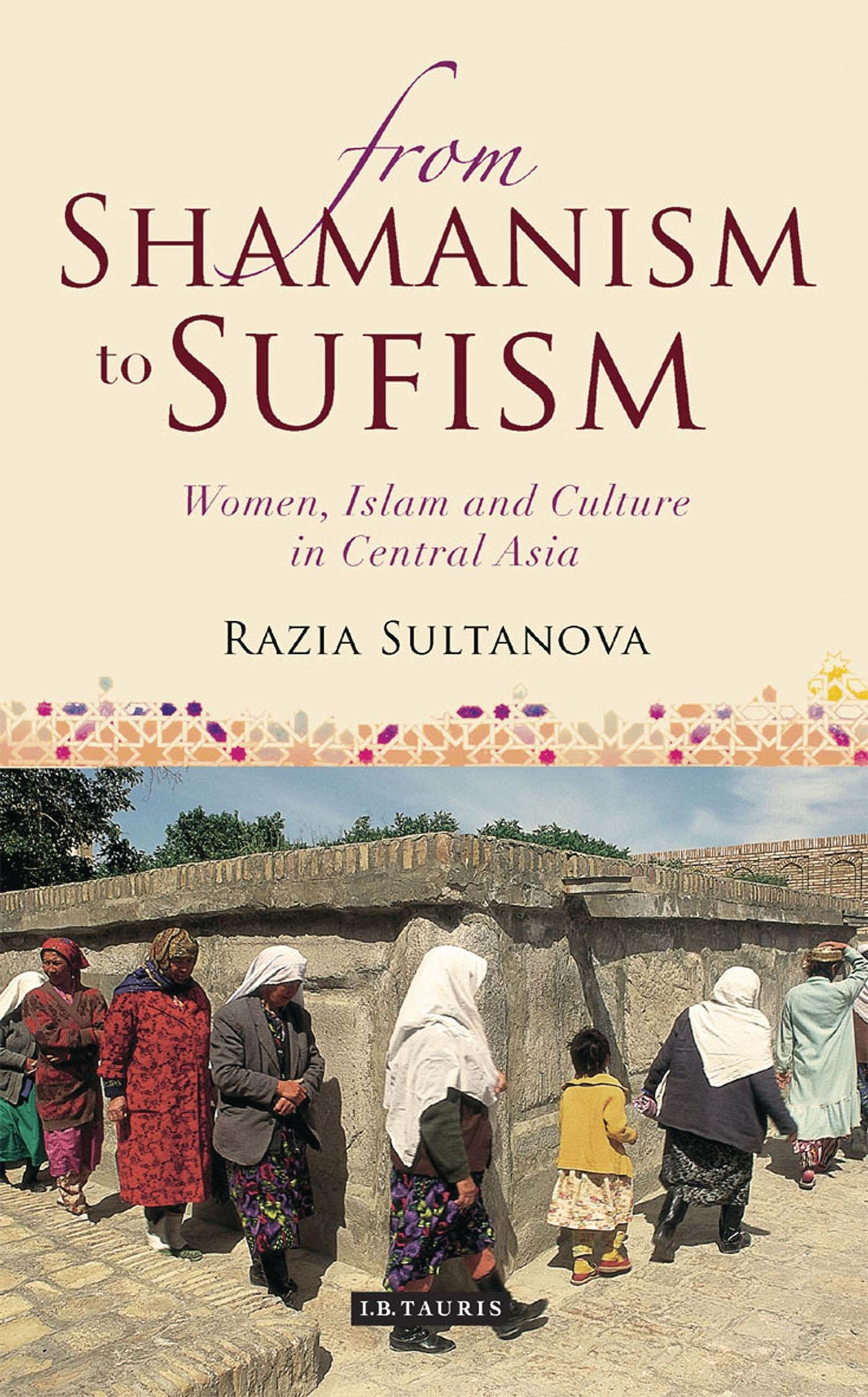
Women have traditionally played a vital part in Islam throughout Central Asia - the vast area from the Caspian Sea to Siberia. With this ground-breaking and original study, Razia Sultanova examines the experiences of Muslim women in the region and the ways in which religion has shaped their daily lives and continues to do so today. 'From Shamanism to Sufism' explores the fundamental interplay between religious belief and the cultural heritage of music and dance and is the first book to focus particularly on the role of women.
Based on evidence derived from over fifteen years of field work, 'From Shamanism to Sufism' shows how women kept alive traditional Islamic religious culture in Central Asia, especially through Shamanism and Sufism, even under Soviet rule when all religion was banned. Nowhere was the role of women more important than in the Ferghana Valley in Uzbekistan, the cradle of female Islamic culture and a centre for women's poetry and music. This area is home to the 'Otin-Oy', a sisterhood of religiously educated women and members of Sufi orders, who take a leading part in rituals, marking the pivotal moments in the Islamic calendar and maintaining religious practices through music and ritual dances. Sultanova shows how the practice of Islam in Uzbekistan has evolved over time: long underground, there was a religious resurgence at independence in 1991, boosting national Uzbek identity and nationalism - 500 new mosques were built - only to be followed by a return to persecution by a repressive state under the banner of the 'war against terror'. Now events have come full circle, and once again covert worship by women remains crucial to the survival of traditional Muslim culture.
Ritual and music are at the heart of Central Asian and Islamic culture, not only at weddings and funerals but in all aspects of everyday life. Through her in-depth analysis of these facets of cultural life within Central Asian society, 'From Shamanism to Sufism' offers important insights into the lives of the societies in the region. The role of women has often been neglected in studies of religious culture and this book fills an enormous gap, restoring women to their rightful historical and cultural context. It will be essential reading for anyone with a serious interest in the History or Religion of Central Asia or in Global Islam..
Based on evidence derived from over fifteen years of field work, 'From Shamanism to Sufism' shows how women kept alive traditional Islamic religious culture in Central Asia, especially through Shamanism and Sufism, even under Soviet rule when all religion was banned. Nowhere was the role of women more important than in the Ferghana Valley in Uzbekistan, the cradle of female Islamic culture and a centre for women's poetry and music. This area is home to the 'Otin-Oy', a sisterhood of religiously educated women and members of Sufi orders, who take a leading part in rituals, marking the pivotal moments in the Islamic calendar and maintaining religious practices through music and ritual dances. Sultanova shows how the practice of Islam in Uzbekistan has evolved over time: long underground, there was a religious resurgence at independence in 1991, boosting national Uzbek identity and nationalism - 500 new mosques were built - only to be followed by a return to persecution by a repressive state under the banner of the 'war against terror'. Now events have come full circle, and once again covert worship by women remains crucial to the survival of traditional Muslim culture.
Ritual and music are at the heart of Central Asian and Islamic culture, not only at weddings and funerals but in all aspects of everyday life. Through her in-depth analysis of these facets of cultural life within Central Asian society, 'From Shamanism to Sufism' offers important insights into the lives of the societies in the region. The role of women has often been neglected in studies of religious culture and this book fills an enormous gap, restoring women to their rightful historical and cultural context. It will be essential reading for anyone with a serious interest in the History or Religion of Central Asia or in Global Islam..
Zahle einfach mit Karte, Klarna, Apple Pay oder Google Pay. Nicht zufrieden? Du hast immer ein 14-tägiges Widerrufsrecht. Lies mehr in unseren AGB. Hast du Fragen, schreib uns eine E-Mail an hello@memmo.org.
Memmo macht das Lernen einfacher – wo auch immer du bist. Bei uns findest du deine Kursbücher und smarte Lerntools an einem Ort: Zusammenfassungen, Quizzes, Podcasts und Lernkarten. Und Ted, dein Lernbuddy, beantwortet alles, was du wissen möchtest. Über 50.000 Studierende lernen bereits hier – gemacht, damit du schneller lernst und weniger Stress hast.