
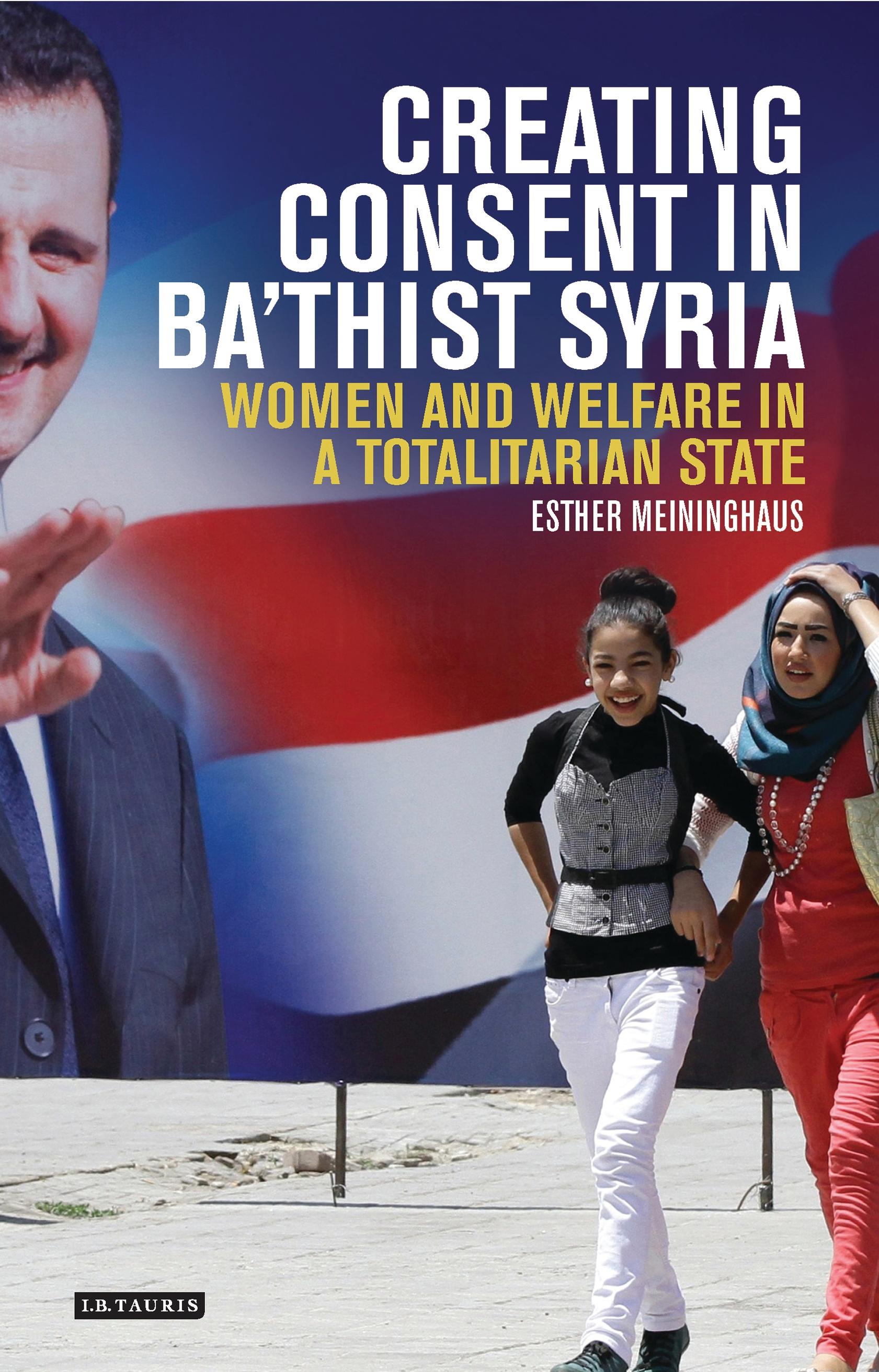
The challenge of maintaining dictatorial regimes through control, co-option and coercion while upholding a facade of legitimacy is something that has concerned leaders throughout the Middle East and beyond. Nowhere is this more evident than in the Syria ruled by the Asads, both Hafiz and his son Bashar. Drawing on the example of the General Union of Syrian Women (founded in 1967), Esther Meininghaus offers new insights into how the Syrian Ba'thist regimes attempted to move beyond mere satisfaction with the compliance of the citizenry and to consolidate their rule amongst the local population. Meininghaus argues that this was partially achieved through providing welfare services delivered by the Union as one of the state-led mass organisations. In this way, she suggests, these regimes did not only aim to undermine opposition and to create the illusion of consent, but they factually catered to local needs and depended on consent. Based on archival material, interviews and statistics, Creating Consent in Ba'thist Syria will shed new light on mass organisations as a crucial institution of Ba'thist state building and, more broadly, the construction of the Asad regimes.
Zahle einfach mit Karte, Klarna, Apple Pay oder Google Pay. Nicht zufrieden? Du hast immer ein 14-tägiges Widerrufsrecht. Lies mehr in unseren AGB. Hast du Fragen, schreib uns eine E-Mail an hello@memmo.org.
Memmo macht das Lernen einfacher – wo auch immer du bist. Bei uns findest du deine Kursbücher und smarte Lerntools an einem Ort: Zusammenfassungen, Quizzes, Podcasts und Lernkarten. Und Ted, dein Lernbuddy, beantwortet alles, was du wissen möchtest. Über 50.000 Studierende lernen bereits hier – gemacht, damit du schneller lernst und weniger Stress hast.