
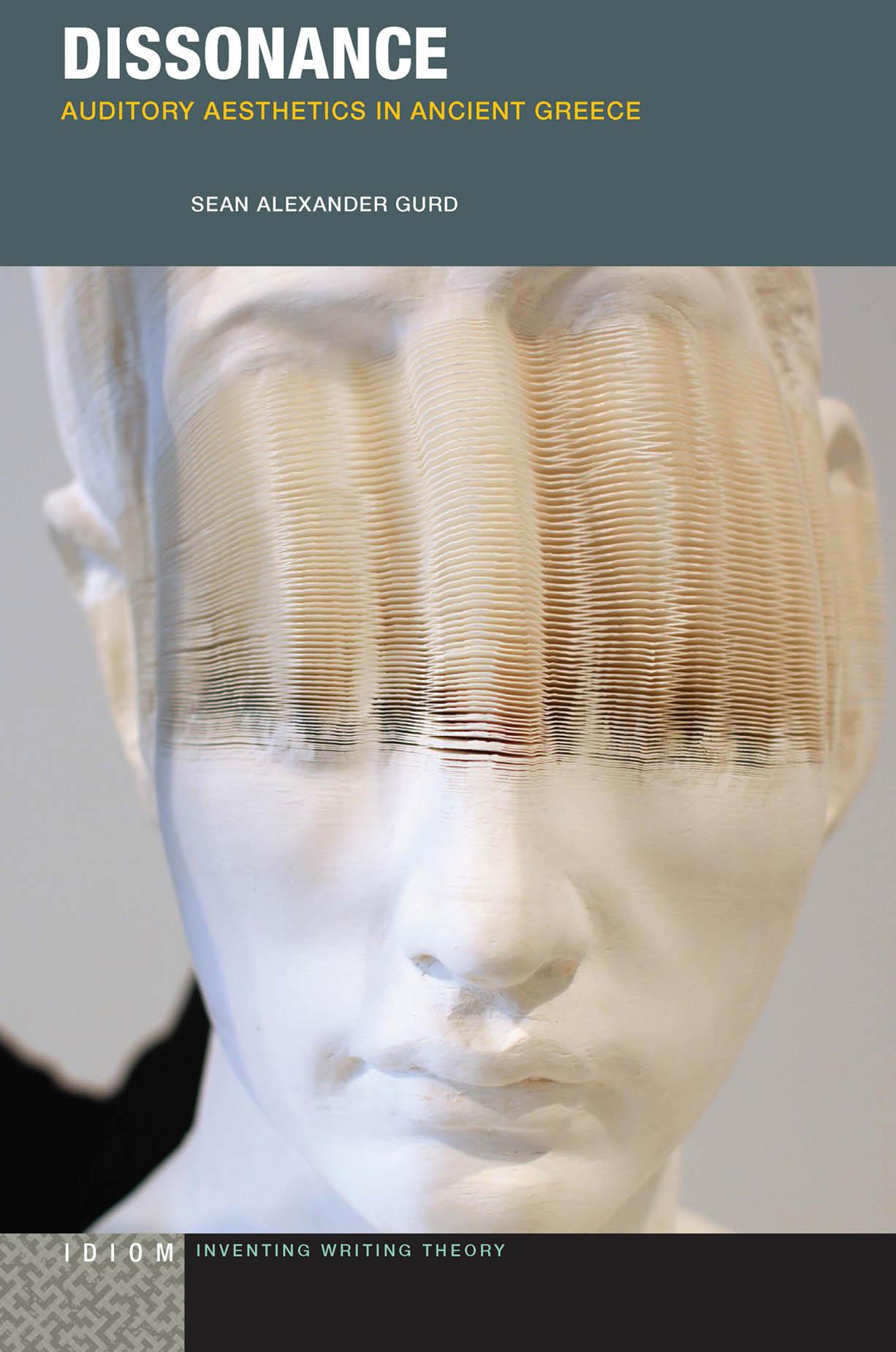
In the four centuries leading up to the death of Euripides, Greek singers, poets, and theorists delved deeply into auditory experience. They charted its capacity to develop topologies distinct from those of the other senses; contemplated its use as a communicator of information; calculated its power to express and cause extreme emotion. They made sound too, artfully and self-consciously creating songs and poems that reveled in sonorousness. Dissonance reveals the commonalities between ancient Greek auditory art and the concerns of contemporary sound studies, avant-garde music, and aesthetics, making the argument that “classical” Greek song and drama were, in fact, an early European avant-garde, a proto-exploration of the aesthetics of noise. The book thus develops an alternative to that romantic ideal which sees antiquity as a frozen and silent world.
Zahle einfach mit Karte, Klarna, Apple Pay oder Google Pay. Nicht zufrieden? Du hast immer ein 14-tägiges Widerrufsrecht. Lies mehr in unseren AGB. Hast du Fragen, schreib uns eine E-Mail an hello@memmo.org.
Memmo macht das Lernen einfacher – wo auch immer du bist. Bei uns findest du deine Kursbücher und smarte Lerntools an einem Ort: Zusammenfassungen, Quizzes, Podcasts und Lernkarten. Und Ted, dein Lernbuddy, beantwortet alles, was du wissen möchtest. Über 50.000 Studierende lernen bereits hier – gemacht, damit du schneller lernst und weniger Stress hast.
Das könnte dir auch gefallen
Buch kaufen0