
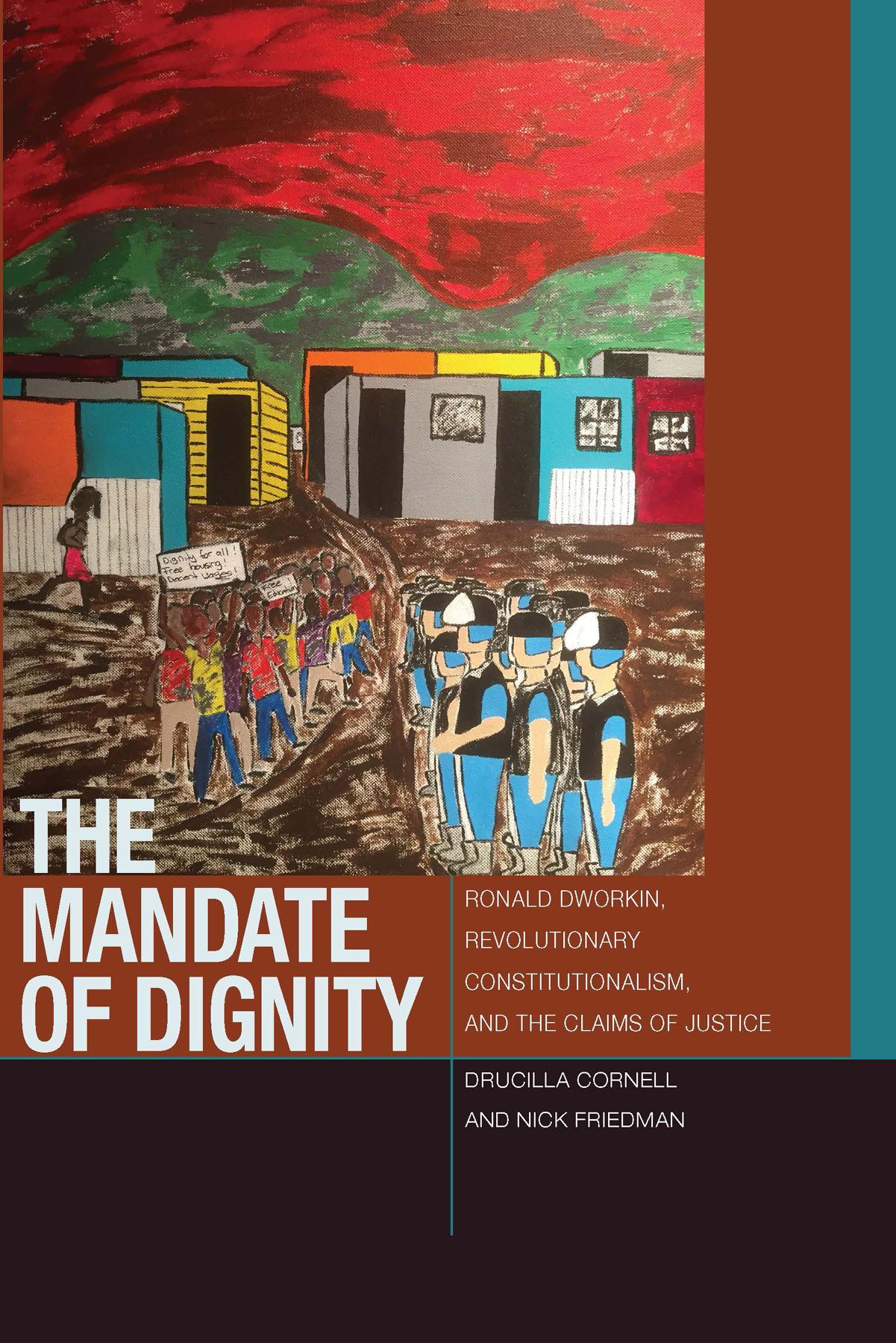
A major American legal thinker, the late Ronald Dworkin also helped shape new dispensations in the Global South. In South Africa, in particular, his work has been fiercely debated in the context of one of the world’s most progressive constitutions. Despite Dworkin’s discomfort with that document’s enshrinement of “socioeconomic rights,” his work enables an important defense of a jurisprudence premised on justice, rather than on legitimacy.
Beginning with a critical overview of Dworkin’s work culminating in his two principles of dignity, Cornell and Friedman turn to Kant and Hegel for an approach better able to ground the principles of dignity Dworkin advocates. Framed thus, Dworkin’s challenge to legal positivism enables a theory of constitutional revolution in which existing legal structures are transformatively revalued according to ethical mandates. By founding law on dignity, Dworkin begins to articulate an ethical jurisprudence responsive to the lived experience of injustice. This book, then, articulates a revolutionary constitutionalism crucial to the struggle for decolonization.
Zahle einfach mit Karte, Klarna, Apple Pay oder Google Pay. Nicht zufrieden? Du hast immer ein 14-tägiges Widerrufsrecht. Lies mehr in unseren AGB. Hast du Fragen, schreib uns eine E-Mail an hello@memmo.org.
Memmo macht das Lernen einfacher – wo auch immer du bist. Bei uns findest du deine Kursbücher und smarte Lerntools an einem Ort: Zusammenfassungen, Quizzes, Podcasts und Lernkarten. Und Ted, dein Lernbuddy, beantwortet alles, was du wissen möchtest. Über 50.000 Studierende lernen bereits hier – gemacht, damit du schneller lernst und weniger Stress hast.