
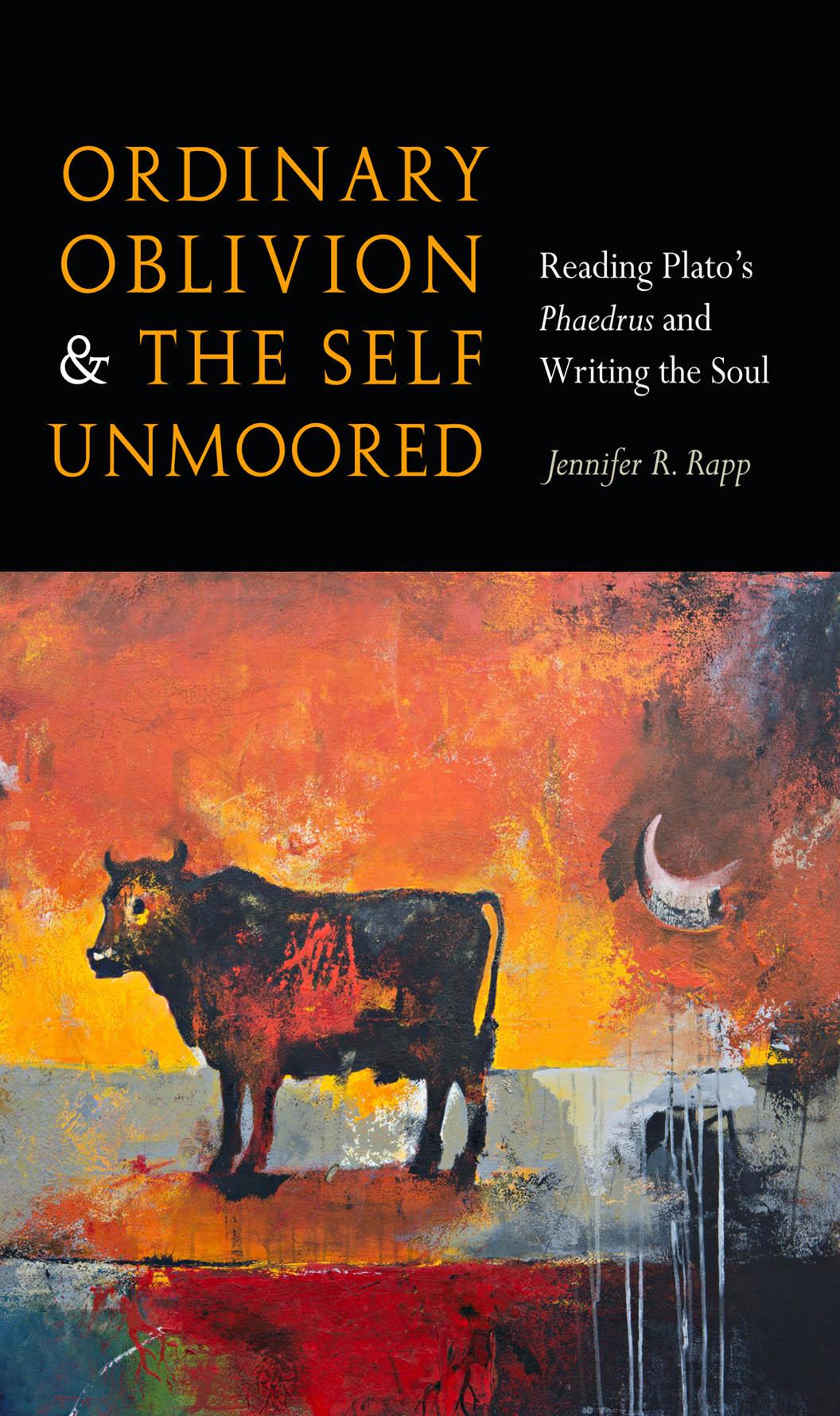
Rapp begins with a question posed by the poet Theodore Roethke: “Should we say that the self, once perceived, becomes a soul?” Through her examination of Plato’s Phaedrus and her insights about the place of forgetting in a life, Rapp answers Roethke’s query with a resounding Yes. In so doing, Rapp reimagines the Phaedrus, interprets anew Plato’s relevance to contemporary life, and offers an innovative account of forgetting as a fertile fragility constitutive of humanity.
Drawing upon poetry and comparisons with other ancient Greek and Daoist texts, Rapp brings to light overlooked features of the Phaedrus, disrupts longstanding interpretations of Plato as the facile champion of memory, and offers new lines of sight onto (and from) his corpus. Her attention to the Phaedrus and her meditative apprehension of the permeable character of human life leave our understanding of both Plato and forgetting inescapably altered. Unsettle everything you think you know about Plato, suspend the twentieth-century entreaty to “Never forget,” and behold here a new mode of critical reflection in which textual study and humanistic inquiry commingle to expansive effect.
Zahle einfach mit Karte, Klarna, Apple Pay oder Google Pay. Nicht zufrieden? Du hast immer ein 14-tägiges Widerrufsrecht. Lies mehr in unseren AGB. Hast du Fragen, schreib uns eine E-Mail an hello@memmo.org.
Memmo macht das Lernen einfacher – wo auch immer du bist. Bei uns findest du deine Kursbücher und smarte Lerntools an einem Ort: Zusammenfassungen, Quizzes, Podcasts und Lernkarten. Und Ted, dein Lernbuddy, beantwortet alles, was du wissen möchtest. Über 50.000 Studierende lernen bereits hier – gemacht, damit du schneller lernst und weniger Stress hast.