
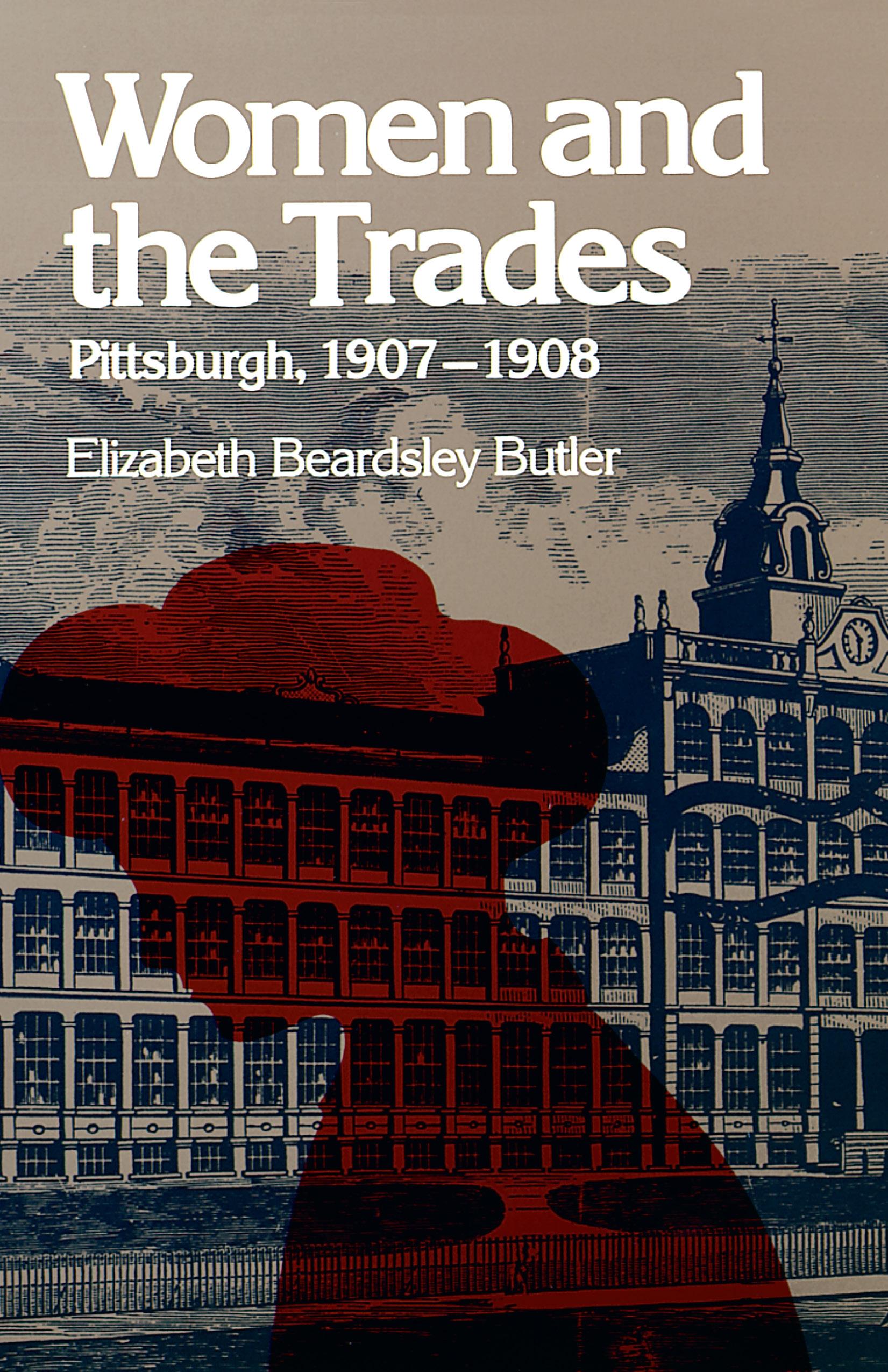
Women and the Trades has long been regarded as a masterwork in the field of social investigation. Originally published in 1909, it was one of six volumes of the path breaking Pittsburgh Survey, the first attempt in the United States to study, systematically and comprehensively, life and labor in one industrial city. No other book documents so precisely the many technological and organizational changes that transformed women's wage work in the early 1900s.
Despite Pittsburgh's image as a male-oriented steel town, many women also worked for a living-rolling cigars, canning pickles, or clerking in stores. The combination of manufacturing, distribution, and communication services made the city of national economic developments.
What Butler found in her visits to countless workplaces did not flatter the city, its employers, or its wage earners. With few exceptions, labor unions served the interests of skilled males. Women's jobs were rigidly segregated, low paying, usually seasonal, and always insecure. Ethnic distinctions erected powerful barriers between different groups of women, as did status hierarchies based on job function.
Professor Maurine Weiner Greenwald's introduction provides biographical sketches of Butler and photographer Lewis Hine and examines the validity of Butler's assumptions and findings, especially with regard to protective legislation, women worker's \u201cpassivity,\u201d and working-class family strategies.
Despite Pittsburgh's image as a male-oriented steel town, many women also worked for a living-rolling cigars, canning pickles, or clerking in stores. The combination of manufacturing, distribution, and communication services made the city of national economic developments.
What Butler found in her visits to countless workplaces did not flatter the city, its employers, or its wage earners. With few exceptions, labor unions served the interests of skilled males. Women's jobs were rigidly segregated, low paying, usually seasonal, and always insecure. Ethnic distinctions erected powerful barriers between different groups of women, as did status hierarchies based on job function.
Professor Maurine Weiner Greenwald's introduction provides biographical sketches of Butler and photographer Lewis Hine and examines the validity of Butler's assumptions and findings, especially with regard to protective legislation, women worker's \u201cpassivity,\u201d and working-class family strategies.
Zahle einfach mit Karte, Klarna, Apple Pay oder Google Pay. Nicht zufrieden? Du hast immer ein 14-tägiges Widerrufsrecht. Lies mehr in unseren AGB. Hast du Fragen, schreib uns eine E-Mail an hello@memmo.org.
Memmo macht das Lernen einfacher – wo auch immer du bist. Bei uns findest du deine Kursbücher und smarte Lerntools an einem Ort: Zusammenfassungen, Quizzes, Podcasts und Lernkarten. Und Ted, dein Lernbuddy, beantwortet alles, was du wissen möchtest. Über 50.000 Studierende lernen bereits hier – gemacht, damit du schneller lernst und weniger Stress hast.
Das könnte dir auch gefallen
Buch kaufen0