
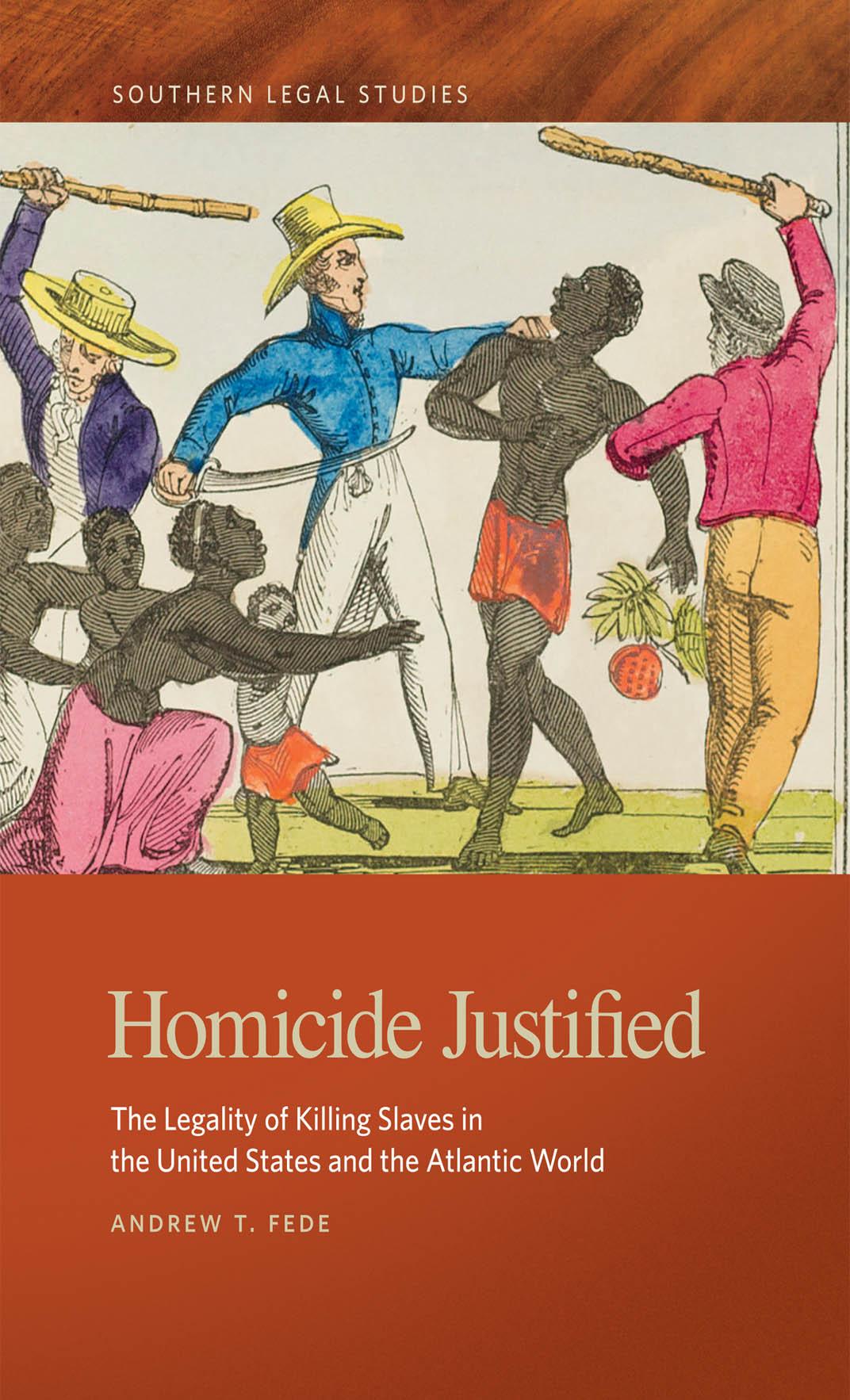
This comparative study looks at the laws concerning the murder of slaves by their masters and at how these laws were implemented. Andrew T. Fede cites a wide range of cases—across time, place, and circumstance—to illuminate legal, judicial, and other complexities surrounding this regrettably common occurrence. These laws had evolved to limit in different ways the masters’ rights to severely punish and even kill their slaves while protecting valuable enslaved people, understood as “property,” from wanton destruction by hirers, overseers, and poor whites who did not own slaves.
To explore the conflicts of masters’ rights with state and colonial laws, Fede shows how slave homicide law evolved and was enforced not only in the United States but also in ancient Roman, Visigoth, Spanish, Portuguese, French, and British jurisdictions. His comparative approach reveals how legal reforms regarding slave homicide in antebellum times, like past reforms dictated by emperors and kings, were the products of changing perceptions of the interests of the public; of the individual slave owners; and of the slave owners’ families, heirs, and creditors.
Although some slave murders came to be regarded as capital offenses, the laws consistently reinforced the second-class status of slaves. This influence, Fede concludes, flowed over into the application of law to free African Americans and would even make itself felt in the legal attitudes that underlay the Jim Crow era.
Zahle einfach mit Karte, Klarna, Apple Pay oder Google Pay. Nicht zufrieden? Du hast immer ein 14-tägiges Widerrufsrecht. Lies mehr in unseren AGB. Hast du Fragen, schreib uns eine E-Mail an hello@memmo.org.
Memmo macht das Lernen einfacher – wo auch immer du bist. Bei uns findest du deine Kursbücher und smarte Lerntools an einem Ort: Zusammenfassungen, Quizzes, Podcasts und Lernkarten. Und Ted, dein Lernbuddy, beantwortet alles, was du wissen möchtest. Über 50.000 Studierende lernen bereits hier – gemacht, damit du schneller lernst und weniger Stress hast.