
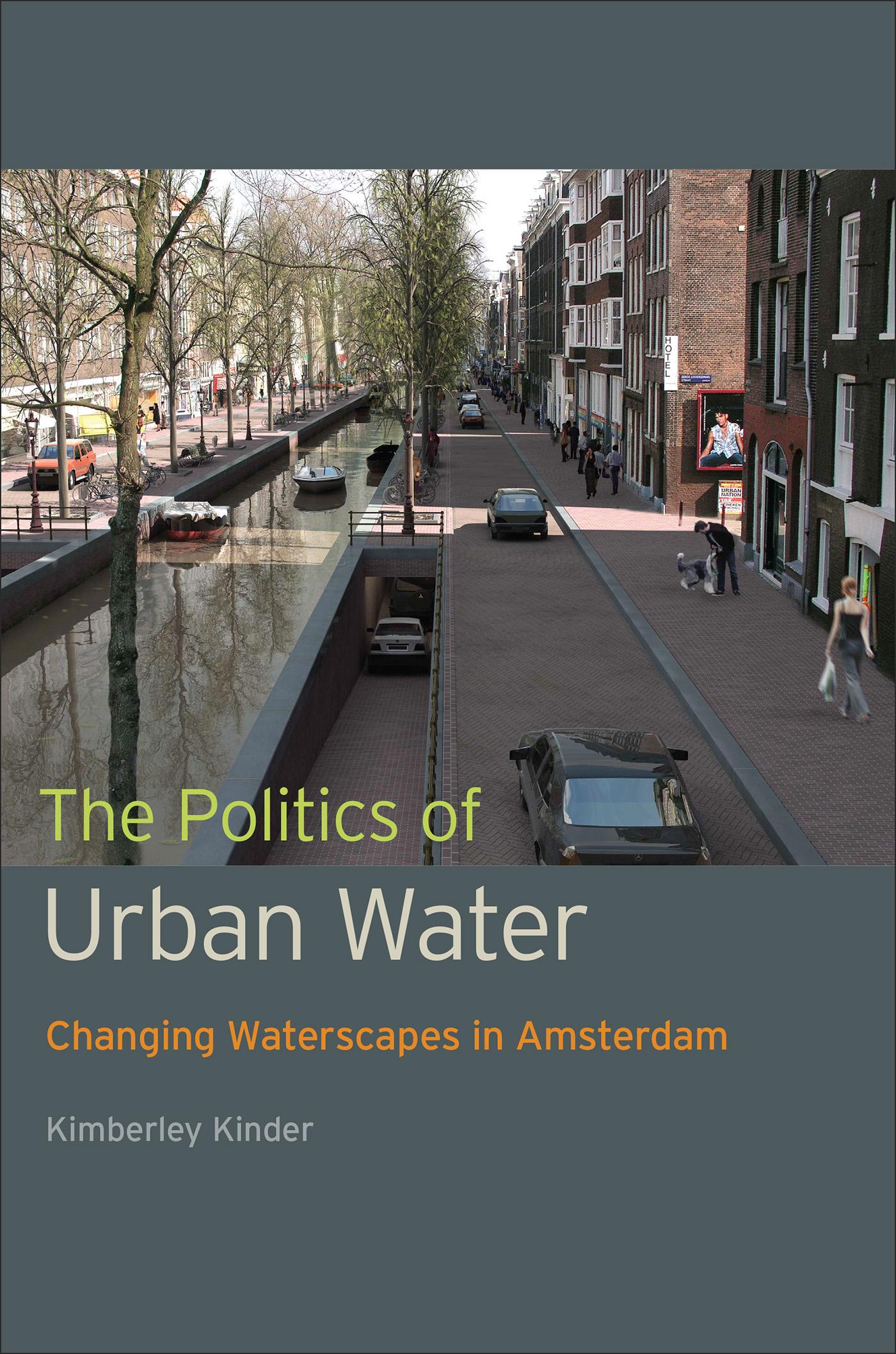
Fifty years ago, urban waterfronts were industrial, polluted, and diseased. Today, luxury homes and shops line riverbanks, harbors, and lakes across Europe and North America. The visual drama of physical reconstruction makes this transition look swift and decisive, but reimaging water is a slow process, punctuated by small cultural shifts and informal spatial seizures that change the meaning of wet urban spaces. In The Politics of Urban Water, Kimberley Kinder explores how active residents in Amsterdam deployed their cityscape when rallying around these concerns, turning space into a vehicle for social reform.
While market dynamics certainly contributed to the transformation of Amsterdam’s shorelines, squatters, partiers, artists, historians, environmentalists, tourists, reporters, and government officials also played crucial roles in bringing waterscapes to life. Their interventions pulled water in new directions, connecting it to political discussions about affordable housing, cultural tolerance, climate change, and national identity. Over time, these political valences have become embedded in laws, norms, symbols, markets, and landscapes, bringing rich undercurrents of friction to urban shores. Amsterdam’s development serves as both an inspiration and a cautionary tale for cities across Europe and North America where rapid new growth creates similar pressures and anxieties.
Zahle einfach mit Karte, Klarna, Apple Pay oder Google Pay. Nicht zufrieden? Du hast immer ein 14-tägiges Widerrufsrecht. Lies mehr in unseren AGB. Hast du Fragen, schreib uns eine E-Mail an hello@memmo.org.
Memmo macht das Lernen einfacher – wo auch immer du bist. Bei uns findest du deine Kursbücher und smarte Lerntools an einem Ort: Zusammenfassungen, Quizzes, Podcasts und Lernkarten. Und Ted, dein Lernbuddy, beantwortet alles, was du wissen möchtest. Über 50.000 Studierende lernen bereits hier – gemacht, damit du schneller lernst und weniger Stress hast.