
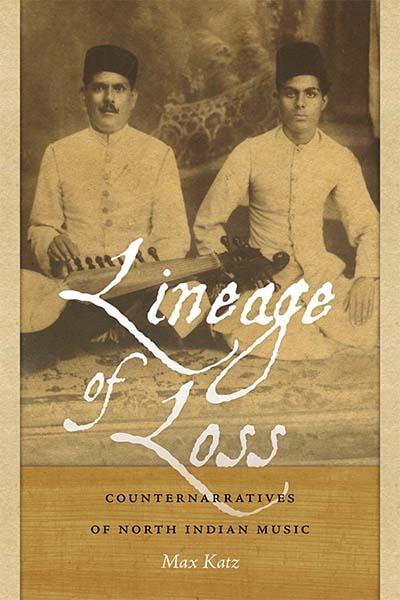
In the middle of the nineteenth century a new family of hereditary musicians emerged in the royal court of Lucknow and subsequently rose to the heights of renown throughout North India. Today this musical lineage, or ghar n, lives on in the music and memories of only a small handful of descendants and players of the family instrument, the sarod. Drawing on six years of ethnographic and archival research, and fifteen years of musical apprenticeship, Max Katz explores the oral history and written record of the Lucknow ghar n ,tracing its displacement, loss of prestige, and erasure from the collective memory. In doing so he illuminates a hidden history of ideological and social struggle in North Indian music culture, intervenes in ongoing debates over the anti-Muslim agenda of Hindustani music's reform movement, and reanimates a lost vision in which Muslim scholar-artists defined the music of the nation. An interdisciplinary, postmodern counter-history, Lineage of Loss offers a new and unsettling narrative of Hindustani music's encounter with modernity.
Zahle einfach mit Karte, Klarna, Apple Pay oder Google Pay. Nicht zufrieden? Du hast immer ein 14-tägiges Widerrufsrecht. Lies mehr in unseren AGB. Hast du Fragen, schreib uns eine E-Mail an hello@memmo.org.
Memmo macht das Lernen einfacher – wo auch immer du bist. Bei uns findest du deine Kursbücher und smarte Lerntools an einem Ort: Zusammenfassungen, Quizzes, Podcasts und Lernkarten. Und Ted, dein Lernbuddy, beantwortet alles, was du wissen möchtest. Über 50.000 Studierende lernen bereits hier – gemacht, damit du schneller lernst und weniger Stress hast.