
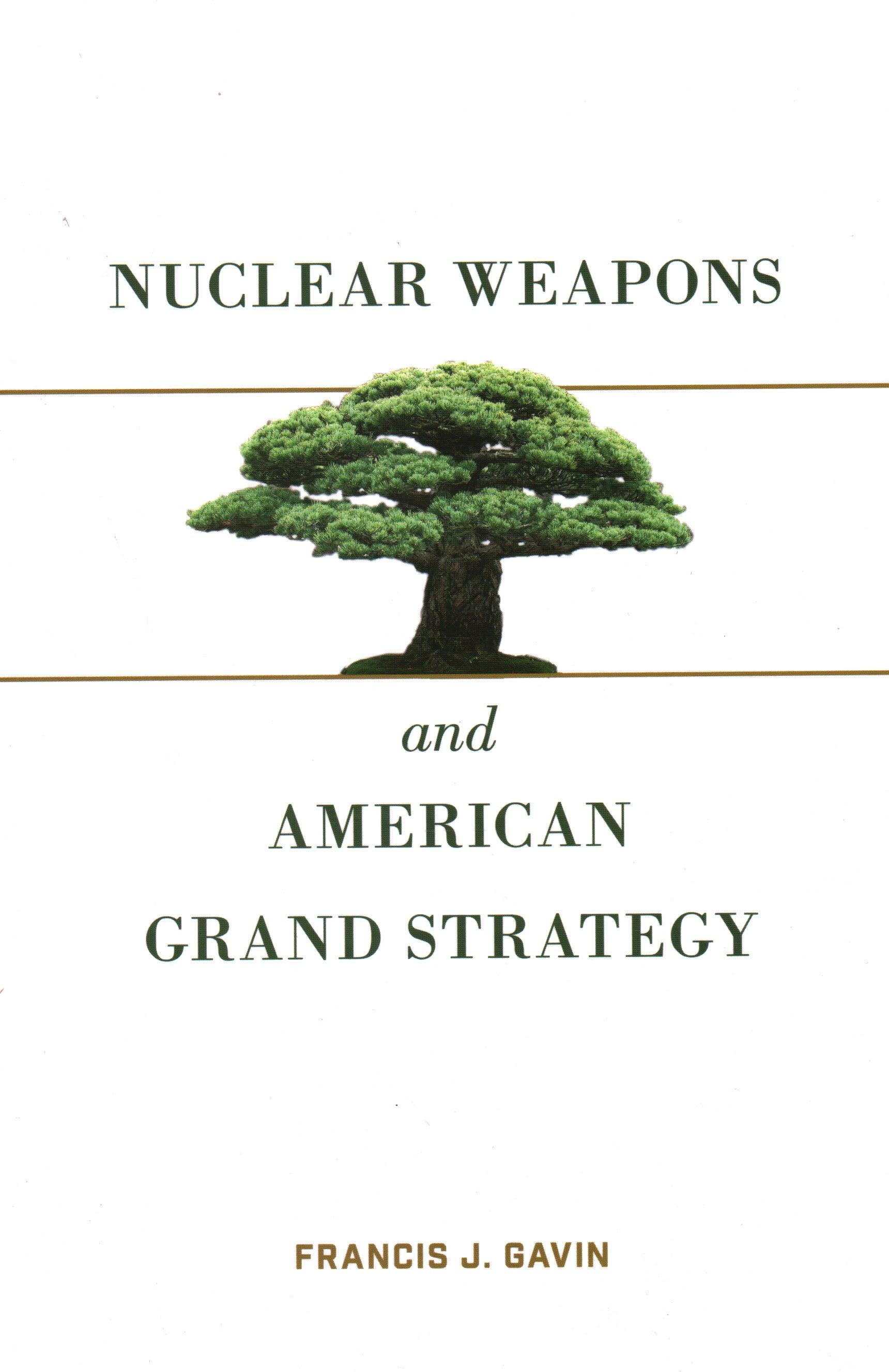
Exploring what we know—and don’t know—about how nuclear weapons shape American grand strategy and international relations
A 2020 CHOICE Outstanding Academic Title
The world first confronted the power of nuclear weapons when the United States dropped atomic bombs on Hiroshima and Nagasaki in August 1945. The global threat of these weapons deepened in the following decades as more advanced weapons, aggressive strategies, and new nuclear powers emerged. Ever since, countless books, reports, and articles—and even a new field of academic inquiry called “security studies”—have tried to explain the so-called nuclear revolution.
Francis J. Gavin argues that scholarly and popular understanding of many key issues about nuclear weapons is incomplete at best and wrong at worst. Among these important, misunderstood issues are: how nuclear deterrence works; whether nuclear coercion is effective; how and why the United States chose its nuclear strategies; why countries develop their own nuclear weapons or choose not to do so; and, most fundamentally, whether nuclear weapons make the world safer or more dangerous.
These and similar questions still matter because nuclear danger is returning as a genuine threat. Emerging technologies and shifting great-power rivalries seem to herald a new type of cold war just three decades after the end of the U.S.-Soviet conflict that was characterized by periodic prospects of global Armageddon.
Nuclear Weapons and American Grand Strategy helps policymakers wrestle with the latest challenges. Written in a clear, accessible, and jargon-free manner, the book also offers insights for students, scholars, and others interested in both the history and future of nuclear danger.
A 2020 CHOICE Outstanding Academic Title
The world first confronted the power of nuclear weapons when the United States dropped atomic bombs on Hiroshima and Nagasaki in August 1945. The global threat of these weapons deepened in the following decades as more advanced weapons, aggressive strategies, and new nuclear powers emerged. Ever since, countless books, reports, and articles—and even a new field of academic inquiry called “security studies”—have tried to explain the so-called nuclear revolution.
Francis J. Gavin argues that scholarly and popular understanding of many key issues about nuclear weapons is incomplete at best and wrong at worst. Among these important, misunderstood issues are: how nuclear deterrence works; whether nuclear coercion is effective; how and why the United States chose its nuclear strategies; why countries develop their own nuclear weapons or choose not to do so; and, most fundamentally, whether nuclear weapons make the world safer or more dangerous.
These and similar questions still matter because nuclear danger is returning as a genuine threat. Emerging technologies and shifting great-power rivalries seem to herald a new type of cold war just three decades after the end of the U.S.-Soviet conflict that was characterized by periodic prospects of global Armageddon.
Nuclear Weapons and American Grand Strategy helps policymakers wrestle with the latest challenges. Written in a clear, accessible, and jargon-free manner, the book also offers insights for students, scholars, and others interested in both the history and future of nuclear danger.
Seiten: 320
Kategorie: Statsvetenskap & Politik
e-ISBN: 9780815737926
Versandgewicht: 1.2 kg
Versand in: 1-2 Tage
Zahle einfach mit Karte, Klarna, Apple Pay oder Google Pay. Nicht zufrieden? Du hast immer ein 14-tägiges Widerrufsrecht. Lies mehr in unseren AGB. Hast du Fragen, schreib uns eine E-Mail an hello@memmo.org.
Memmo macht das Lernen einfacher – wo auch immer du bist. Bei uns findest du deine Kursbücher und smarte Lerntools an einem Ort: Zusammenfassungen, Quizzes, Podcasts und Lernkarten. Und Ted, dein Lernbuddy, beantwortet alles, was du wissen möchtest. Über 50.000 Studierende lernen bereits hier – gemacht, damit du schneller lernst und weniger Stress hast.