
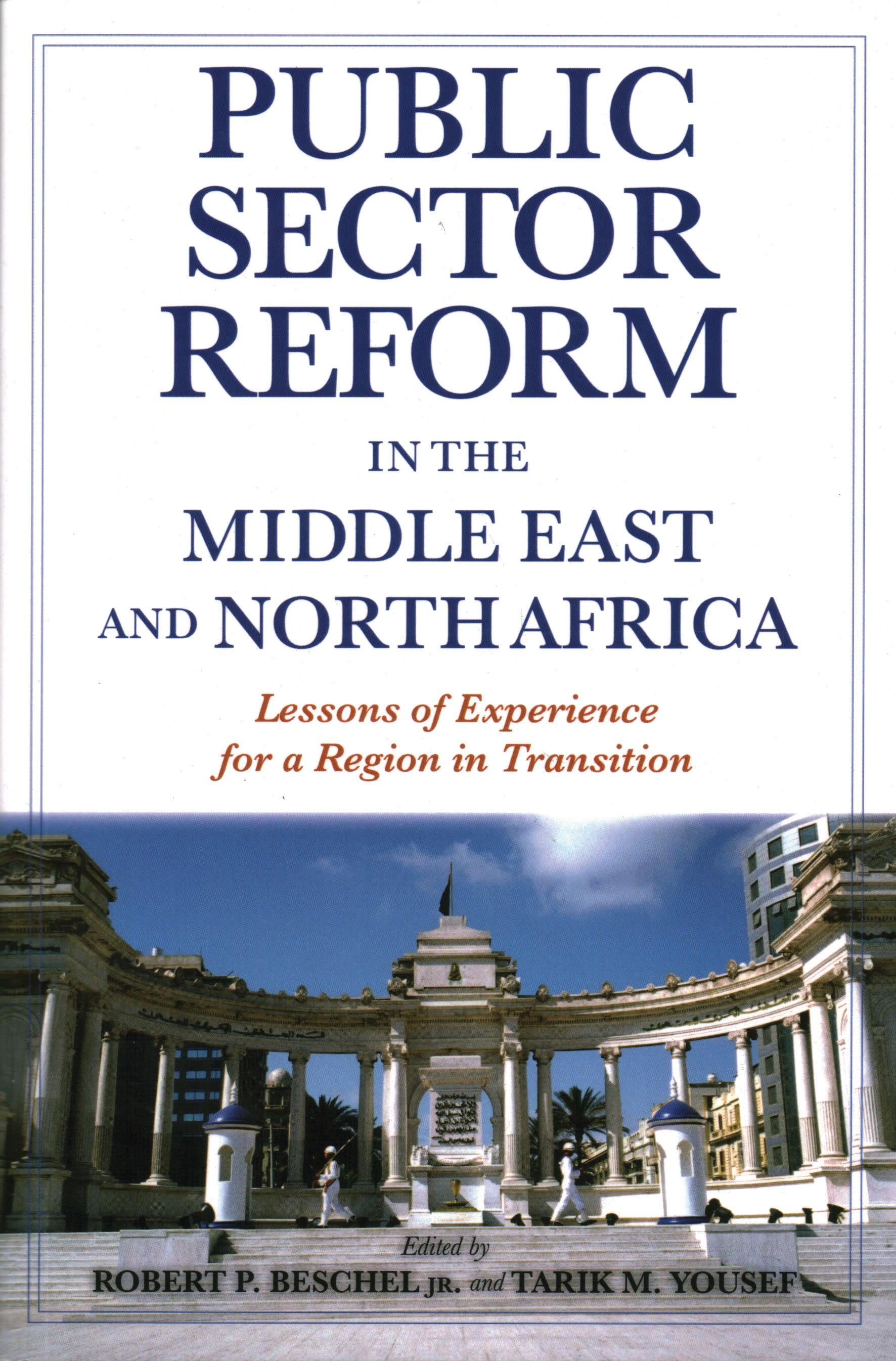
Critical examinations of efforts to make governments more efficient and responsive
Political upheavals and civil wars in the Middle East and North Africa (MENA) have obscured efforts by many countries in the region to reform their public sectors. Unwieldy, unresponsiveand often corruptgovernments across the region have faced new pressure, not least from their publics, to improve the quality of public services and open up their decisionmaking processes. Some of these reform efforts were under way and at least partly successful before the outbreak of the Arab Spring in 2010. Reform efforts have continued in some countries despite the many upheavals since then.
This book offers a comprehensive assessment of a wide range of reform efforts in nine countries. In six cases the reforms targeted core systems of government: Jordan's restructuring of cabinet operations, the Palestinian Authority's revision of public financial management, Morocco's voluntary retirement program, human resource management reforms in Lebanon, an e-governance initiative in Dubai, and attempts to improve transparency in Tunisia. Five other reform efforts tackled line departments of government, among them Egypt's attempt to improve tax collection and Saudi Arabia's work to improve service delivery and bill collection.
Some of these reform efforts were more successful than others. This book examines both the good and the bad, looking not only at what each reform accomplished but at how it was implemented. The result is a series of useful lessons on how public sector reforms can be adopted in MENA.
Political upheavals and civil wars in the Middle East and North Africa (MENA) have obscured efforts by many countries in the region to reform their public sectors. Unwieldy, unresponsiveand often corruptgovernments across the region have faced new pressure, not least from their publics, to improve the quality of public services and open up their decisionmaking processes. Some of these reform efforts were under way and at least partly successful before the outbreak of the Arab Spring in 2010. Reform efforts have continued in some countries despite the many upheavals since then.
This book offers a comprehensive assessment of a wide range of reform efforts in nine countries. In six cases the reforms targeted core systems of government: Jordan's restructuring of cabinet operations, the Palestinian Authority's revision of public financial management, Morocco's voluntary retirement program, human resource management reforms in Lebanon, an e-governance initiative in Dubai, and attempts to improve transparency in Tunisia. Five other reform efforts tackled line departments of government, among them Egypt's attempt to improve tax collection and Saudi Arabia's work to improve service delivery and bill collection.
Some of these reform efforts were more successful than others. This book examines both the good and the bad, looking not only at what each reform accomplished but at how it was implemented. The result is a series of useful lessons on how public sector reforms can be adopted in MENA.
Seiten: 280
Kategorie: Statsvetenskap & Politik
e-ISBN: 9780815736981
Versandgewicht: 1.2 kg
Versand in: 1-2 Tage
Zahle einfach mit Karte, Klarna, Apple Pay oder Google Pay. Nicht zufrieden? Du hast immer ein 14-tägiges Widerrufsrecht. Lies mehr in unseren AGB. Hast du Fragen, schreib uns eine E-Mail an hello@memmo.org.
Memmo macht das Lernen einfacher – wo auch immer du bist. Bei uns findest du deine Kursbücher und smarte Lerntools an einem Ort: Zusammenfassungen, Quizzes, Podcasts und Lernkarten. Und Ted, dein Lernbuddy, beantwortet alles, was du wissen möchtest. Über 50.000 Studierende lernen bereits hier – gemacht, damit du schneller lernst und weniger Stress hast.