
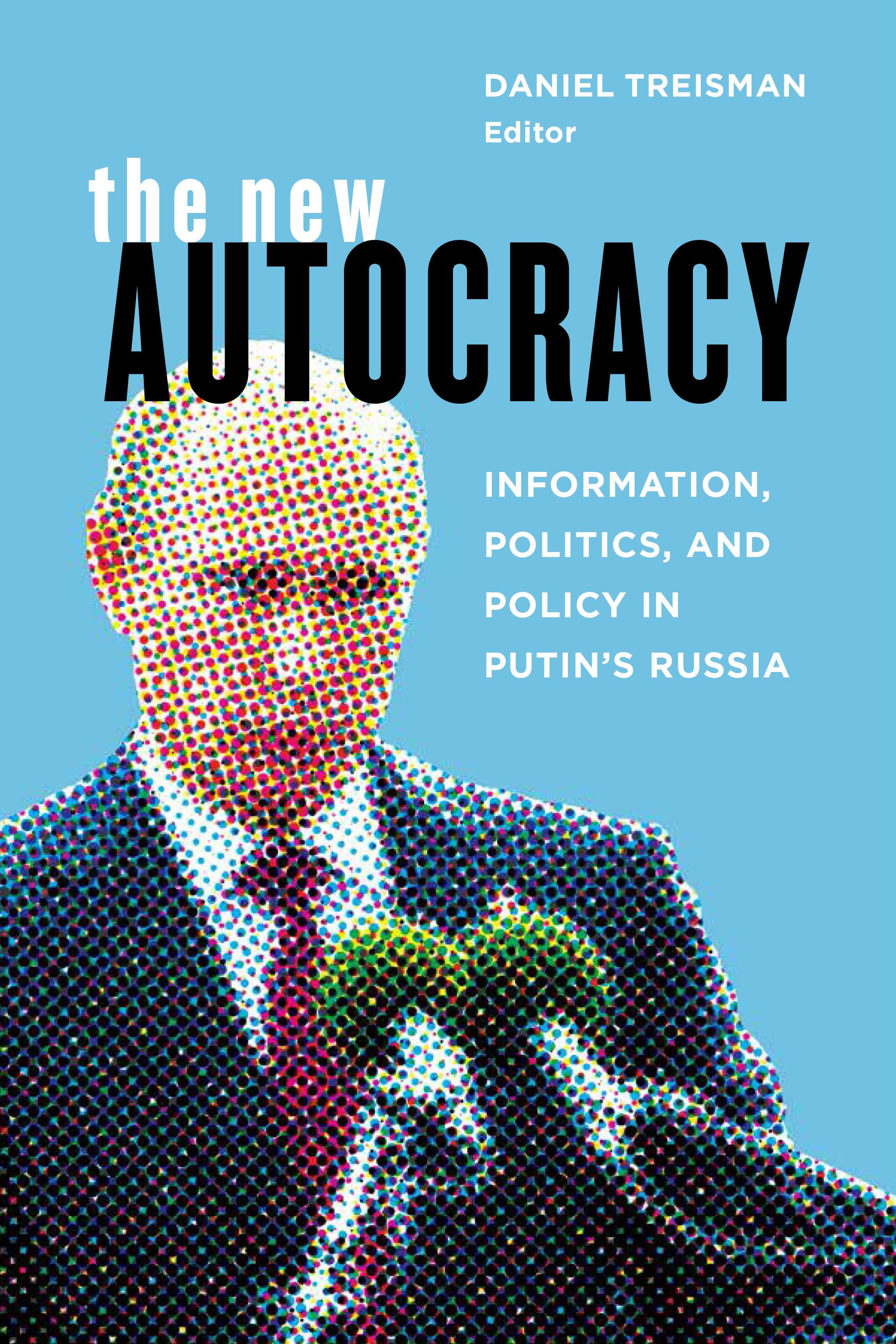
Corruption, fake news, and the "informational autocracy" sustaining Putin in power
After fading into the background for many years following the collapse of the Soviet Union, Russia suddenly has emerged as a new threat-at least in the minds of many Westerners. But Western assumptions about Russia, and in particular about political decision-making in Russia, tend to be out of date or just plain wrong.
Under the leadership of Vladimir Putin since 2000, Russia is neither a somewhat reduced version of the Soviet Union nor a classic police state. Corruption is prevalent at all levels of government and business, but Russia's leaders pursue broader and more complex goals than one would expect in a typical kleptocracy, such as those in many developing countries. Nor does Russia fit the standard political science model of a "competitive authoritarian" regime; its parliament, political parties, and other political bodies are neither fakes to fool the West nor forums for bargaining among the elites.
The result of a two-year collaboration between top Russian experts and Western political scholars, Autocracy explores the complex roles of Russia's presidency, security services, parliament, media and other actors. The authors argue that Putin has created an “informational autocracy,” which relies more on media manipulation than on the comprehensive repression of traditional dictatorships. The fake news, hackers, and trolls that featured in Russia's foreign policy during the 2016 U.S. presidential election are also favored tools of Putin's domestic regime-along with internet restrictions, state television, and copious in-house surveys. While these tactics have been successful in the short run, the regime that depends on them already shows signs of age: over-centralization, a narrowing of information flows, and a reliance on informal fixers to bypass the bureaucracy. The regime's challenge will be to continue to block social modernization without undermining the leadership's own capabilities.
Zahle einfach mit Karte, Klarna, Apple Pay oder Google Pay. Nicht zufrieden? Du hast immer ein 14-tägiges Widerrufsrecht. Lies mehr in unseren AGB. Hast du Fragen, schreib uns eine E-Mail an hello@memmo.org.
Memmo macht das Lernen einfacher – wo auch immer du bist. Bei uns findest du deine Kursbücher und smarte Lerntools an einem Ort: Zusammenfassungen, Quizzes, Podcasts und Lernkarten. Und Ted, dein Lernbuddy, beantwortet alles, was du wissen möchtest. Über 50.000 Studierende lernen bereits hier – gemacht, damit du schneller lernst und weniger Stress hast.