
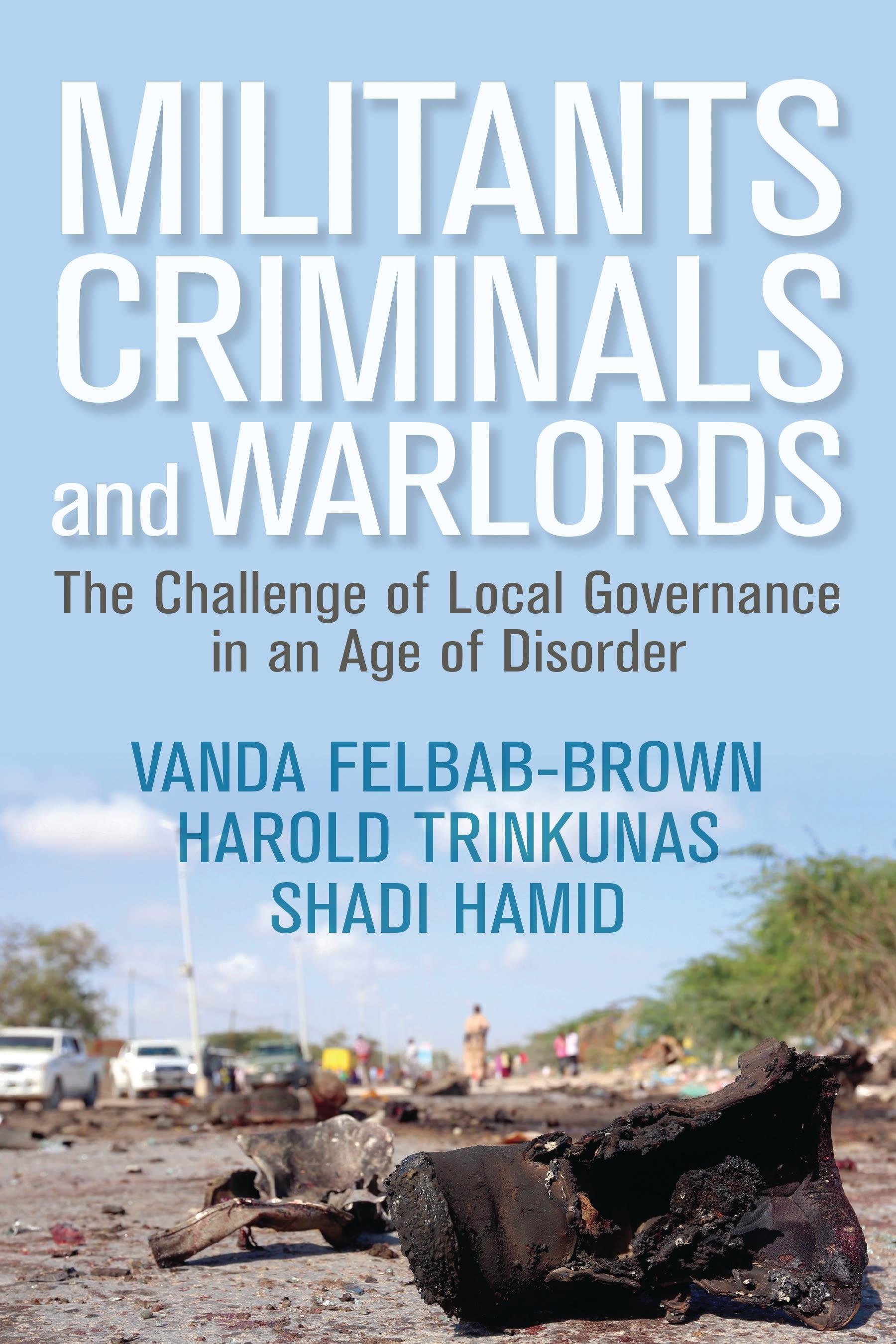
Conventional political theory holds that the sovereign state is the legitimate source of order and provider of public services in any society, whether democratic or not. But Hezbollah and ISIS in the Middle East, pirate clans in Africa, criminal gangs in South America, and militias in Southeast Asia are examples of nonstate actors that control local territory and render public services that the nation-state cannot or will not provide.
This fascinating book takes the reader around the world to areas where national governance has broken down-or never really existed. In these places, the vacuum has been filled by local gangs, militias, and warlords, some with ideological or political agendas and others focused primarily on economic gain. Many of these actors have substantial popularity and support among local populations and have developed their own enduring institutions, often undermining the legitimacy of the national state.
The authors show that the rest of the world has more than a passing interest in these situations, in part because transborder crime and terrorism often emerge but also because failed states threaten international interests from trade to security. This book also poses, and offers answers for, the question: How should the international community respond to local orders dominated by armed nonstate actors? In many cases outsiders have taken the short-term route-accepting unsavory local actors out of expediency-but at the price of long-term instability or damage to human rights and other considerations.
From Africa and the Middle East to Asia and Latin America, the local situations highlighted in this book are, and will remain, high on today's international agenda. The book makes a unique contribution to global understanding of how those situations developed and what can be done about them.
This title is part of the Geopolitics in the 21st Century series.
This fascinating book takes the reader around the world to areas where national governance has broken down-or never really existed. In these places, the vacuum has been filled by local gangs, militias, and warlords, some with ideological or political agendas and others focused primarily on economic gain. Many of these actors have substantial popularity and support among local populations and have developed their own enduring institutions, often undermining the legitimacy of the national state.
The authors show that the rest of the world has more than a passing interest in these situations, in part because transborder crime and terrorism often emerge but also because failed states threaten international interests from trade to security. This book also poses, and offers answers for, the question: How should the international community respond to local orders dominated by armed nonstate actors? In many cases outsiders have taken the short-term route-accepting unsavory local actors out of expediency-but at the price of long-term instability or damage to human rights and other considerations.
From Africa and the Middle East to Asia and Latin America, the local situations highlighted in this book are, and will remain, high on today's international agenda. The book makes a unique contribution to global understanding of how those situations developed and what can be done about them.
This title is part of the Geopolitics in the 21st Century series.
Zahle einfach mit Karte, Klarna, Apple Pay oder Google Pay. Nicht zufrieden? Du hast immer ein 14-tägiges Widerrufsrecht. Lies mehr in unseren AGB. Hast du Fragen, schreib uns eine E-Mail an hello@memmo.org.
Memmo macht das Lernen einfacher – wo auch immer du bist. Bei uns findest du deine Kursbücher und smarte Lerntools an einem Ort: Zusammenfassungen, Quizzes, Podcasts und Lernkarten. Und Ted, dein Lernbuddy, beantwortet alles, was du wissen möchtest. Über 50.000 Studierende lernen bereits hier – gemacht, damit du schneller lernst und weniger Stress hast.