
For several centuries, international relations has been primarily the purview of nation-states. Key powers have included at various times Great Britain, France, Japan, China, Russia (then the U.S.S.R., and then Russia again), and the nation most influential in international relations for the past several decades has been the United States. But in a world growing smaller, with a globalizing system increasing in complexity by the day, the nation-state paradigm is not as dominant as it once was.
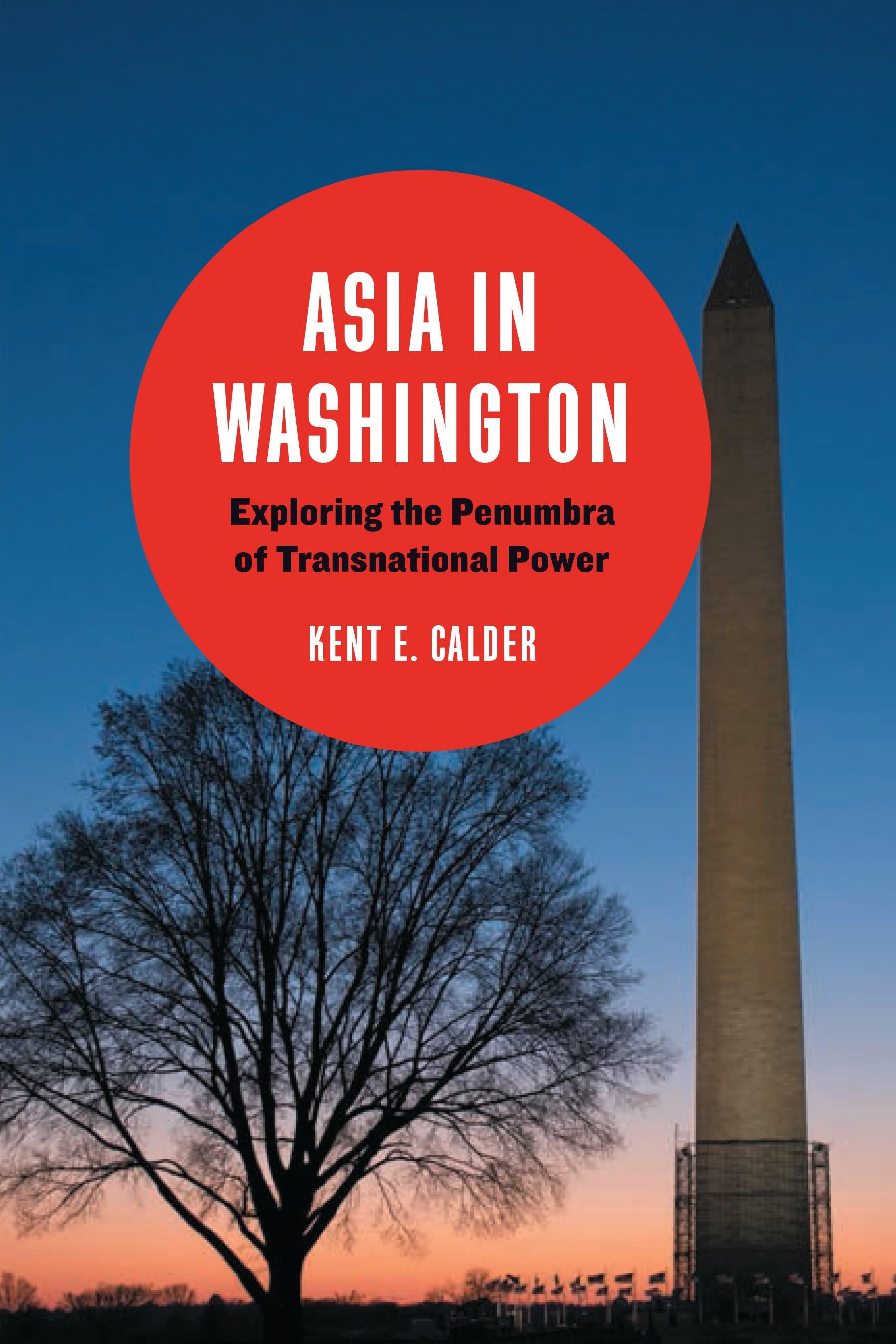
In Asia in Washington, longtime Asia analyst Kent Calder examines the concept of ""global city"" in the context of international affairs. The term typically has been used in an economic context, referring to centers of international finance and commerce such as New York, Tokyo, and London. But Calder extends the concept to political centers as wellparticularly in this case, Washington, D.C.
Improved communications, enhanced transportation, greater economic integration and activity have created a new economic village, and global political cities are arising within the new structuredistinguished not by their CEOs or stock markets but by their influence over policy decisions, and their amassing of strategic intelligence on topics from national policy trends to geopolitical risk.
Calder describes the rise of Washington, D.C., as perhaps the preeminent global political cityseat of the world's most powerful government, center of NGO and multilateral policy activity, the locale of institutions such as the World Bank and IMF, and home to numerous think tanks and universities.
Within Washington, the role of Asia is especially relevant for several reasons. It represents the core of the non-Western industrialized world and the most challenge to Western dominance. It also raises the delicate issue of how race matters in international global governancea factor crucially important during a time of globalization. And since Asia developed later than the West, its changing role in Washington raises major issues regarding how rising powers assimilate themselves into global governance structure. How do Asian nations establish, increase, and leverage their Washington presence, and what is the impact on Washington itself and the decisions made there? Kent Calder explains it all in Asia in Washington.
In Asia in Washington, longtime Asia analyst Kent Calder examines the concept of ""global city"" in the context of international affairs. The term typically has been used in an economic context, referring to centers of international finance and commerce such as New York, Tokyo, and London. But Calder extends the concept to political centers as wellparticularly in this case, Washington, D.C.
Improved communications, enhanced transportation, greater economic integration and activity have created a new economic village, and global political cities are arising within the new structuredistinguished not by their CEOs or stock markets but by their influence over policy decisions, and their amassing of strategic intelligence on topics from national policy trends to geopolitical risk.
Calder describes the rise of Washington, D.C., as perhaps the preeminent global political cityseat of the world's most powerful government, center of NGO and multilateral policy activity, the locale of institutions such as the World Bank and IMF, and home to numerous think tanks and universities.
Within Washington, the role of Asia is especially relevant for several reasons. It represents the core of the non-Western industrialized world and the most challenge to Western dominance. It also raises the delicate issue of how race matters in international global governancea factor crucially important during a time of globalization. And since Asia developed later than the West, its changing role in Washington raises major issues regarding how rising powers assimilate themselves into global governance structure. How do Asian nations establish, increase, and leverage their Washington presence, and what is the impact on Washington itself and the decisions made there? Kent Calder explains it all in Asia in Washington.
Seiten: 366
Kategorie: Statsvetenskap & Politik
e-ISBN: 9780815725398
Versandgewicht: 1.2 kg
Versand in: 1-2 Tage
Zahle einfach mit Karte, Klarna, Apple Pay oder Google Pay. Nicht zufrieden? Du hast immer ein 14-tägiges Widerrufsrecht. Lies mehr in unseren AGB. Hast du Fragen, schreib uns eine E-Mail an hello@memmo.org.
Memmo macht das Lernen einfacher – wo auch immer du bist. Bei uns findest du deine Kursbücher und smarte Lerntools an einem Ort: Zusammenfassungen, Quizzes, Podcasts und Lernkarten. Und Ted, dein Lernbuddy, beantwortet alles, was du wissen möchtest. Über 50.000 Studierende lernen bereits hier – gemacht, damit du schneller lernst und weniger Stress hast.