
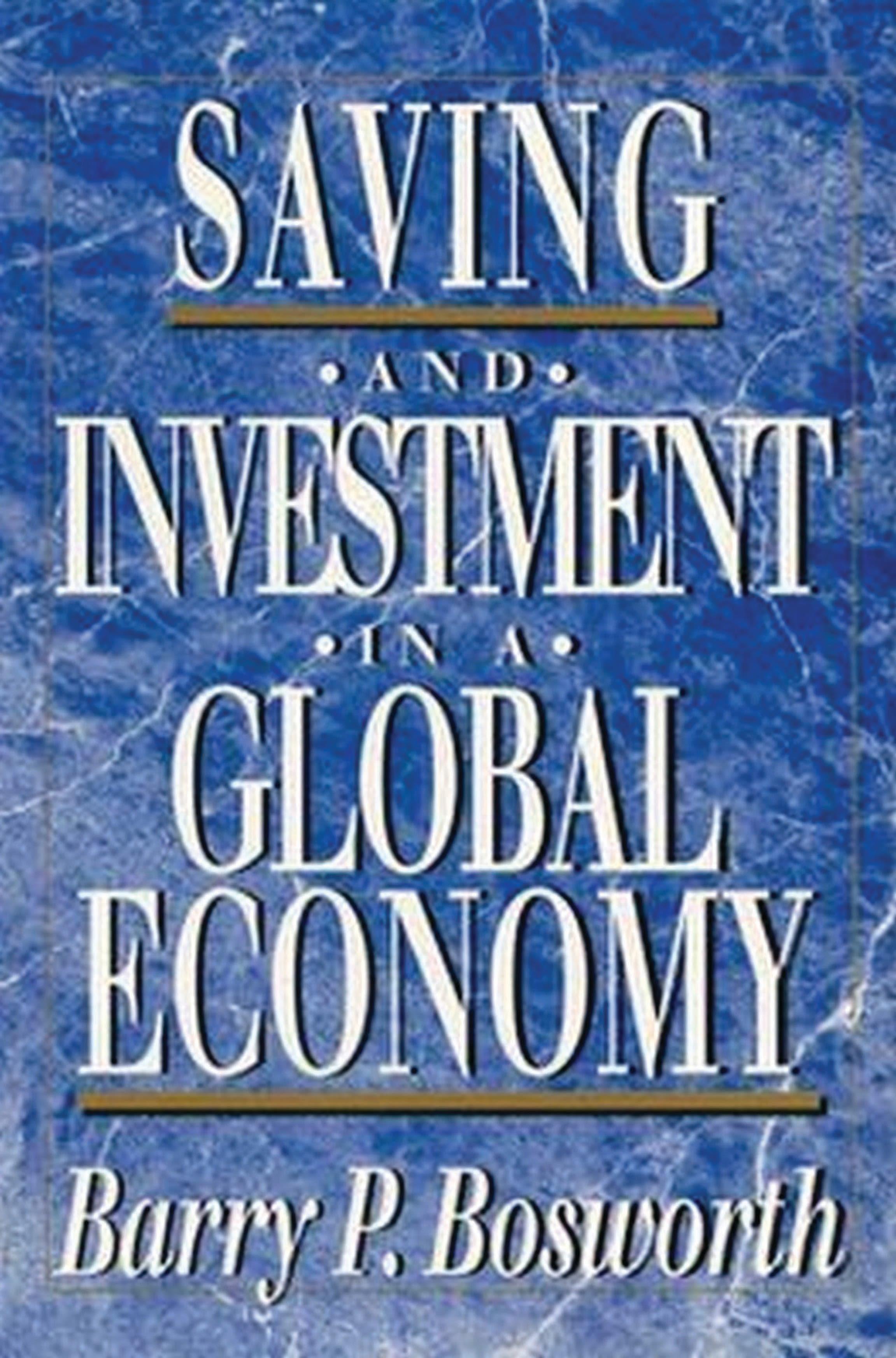
The emergence of large trade imbalances among the industrial countries during the 1980s-particularly the massive deficit of the United States and the surpluses of Germany and Japan-has led to growing disenchantment with the international economic system. But while many critics point to unfair trade practices as the cause of these imbalances, others contend that this emphasis is misplaced. In this provocative book by one of the nation's leading economists, Barry Bosworth argues that disparities are not the result of external infraction, but rather a reflection of domestic failures. He shows that the United States, for example, with its large government budget deficit and low rate of private saving, must borrow abroad to finance its investments. Similarly, trade surpluses of countries such as Japan reflect a surplus of national saving over domestic investment, rather than restrictive trade practices. Bosworth explains that large trade imbalances became possible in the 1980s because of the development of an international capital market that greatly reduced the barriers to borrowing and lending across national borders. The result is an international system in which national economies are closely linked through international capital markets as well as trade in goods and services. Using data from the major industrial countries, Bosworth highlights the process by which changes in domestic rates of saving and investment lead to changes in interest rates, exchange rates, and trade balances. He first examines why national saving and investment have fallen throughout the industrialized world. He then focuses on how exchange rates respond to trade imbalances, and considers whether the wide fluctuations in exchange rates are a cause for concern or simply an integral part of the international adjustment to the divergent patterns of national saving and investment.
Zahle einfach mit Karte, Klarna, Apple Pay oder Google Pay. Nicht zufrieden? Du hast immer ein 14-tägiges Widerrufsrecht. Lies mehr in unseren AGB. Hast du Fragen, schreib uns eine E-Mail an hello@memmo.org.
Memmo macht das Lernen einfacher – wo auch immer du bist. Bei uns findest du deine Kursbücher und smarte Lerntools an einem Ort: Zusammenfassungen, Quizzes, Podcasts und Lernkarten. Und Ted, dein Lernbuddy, beantwortet alles, was du wissen möchtest. Über 50.000 Studierende lernen bereits hier – gemacht, damit du schneller lernst und weniger Stress hast.