
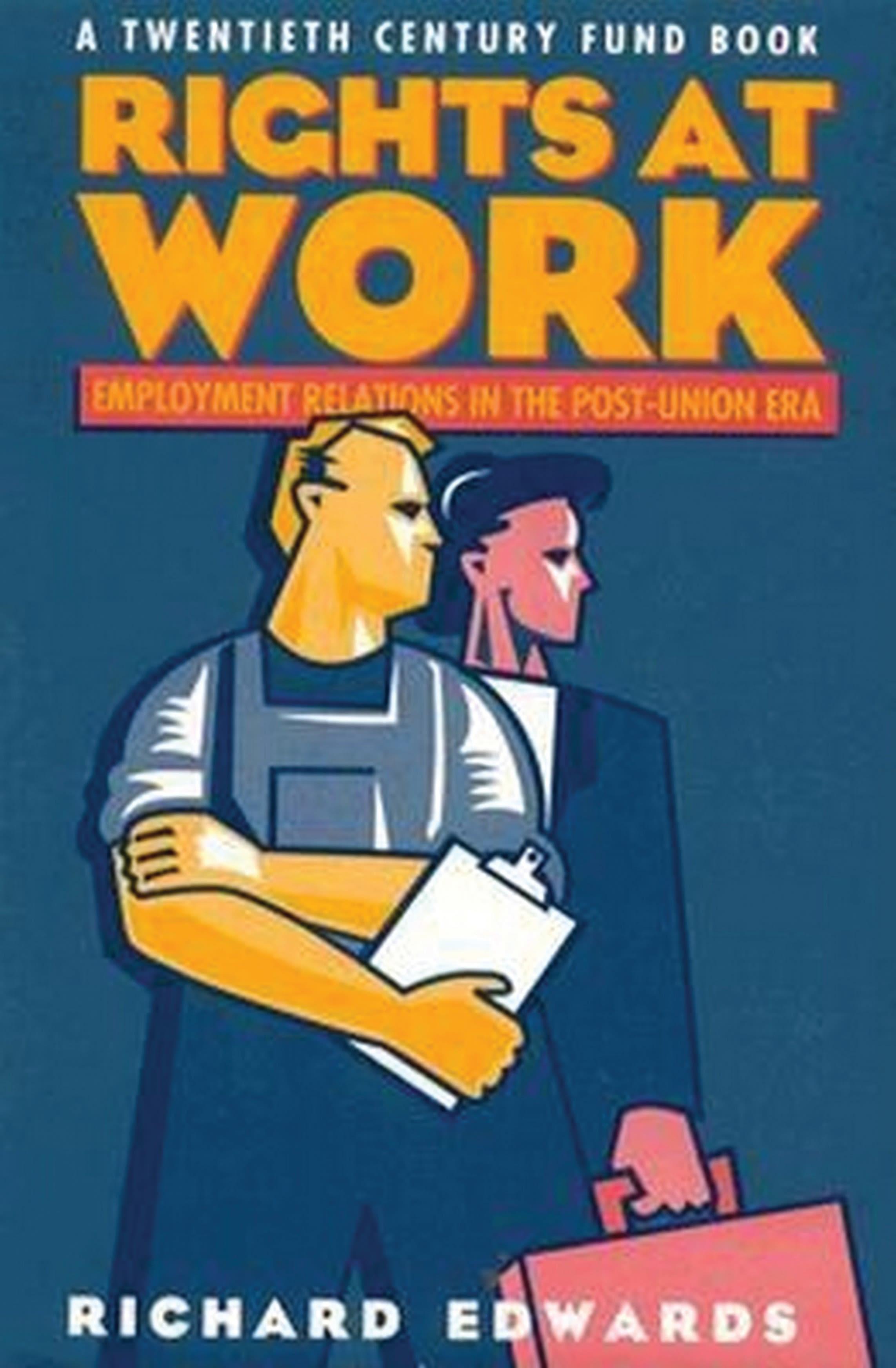
With growing international competition, American firms have been gaced with increasing pressures to produce better products, cut costs, and improve efficiency. As a result, American employers have changed many of their long-standing labor priorities. Work-force stability has become less important; long-term commitments have become less attractive; and labor costs, especially fringe benefits, have come under increased scrutiny. With this large reorganization of work forces and priorities, Americans are again faced with the significant questions of what rights workers haveand should havein the workplace.
In the current environment, employers have a greater need for highly motivated, hard-working, skilled employees, and have often developed innovated forms of management to enlist these worker's support. So too, national legislation has granted workers new rights in recent years, such as mandatory early notification of plant closings, greater rights for workers with disabilities, and increased protection for older workers. State legislators have also enacted expanded protection for workers, and state courts have been rewriting basic legal doctrines governing workers' rights in ways that favor employees.
In this book, Richard Edwards explores workers' rights and the institutions that have defined and are now enforcing them. He looks closely at the decline of American unions and its effect on traditional rights. As unions have been transformed from major institutional players in the American economy to much more marginal brokers enrolling only a small minority of American workers, political support for workers' rights has diminished. Edwards also traces the American state courts' and the ongoing revision of the legal interpretations of employment contracts and employers' promises, a development which he believes may revolutionize traditional employment law.
Rights at Work cuts through the debate between employers' groups and workers' advocates to find a new common ground. Edwards argues that a new system of employment relations offers a ""win-win"" opportunity, and he proposes some innovative public policy strategies that could protect workers' rights while enhancing employers' ability to succeed in a highly competitive global market.
In the current environment, employers have a greater need for highly motivated, hard-working, skilled employees, and have often developed innovated forms of management to enlist these worker's support. So too, national legislation has granted workers new rights in recent years, such as mandatory early notification of plant closings, greater rights for workers with disabilities, and increased protection for older workers. State legislators have also enacted expanded protection for workers, and state courts have been rewriting basic legal doctrines governing workers' rights in ways that favor employees.
In this book, Richard Edwards explores workers' rights and the institutions that have defined and are now enforcing them. He looks closely at the decline of American unions and its effect on traditional rights. As unions have been transformed from major institutional players in the American economy to much more marginal brokers enrolling only a small minority of American workers, political support for workers' rights has diminished. Edwards also traces the American state courts' and the ongoing revision of the legal interpretations of employment contracts and employers' promises, a development which he believes may revolutionize traditional employment law.
Rights at Work cuts through the debate between employers' groups and workers' advocates to find a new common ground. Edwards argues that a new system of employment relations offers a ""win-win"" opportunity, and he proposes some innovative public policy strategies that could protect workers' rights while enhancing employers' ability to succeed in a highly competitive global market.
Seiten: 265
Kategorie: Samhällsvetenskap
e-ISBN: 9780815719793
Versandgewicht: 1.2 kg
Versand in: 1-2 Tage
Zahle einfach mit Karte, Klarna, Apple Pay oder Google Pay. Nicht zufrieden? Du hast immer ein 14-tägiges Widerrufsrecht. Lies mehr in unseren AGB. Hast du Fragen, schreib uns eine E-Mail an hello@memmo.org.
Memmo macht das Lernen einfacher – wo auch immer du bist. Bei uns findest du deine Kursbücher und smarte Lerntools an einem Ort: Zusammenfassungen, Quizzes, Podcasts und Lernkarten. Und Ted, dein Lernbuddy, beantwortet alles, was du wissen möchtest. Über 50.000 Studierende lernen bereits hier – gemacht, damit du schneller lernst und weniger Stress hast.