
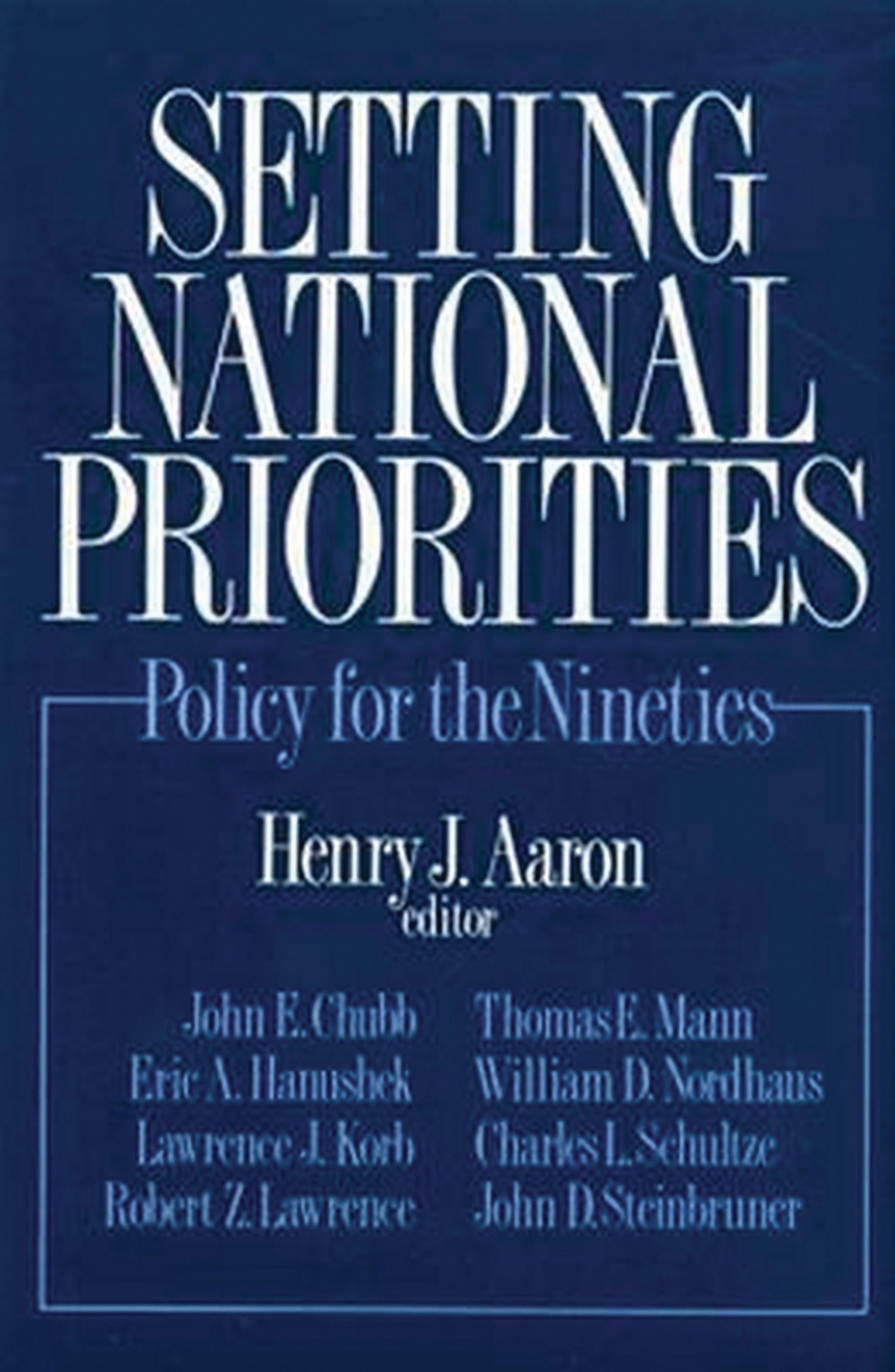
Setting National Priorities continues the highly acclaimed and influential series of books that examine domestic and foreign policy choices confronting the United States. Members of the Brookings staff join outside experts to evaluate America's course through the next decade.
In clear and nontechnical terms the contributors explain and evaluate options for the United States in the 1990s, consider whether the federal government's current pollicies are consistent with long-term objectives, and explain what action could best achieve those goals.
Charles L. Schultze shows why it is important to solve the problem of the federal budget deficit and how it can be done: John D. Steinbruner addresses the revolution taking place in American foreign policy and explains how the United States can be more secure with lower defense spending; Lawrence J. Korb evaluates President Bush's defense budget and suggests possible improvements; Robert Z. Lawrence describes how the U.S. government and private industry should respond to the competitive challenge from foreign companies; William D. Nordhaus explains the risks form global warming and presents a policy to meet them; John E. Chubb and Eric A. Hanshek chart new directions of American elementary and secondary education; Henry J. Aaron identifies the major problems with the financing of healthcare and describes how they can be solved; and Thomas E. Mann considers how political institutions and public preferences constrain our ability to enact needed policy changes and what might be done to overcome those obstacles.
In clear and nontechnical terms the contributors explain and evaluate options for the United States in the 1990s, consider whether the federal government's current pollicies are consistent with long-term objectives, and explain what action could best achieve those goals.
Charles L. Schultze shows why it is important to solve the problem of the federal budget deficit and how it can be done: John D. Steinbruner addresses the revolution taking place in American foreign policy and explains how the United States can be more secure with lower defense spending; Lawrence J. Korb evaluates President Bush's defense budget and suggests possible improvements; Robert Z. Lawrence describes how the U.S. government and private industry should respond to the competitive challenge from foreign companies; William D. Nordhaus explains the risks form global warming and presents a policy to meet them; John E. Chubb and Eric A. Hanshek chart new directions of American elementary and secondary education; Henry J. Aaron identifies the major problems with the financing of healthcare and describes how they can be solved; and Thomas E. Mann considers how political institutions and public preferences constrain our ability to enact needed policy changes and what might be done to overcome those obstacles.
Seiten: 333
Kategorie: Statsvetenskap & Politik
e-ISBN: 9780815719441
Versandgewicht: 1.2 kg
Versand in: 1-2 Tage
Zahle einfach mit Karte, Klarna, Apple Pay oder Google Pay. Nicht zufrieden? Du hast immer ein 14-tägiges Widerrufsrecht. Lies mehr in unseren AGB. Hast du Fragen, schreib uns eine E-Mail an hello@memmo.org.
Memmo macht das Lernen einfacher – wo auch immer du bist. Bei uns findest du deine Kursbücher und smarte Lerntools an einem Ort: Zusammenfassungen, Quizzes, Podcasts und Lernkarten. Und Ted, dein Lernbuddy, beantwortet alles, was du wissen möchtest. Über 50.000 Studierende lernen bereits hier – gemacht, damit du schneller lernst und weniger Stress hast.