
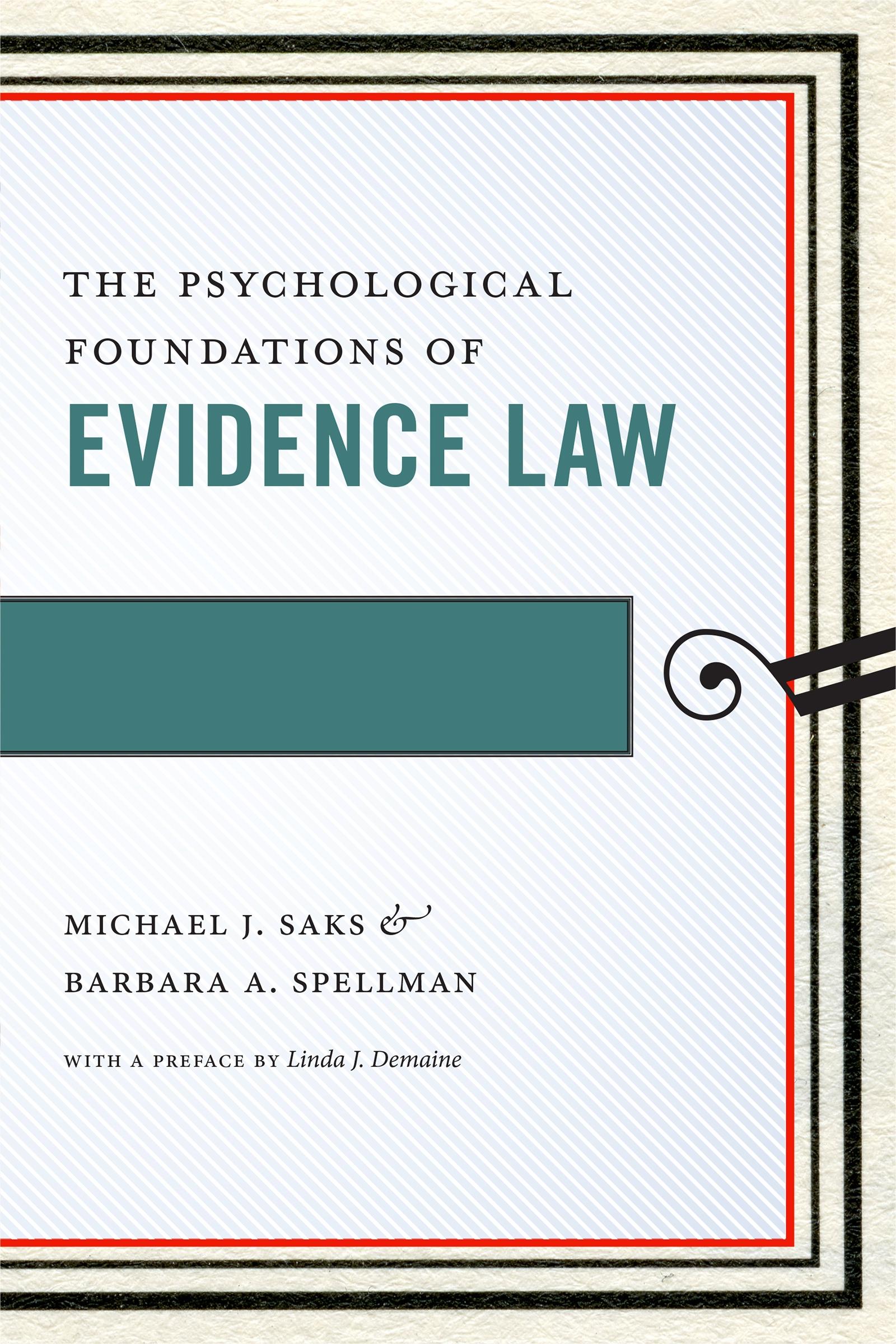
Identifies and evaluates the psychological choices implicit in the rules of evidence
Evidence law is meant to facilitate trials that are fair, accurate, and efficient, and that encourage and protect important societal values and relationships. In pursuit of these often-conflicting goals, common law judges and modern drafting committees have had to perform as amateur applied psychologists. Their task has required them to employ what they think they know about the ability and motivations of witnesses to perceive, store, and retrieve information; about the effects of the litigation process on testimony and other evidence; and about our capacity to comprehend and evaluate evidence. These are the same phenomena that cognitive and social psychologists systematically study.
The rules of evidence have evolved to restrain lawyers from using the most robust weapons of influence, and to direct judges to exclude certain categories of information, limit it, or instruct juries on how to think about it. Evidence law regulates the form of questions lawyers may ask, filters expert testimony, requires witnesses to take oaths, and aims to give lawyers and factfinders the tools they need to assess witnesses’ reliability. But without a thorough grounding in psychology, is the “common sense” of the rulemakers as they create these rules always, or even usually, correct? And when it is not, how can the rules be fixed?
Addressed to those in both law and psychology, The Psychological Foundations of Evidence Law draws on the best current psychological research-based knowledge to identify and evaluate the choices implicit in the rules of evidence, and to suggest alternatives that psychology reveals as better for accomplishing the law’s goals.
Zahle einfach mit Karte, Klarna, Apple Pay oder Google Pay. Nicht zufrieden? Du hast immer ein 14-tägiges Widerrufsrecht. Lies mehr in unseren AGB. Hast du Fragen, schreib uns eine E-Mail an hello@memmo.org.
Memmo macht das Lernen einfacher – wo auch immer du bist. Bei uns findest du deine Kursbücher und smarte Lerntools an einem Ort: Zusammenfassungen, Quizzes, Podcasts und Lernkarten. Und Ted, dein Lernbuddy, beantwortet alles, was du wissen möchtest. Über 50.000 Studierende lernen bereits hier – gemacht, damit du schneller lernst und weniger Stress hast.