
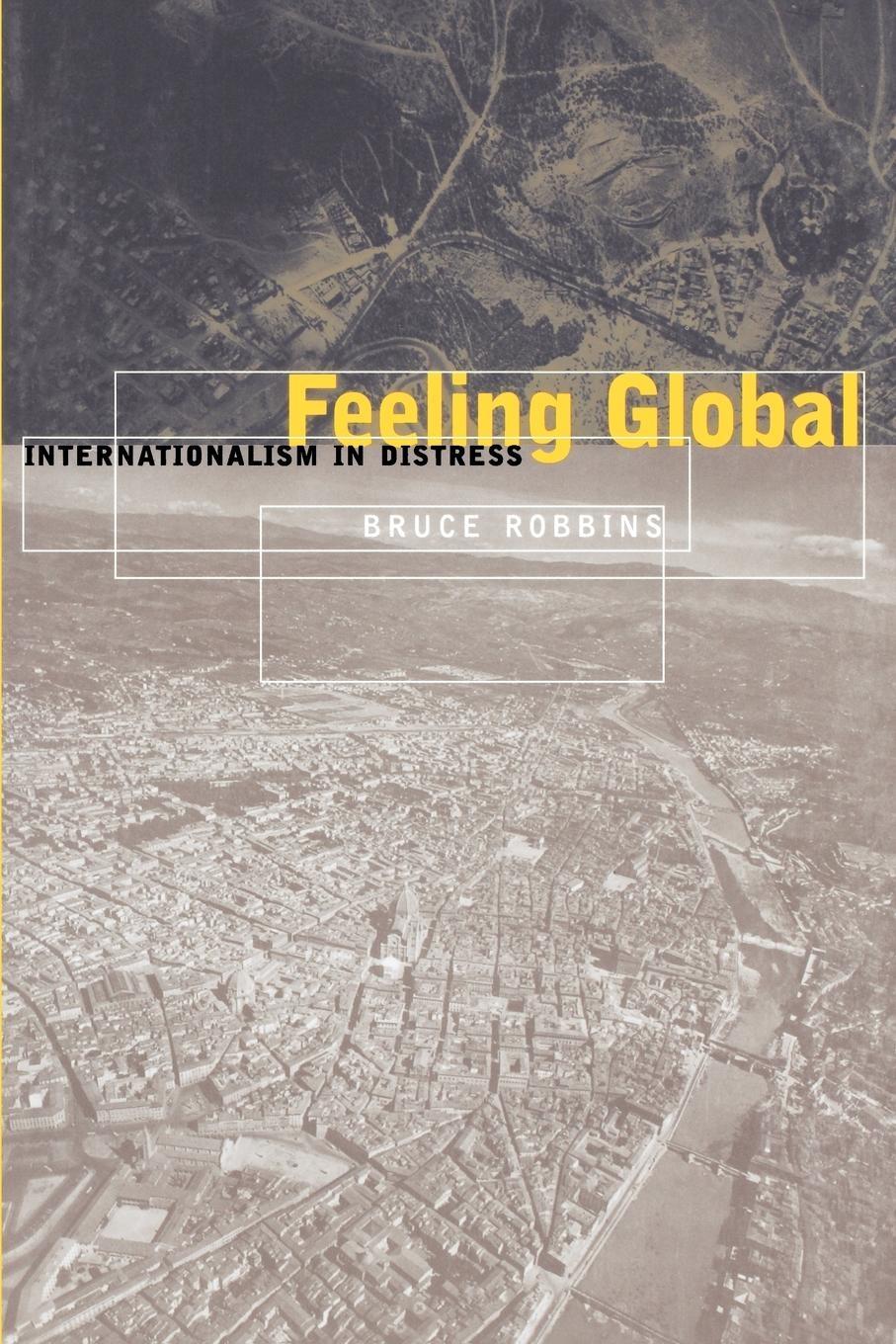
Is global culture merely a pale and sinister reflection of capitalist globalization? Bruce Robbins responds to this and other questions in Feeling Global, a crucial document on nationalism, culturalism, and the role of intellectuals in the age of globalization.
Building on his previous work, Robbins here takes up the question of the status of international human rights. Robbins' conception of internationalism is driven not only by the imperatives of global human rights policy, but by an understanding of transnational cultures, thus linking practical policymaking to cultural politics at the expense of neither. Robbins' cultural criticism, in other words, affords us much more than an understanding of how culture "shapes our lives." Instead, Robbins shows, particularly in his discussions of Martha Nussbaum, Richard Rorty, Susan Sontag, Michael Walzer and others, how "culture" itself has become a term that blocks—for commentators on both the right and the left—serious engagement with the contemporary cosmopolitan ideal of a nonuniversalist discourse of human rights.
Rescuing "cosmopolitanism" itself from its connotations of leisured individuals loyal to no one and willing to sample all cultures at will, Feeling Global presents a compelling way to think about the ethical obligations of intellectuals at a time when their place in the new world order is profoundly uncertain.
Zahle einfach mit Karte, Klarna, Apple Pay oder Google Pay. Nicht zufrieden? Du hast immer ein 14-tägiges Widerrufsrecht. Lies mehr in unseren AGB. Hast du Fragen, schreib uns eine E-Mail an hello@memmo.org.
Memmo macht das Lernen einfacher – wo auch immer du bist. Bei uns findest du deine Kursbücher und smarte Lerntools an einem Ort: Zusammenfassungen, Quizzes, Podcasts und Lernkarten. Und Ted, dein Lernbuddy, beantwortet alles, was du wissen möchtest. Über 50.000 Studierende lernen bereits hier – gemacht, damit du schneller lernst und weniger Stress hast.