
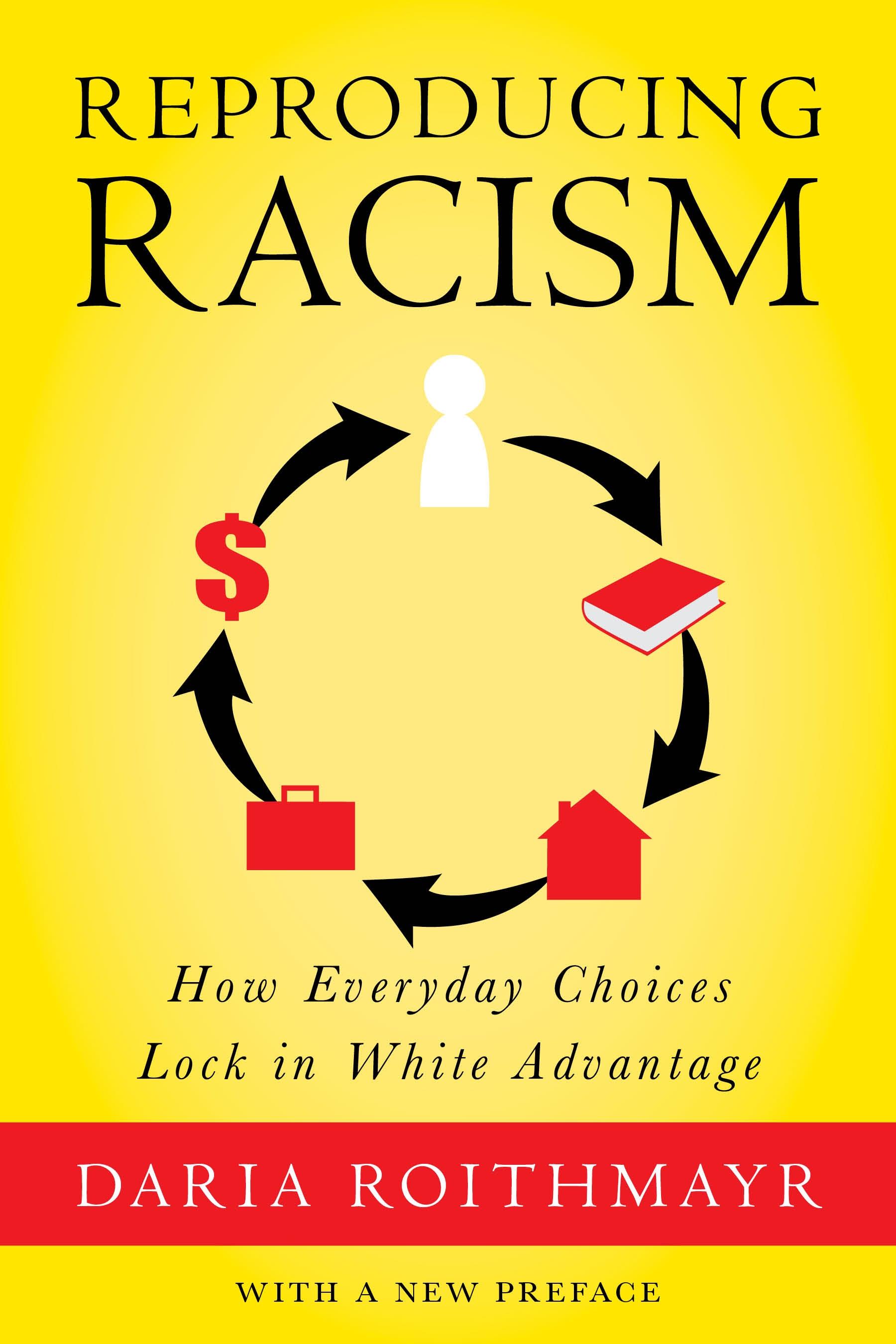
Argues that racial inequality reproduces itself automatically over time because early unfair advantage for whites has paved the way for continuing advantage
This book is designed to change the way we think about racial inequality. Long after the passage of civil rights laws, blacks and Latinos possess barely a nickel of wealth for every dollar that whites have. Why have we made so little progress?
Legal scholar Daria Roithmayr provocatively argues that racial inequality lives on because white advantage functions as a powerful self-reinforcing monopoly, reproducing itself automatically from generation to generation even in the absence of intentional discrimination. Drawing on work in antitrust law and a range of other disciplines, Roithmayr brilliantly compares the dynamics of white advantage to the unfair tactics of giants like AT&T and Microsoft.
With penetrating insight, Roithmayr locates the engine of white monopoly in positive feedback loops that connect the dramatic disparity of Jim Crow to modern racial gaps in jobs, housing and education. Wealthy white neighborhoods fund public schools that then turn out wealthy white neighbors. Whites with lucrative jobs informally refer their friends, who refer their friends, and so on. Roithmayr concludes that racial inequality might now be locked in place, unless policymakers immediately take drastic steps to dismantle this oppressive system.
Zahle einfach mit Karte, Klarna, Apple Pay oder Google Pay. Nicht zufrieden? Du hast immer ein 14-tägiges Widerrufsrecht. Lies mehr in unseren AGB. Hast du Fragen, schreib uns eine E-Mail an hello@memmo.org.
Memmo macht das Lernen einfacher – wo auch immer du bist. Bei uns findest du deine Kursbücher und smarte Lerntools an einem Ort: Zusammenfassungen, Quizzes, Podcasts und Lernkarten. Und Ted, dein Lernbuddy, beantwortet alles, was du wissen möchtest. Über 50.000 Studierende lernen bereits hier – gemacht, damit du schneller lernst und weniger Stress hast.