
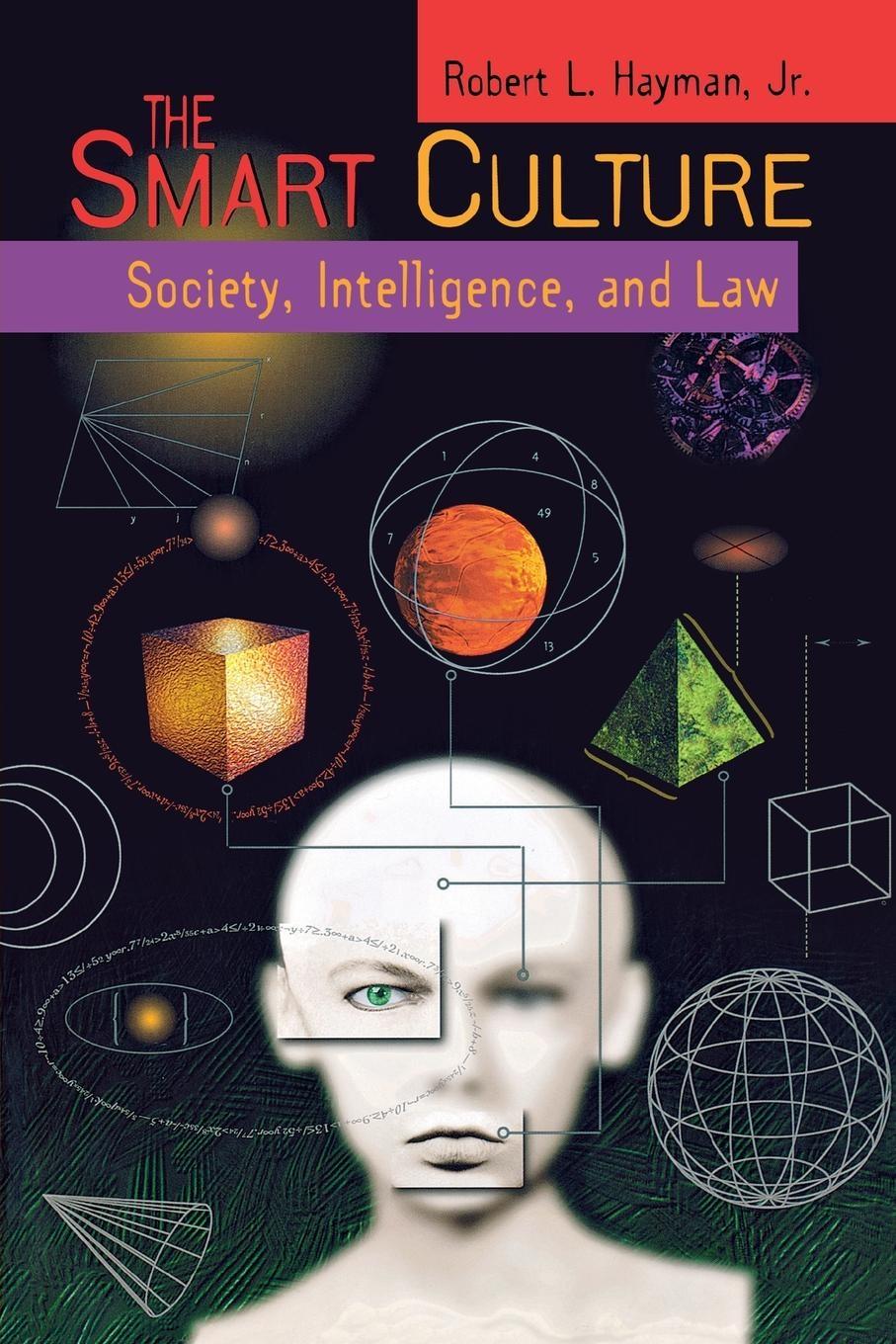
What exactly is intelligence? Is it social achievement? Professional success? Is it common sense? Or the number on an IQ test?
Interweaving engaging narratives with dramatic case studies, Robert L. Hayman, Jr., has written a history of intelligence that will forever change the way we think about who is smart and who is not. To give weight to his assertion that intelligence is not simply an inherent characteristic but rather one which reflects the interests and predispositions of those doing the measuring, Hayman traces numerous campaigns to classify human intelligence. His tour takes us through the early craniometric movement, eugenics, the development of the IQ, Spearman's "general" intelligence, and more recent works claiming a genetic basis for intelligence differences.
What Hayman uncovers is the maddening irony of intelligence: that "scientific" efforts to reduce intelligence to a single, ordinal quantity have persisted--and at times captured our cultural imagination--not because of their scientific legitimacy, but because of their longstanding political appeal. The belief in a natural intellectual order was pervasive in "scientific" and "political" thought both at the founding of the Republic and throughout its nineteenth-century Reconstruction. And while we are today formally committed to the notion of equality under the law, our culture retains its central belief in the natural inequality of its members. Consequently, Hayman argues, the promise of a genuine equality can be realized only when the mythology of "intelligence" is debunked--only, that is, when we recognize the decisive role of culture in defining intelligence and creating intelligence differences. Only culture can give meaning to the statement that one person-- or one group--is smarter than another. And only culture can provide our motivation for saying it.
With a keen wit and a sharp eye, Hayman highlights the inescapable contradictions that arise in a society committed both to liberty and to equality and traces how the resulting tensions manifest themselves in the ways we conceive of identity, community, and merit.
Zahle einfach mit Karte, Klarna, Apple Pay oder Google Pay. Nicht zufrieden? Du hast immer ein 14-tägiges Widerrufsrecht. Lies mehr in unseren AGB. Hast du Fragen, schreib uns eine E-Mail an hello@memmo.org.
Memmo macht das Lernen einfacher – wo auch immer du bist. Bei uns findest du deine Kursbücher und smarte Lerntools an einem Ort: Zusammenfassungen, Quizzes, Podcasts und Lernkarten. Und Ted, dein Lernbuddy, beantwortet alles, was du wissen möchtest. Über 50.000 Studierende lernen bereits hier – gemacht, damit du schneller lernst und weniger Stress hast.