
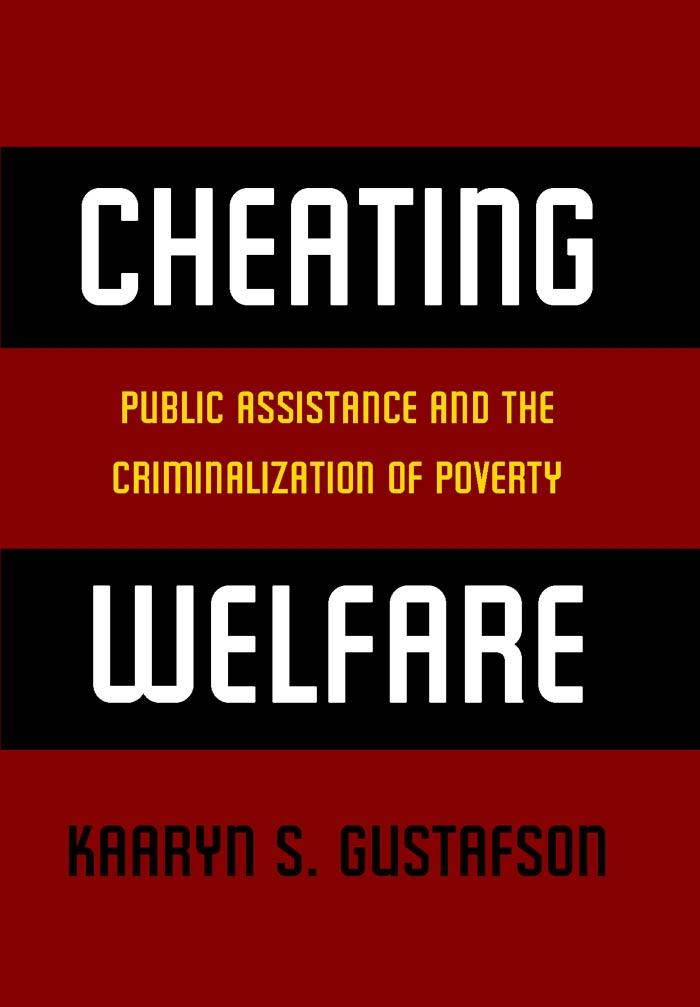
Over the last three decades, welfare policies have been informed by popular beliefs that welfare fraud is rampant. As a result, welfare policies have become more punitive and the boundaries between the welfare system and the criminal justice system have blurred—so much so that in some locales prosecution caseloads for welfare fraud exceed welfare caseloads. In reality, some recipients manipulate the welfare system for their own ends, others are gravely hurt by punitive policies, and still others fall somewhere in between.
In Cheating Welfare, Kaaryn S. Gustafson endeavors to clear up these gray areas by providing insights into the history, social construction, and lived experience of welfare. She shows why cheating is all but inevitable—not because poor people are immoral, but because ordinary individuals navigating complex systems of rules are likely to become entangled despite their best efforts. Through an examination of the construction of the crime we know as welfare fraud, which she bases on in-depth interviews with welfare recipients in Northern California, Gustafson challenges readers to question their assumptions about welfare policies, welfare recipients, and crime control in the United States.
Zahle einfach mit Karte, Klarna, Apple Pay oder Google Pay. Nicht zufrieden? Du hast immer ein 14-tägiges Widerrufsrecht. Lies mehr in unseren AGB. Hast du Fragen, schreib uns eine E-Mail an hello@memmo.org.
Memmo macht das Lernen einfacher – wo auch immer du bist. Bei uns findest du deine Kursbücher und smarte Lerntools an einem Ort: Zusammenfassungen, Quizzes, Podcasts und Lernkarten. Und Ted, dein Lernbuddy, beantwortet alles, was du wissen möchtest. Über 50.000 Studierende lernen bereits hier – gemacht, damit du schneller lernst und weniger Stress hast.