
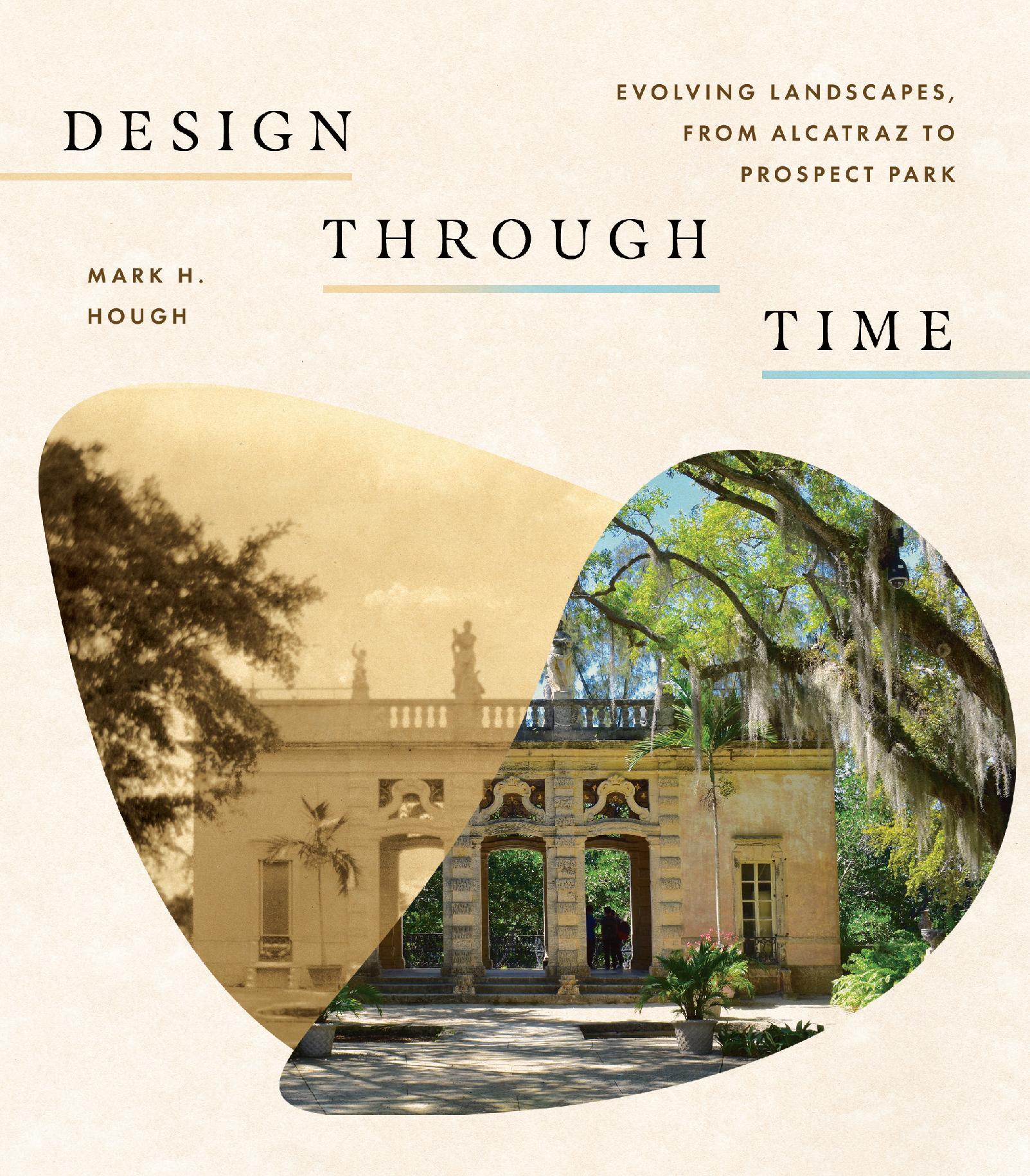
Understanding landscape design as a dynamic, not static, art form
Landscape architects do not situate their work in a vacuum. It exists in a state of constant change and is better understood as a product of continual evolution than as a work of pure design. In Design through Time, Mark Hough offers case studies of parks, gardens, campuses, communities, and cultural sites—from the Missouri Botanical Garden and Mount Auburn Cemetery to Tuskegee University and Dumbarton Oaks Park—to answer several crucial questions: Who is the proposed landscape conceived to please? How will it change, affected by both natural and societal events? How will stewards address the need for landscapes to remain relevant, attractive, and accessible?
To address these concerns, Hough analyzes the influence and impact of generations of administrators, advocates, horticulturalists, institutional leaders, elected officials, and others whose collective decisions compel landscapes to grow and change in ways that strive to respect their established legacies while adjusting to shifting cultural, ecological, and economic realities. The resulting work is a dynamic look at landscape design that reflects its status as an art form that is ever changing, never static.
Landscape architects do not situate their work in a vacuum. It exists in a state of constant change and is better understood as a product of continual evolution than as a work of pure design. In Design through Time, Mark Hough offers case studies of parks, gardens, campuses, communities, and cultural sites—from the Missouri Botanical Garden and Mount Auburn Cemetery to Tuskegee University and Dumbarton Oaks Park—to answer several crucial questions: Who is the proposed landscape conceived to please? How will it change, affected by both natural and societal events? How will stewards address the need for landscapes to remain relevant, attractive, and accessible?
To address these concerns, Hough analyzes the influence and impact of generations of administrators, advocates, horticulturalists, institutional leaders, elected officials, and others whose collective decisions compel landscapes to grow and change in ways that strive to respect their established legacies while adjusting to shifting cultural, ecological, and economic realities. The resulting work is a dynamic look at landscape design that reflects its status as an art form that is ever changing, never static.
Zahle einfach mit Karte, Klarna, Apple Pay oder Google Pay. Nicht zufrieden? Du hast immer ein 14-tägiges Widerrufsrecht. Lies mehr in unseren AGB. Hast du Fragen, schreib uns eine E-Mail an hello@memmo.org.
Memmo macht das Lernen einfacher – wo auch immer du bist. Bei uns findest du deine Kursbücher und smarte Lerntools an einem Ort: Zusammenfassungen, Quizzes, Podcasts und Lernkarten. Und Ted, dein Lernbuddy, beantwortet alles, was du wissen möchtest. Über 50.000 Studierende lernen bereits hier – gemacht, damit du schneller lernst und weniger Stress hast.
Das könnte dir auch gefallen
Buch kaufen0