
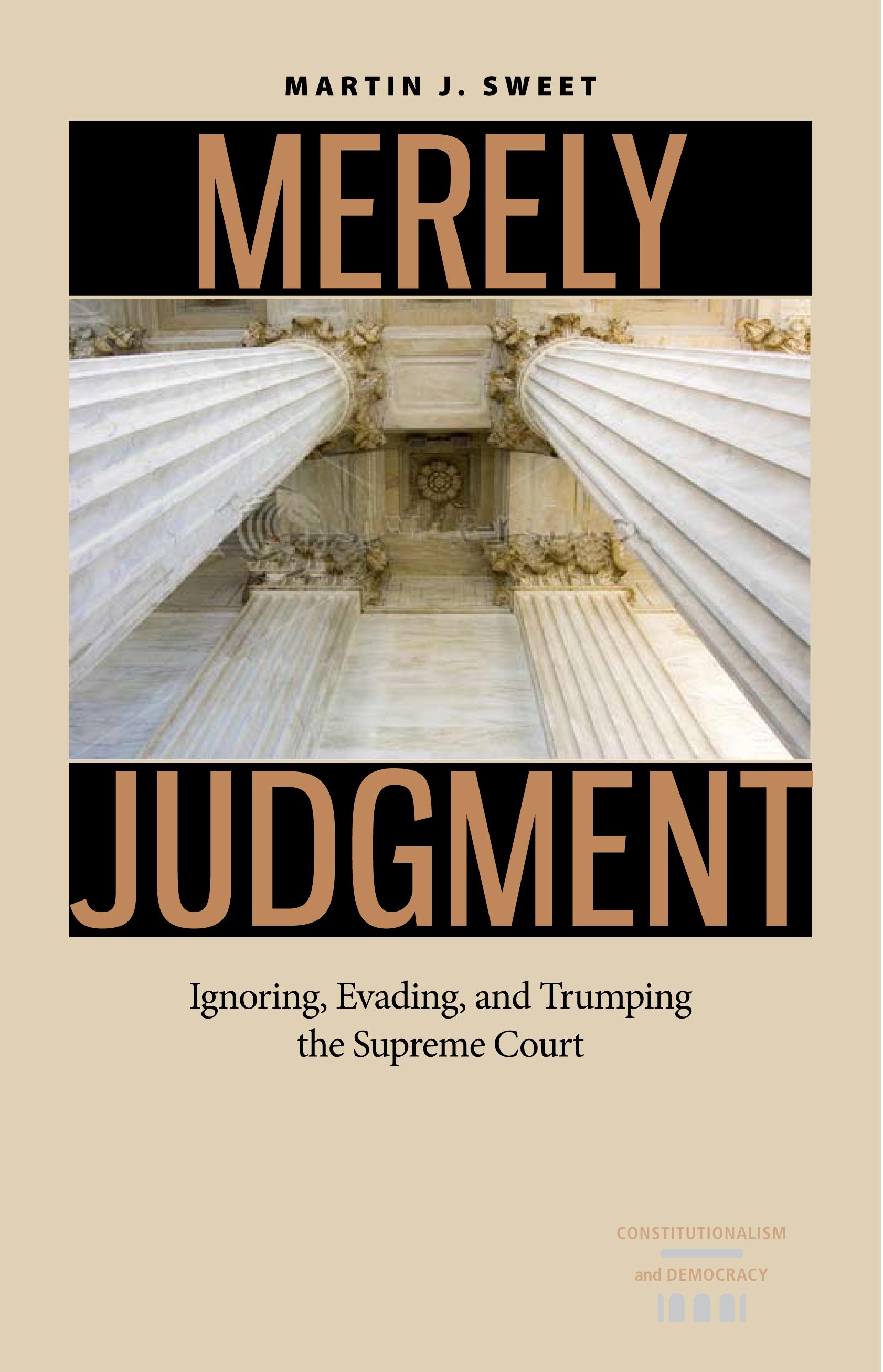
Merely Judgment uses affirmative action in government contracting, legislative vetoes, flag burning, hate speech, and school prayer as windows for understanding how Supreme Court decisions send signals regarding the Court’s policy preferences to institutions and actors (such as lower courts, legislatures, executive branches, and interest groups), and then traces the responses of these same institutions and actors to Court decisions. The lower courts nearly always abide by Supreme Court precedent, but, to a surprising degree, elected branches and other institutions avoid complying with Supreme Court decisions. To explain the persistence of unconstitutional policies and legislation, Sweet isolates the ability of institutions to derail the litigation process. Merely Judgment explores the mechanisms by which litigants and their peers have escaped from the clutches of litigation and thus effectively ignored, evaded, and trumped the Supreme Court.
Zahle einfach mit Karte, Klarna, Apple Pay oder Google Pay. Nicht zufrieden? Du hast immer ein 14-tägiges Widerrufsrecht. Lies mehr in unseren AGB. Hast du Fragen, schreib uns eine E-Mail an hello@memmo.org.
Memmo macht das Lernen einfacher – wo auch immer du bist. Bei uns findest du deine Kursbücher und smarte Lerntools an einem Ort: Zusammenfassungen, Quizzes, Podcasts und Lernkarten. Und Ted, dein Lernbuddy, beantwortet alles, was du wissen möchtest. Über 50.000 Studierende lernen bereits hier – gemacht, damit du schneller lernst und weniger Stress hast.