
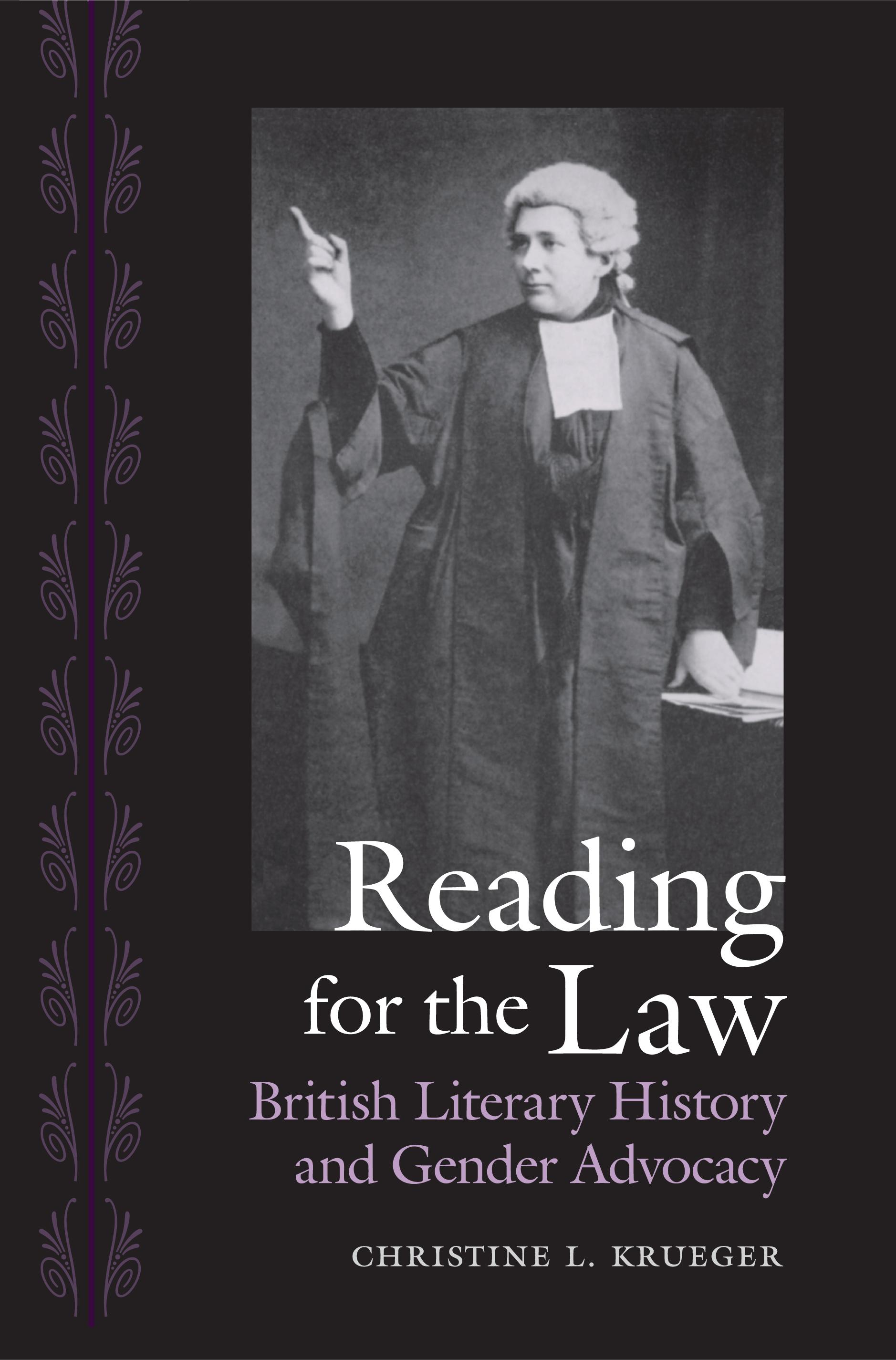
Taking her title from the British term for legal study, "to read for the law," Christine L. Krueger asks how "reading for the law" as literary history contributes to the progressive educational purposes of the Law and Literature movement. She argues that a multidisciplinary "historical narrative jurisprudence" strengthens narrative legal theorists' claims for the transformative powers of stories by replacing an ahistorical opposition between literature and law with a history of their interdependence, and their embeddedness in print culture. Focusing on gender and feminist advocacy in the long nineteenth century, Reading for the Law demonstrates the relevance of literary history to feminist jurisprudence and suggests how literary history might contribute to other forms of "outsider jurisprudence."
Krueger develops this argument across discussions of key jurisprudential concepts: precedent, agency, testimony, and motive. She draws from a wide range of literary, legal, and historical sources, from the early modern period through the Victorian age, as well as from contemporary literary, feminist, and legal theory. Topics considered include the legacy of witchcraft prosecutions, the evolution of the Reasonable Man standard of evidence in lunacy inquiries, the fate of female witnesses and pro se litigants, advocacy for female prisoners and infanticide defendants, and defense strategies for men accused of indecent assault and sodomy. The saliency of the nineteenth-century British literary culture stems in part from its place in a politico-legal tradition that produces the very conditions of narrative legal theorists’ aspirations for meaningful social transformation in modern, multicultural democracies.
Zahle einfach mit Karte, Klarna, Apple Pay oder Google Pay. Nicht zufrieden? Du hast immer ein 14-tägiges Widerrufsrecht. Lies mehr in unseren AGB. Hast du Fragen, schreib uns eine E-Mail an hello@memmo.org.
Memmo macht das Lernen einfacher – wo auch immer du bist. Bei uns findest du deine Kursbücher und smarte Lerntools an einem Ort: Zusammenfassungen, Quizzes, Podcasts und Lernkarten. Und Ted, dein Lernbuddy, beantwortet alles, was du wissen möchtest. Über 50.000 Studierende lernen bereits hier – gemacht, damit du schneller lernst und weniger Stress hast.