
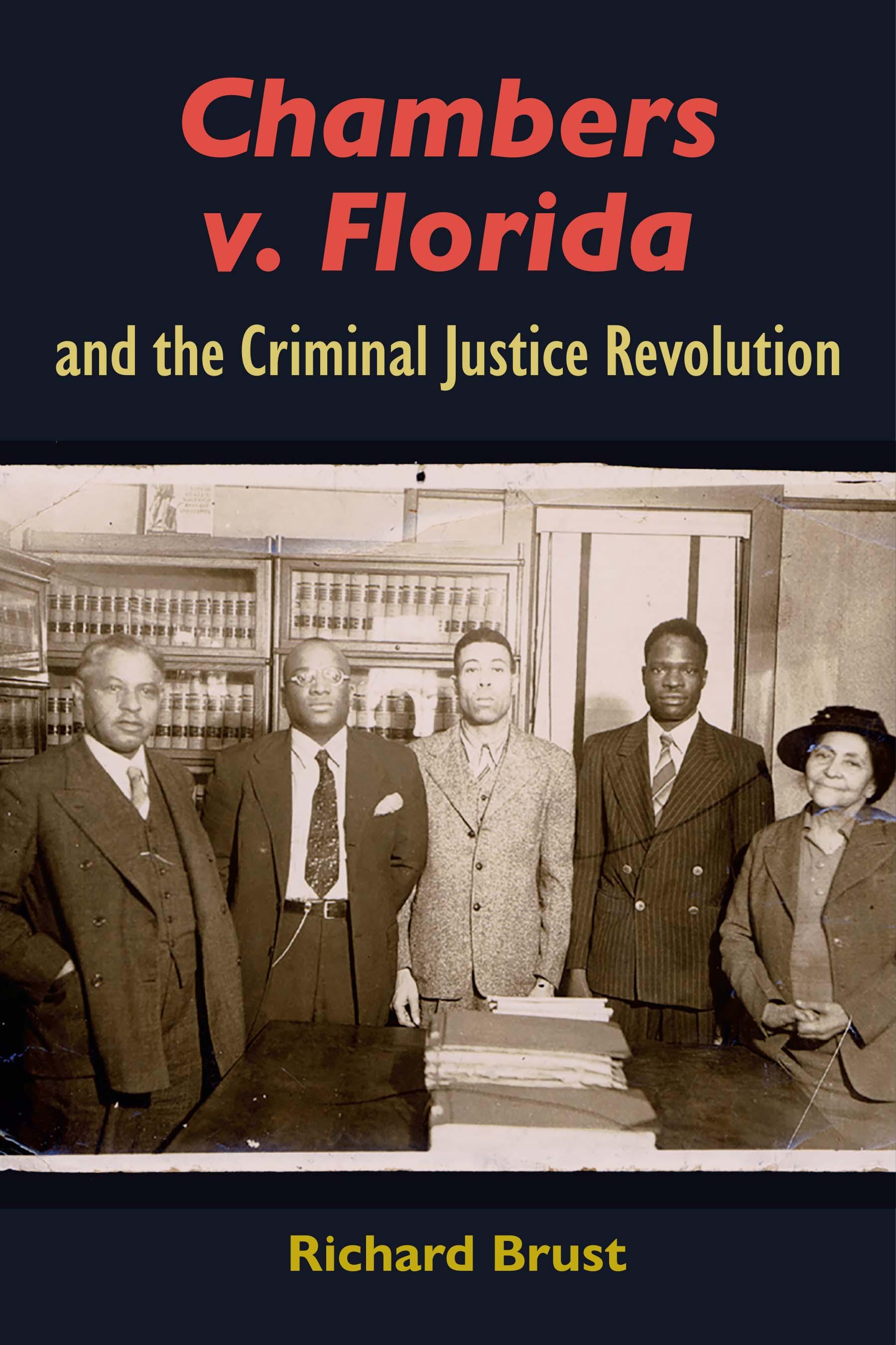
The history and enduring legacy of a breakthrough case in criminal justice reform
Florida Historical Society Rembert Patrick Award
In 1940, the United States Supreme Court decided in Chambers v. Florida to ban confessions obtained through mental or physical coercion in criminal trials. This landmark ruling laid the groundwork for many later protections for those in the custody of law enforcement. This book shows how the case contributed to what is now known as the “criminal procedure revolution,” a series of Supreme Court rulings that found protections in the Bill of Rights applied not only to defendants in federal cases but also to those in state legal systems.
The trial that sparked this chain of events resulted from the robbing and murder of a white fish-market owner in Pompano, Florida, in 1933. Local law enforcement officers extracted confessions from four Black migrant workers after a week of torture and abuse. Simuel McGill, a Black lawyer based in Jacksonville, mounted appeals, kept the accused men safe from lynchings, and eventually took the case to the nation’s highest court, where Justice Hugo Black, among other parts of the ruling, compared justice systems in the Jim Crow South to those of totalitarian nations in 1930s Europe. This book fully explores the case, often overlooked by historians, and its ripple effects—such as the “Miranda rights” formalized in 1966, including the “right to remain silent.”
“Chambers v. Florida” and the Criminal Justice Revolution demonstrates the influence of African American lawyers in early criminal and civil rights cases, as well as the growing public awareness of abuses of power by white sheriffs and law enforcement authorities during this time. It highlights the ever-present need to safeguard protections for minority and impoverished individuals accused of crimes, reminding readers that with perseverance and vigilance, justice can prevail.
Zahle einfach mit Karte, Klarna, Apple Pay oder Google Pay. Nicht zufrieden? Du hast immer ein 14-tägiges Widerrufsrecht. Lies mehr in unseren AGB. Hast du Fragen, schreib uns eine E-Mail an hello@memmo.org.
Memmo macht das Lernen einfacher – wo auch immer du bist. Bei uns findest du deine Kursbücher und smarte Lerntools an einem Ort: Zusammenfassungen, Quizzes, Podcasts und Lernkarten. Und Ted, dein Lernbuddy, beantwortet alles, was du wissen möchtest. Über 50.000 Studierende lernen bereits hier – gemacht, damit du schneller lernst und weniger Stress hast.